The American College of Foot and Ankle Pediatrics (ACFAP) installed Louis J. DeCaro, DPM, on July 25 as its new president. DeCaro, who is currently in private practice in West Hatfield, MA, and directs several adult and pediatric biomechanics clinics, specializes in podopediatrics.
Lower Extremity Review
Bacterin filler effective for talar defects
Patients with osteochondral defects of the talus and previously failed microfractures who underwent malleolar osteotomy and implantation of Belgrade, MT-based Bacterin’s allograft bone graft material had positive outcomes at two-year follow-up, according to a study epublished in July by The Journal of Foot & Ankle Surgery.
Down syndrome group honors Veldman
The National Down Syndrome Congress (NDSC) on July 12 presented SureStep CEO Bernie Veldman, CO, with its 2014 Exceptional Meritorious Service at its annual conference in Indianapolis.
Diabetic shoes cut lower extremity risks
Milwaukee, WI-based Dr. Comfort released results in July of a study showing people with type 2 diabetes who wear therapeutic shoes lower their likelihood of developing foot ulcers and undergoing lower limb amputations.
CaerVision appoints new director
Frederick, MD-based CaerVision, in July appointed Sarah Breymeier senior director of its Podiatry Network, which provides educational and marketing content for televisions and monitors in practitioners’ waiting and exam rooms.
APMA gives Amniox seal of approval
The American Podiatric Medical Association (APMA) in July gave its Seal of Approval to Amniox’s Neox Wound Matrix and Clarix Regenerative Matrix product lines.
Incline walking: An offloading option for patients with knee OA
Incline walking on a treadmill results in less frontal plane knee loading and more gluteus, hamstrings, quadriceps, and triceps surae muscle activation than level walking, and therefore may benefit patients with knee osteoarthritis or those who have undergone knee replacement.
By Henry Wang, PhD, Mason Haggerty, MS, Clark Dickin, PhD, and Jennifer Popps, PhD
Understanding Hypotonia
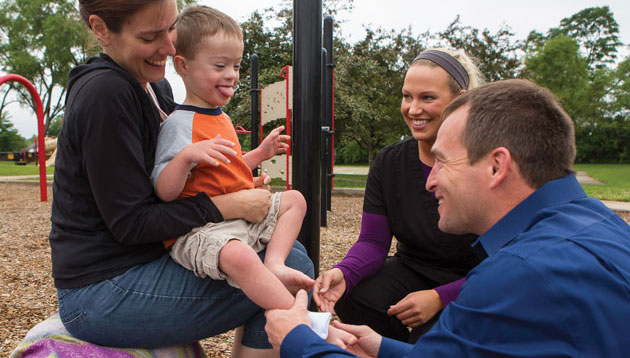
Diagnostic challenges should not delay clinical intervention – Hypotonia, or abnormally low muscle tone, is by itself not a disorder but a symptom of an enormous array of issues—many of which can be difficult to diagnose accurately.
By Christina Hall Nettles
Out on a limb: Taking on Tommy John
Baseball’s approach to preventing arm injuries so far has been to try to limit loads on the arm itself. But more and more evidence seems to suggest some of the prevention efforts should be focused further down the kinetic chain.
By Jordana Bieze Foster, Editor
Making history: Nurse is first US osseointegrated amputee
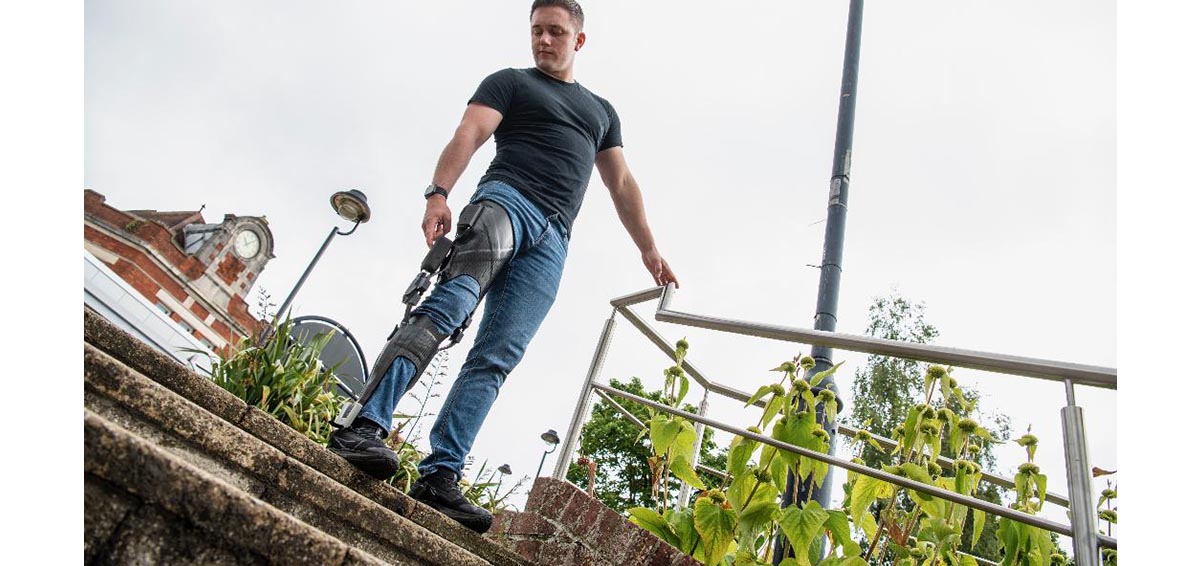
It was a first for Las Vegas physical therapist Edward Dolegowski, PT: An amputee reported that her prosthesis felt like her leg.
By Samantha Rosenblum
Weight-bearing casts for Achilles tear keep pace with nonweight-bearing
Use of a weight-bearing cast for the nonoperative treatment of acute Achilles tendon rupture produces outcomes that are at least equivalent to traditional nonweight-bearing casts, according to a randomized controlled trial from researchers in Auckland, New Zealand.
By Emily Delzell
AFO users retain deficits in function, blood flow many years after stroke
People who use an ankle foot orthosis (AFO) after a stroke retain significant deficits in neuromuscular function and blood flow many years later, according to research from the University of Oklahoma in Oklahoma City.
By Emily Delzell
Patient Perspective: The long struggle to get a knee back in the game
It happened about two years ago while I was playing a friendly game of basketball with my teenage sons and friends. I was 49 years old and never felt like slowing down. Like most guys, while playing ball, we would imitate our favorite players.
By Joseph Hayward
Gait: The Cornerstone of Intervention
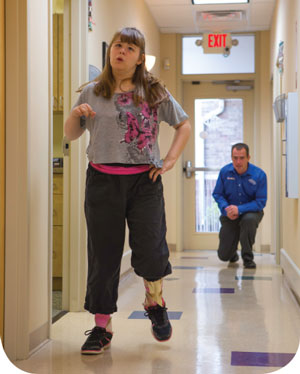
Quantifying the effects of hypotonia starts in the clinic – Effective management of children with hypotonia requires an understanding of how the condition affects gait. Clinicians typically rely on their professional experience when discussing the effects of hypotonia on gait in pediatric patients, partly because they trust that experience…
By Cary Groner
The Importance of Gross Motor Skills
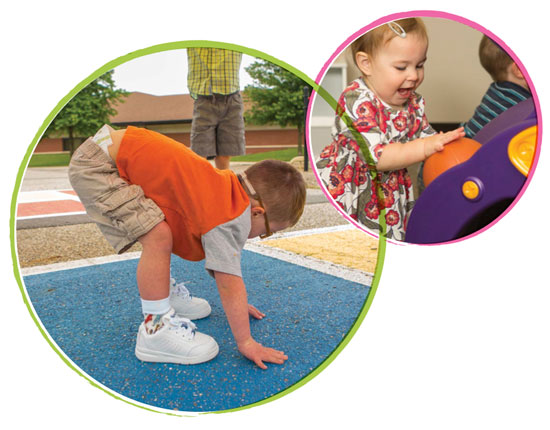
Early intervention can help provide a solid foundation – Many kids with Down syndrome, autism, and other neurological conditions may experience biomechanical limitations in the form of delayed development of gross motor skills. One of the drivers of that delay can be hypotonia.
By Shalmali Pal
Join
Subscribe For Updates
Stay in the loop with the latest news and updates! Subscribe now to receive exclusive content, special offers, and important announcements straight to your inbox. Don’t miss out – join our community today for all the latest updates delivered directly to you.