Tri-Stretch is a portable exercise device designed to lengthen muscles three dimensionally. The Tri-Stretch program allows the user to stretch and strengthen in three directions—forward/ backward, side-to-side, and rotational—with multiple joints working simultaneously, replicating the demands of sport.
Lower Extremity Review
LifeGait System
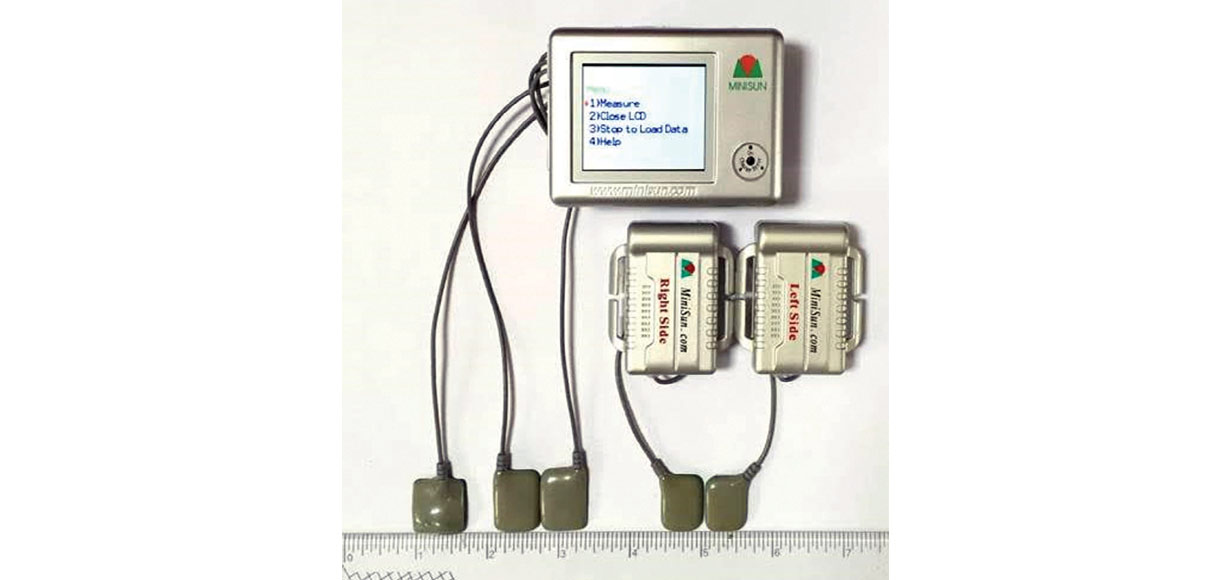
MiniSun’s new IDEEA (Intelligent Device for Energy Expenditure and Activity) LifeGait system is a portable, wearable method of cost-effectively analyzing gait, function, and activities of daily living in a free-living environment on a 24-hour basis. The system uses technologies that include tiny 3D sensors, wireless data transfer…
OPTP Catalog, 36th Edition
OPTP has published the 36th edition of its semiannual professional catalog. The catalog has been updated with new products in 16 diverse categories: balance, core strength and stability, foam rolling, foot therapy, manual therapy, McKenzie method, movement therapy, neuroscience, Pilates and yoga, resistance exercise…
Medi-Dyne FootShield
Medi-Dyne announces the newest addition to its 2Toms line of blister-prevention, chafing, skin-guard, and odor-eliminator products. FootShield is a moisture and odor-control product designed for daily use. It contains a blend of natural antifungal ingredients and moisturizers, including jojoba, grape seed, and tea tree oils.
Knee OA in amputees: Biomechanical and technological considerations
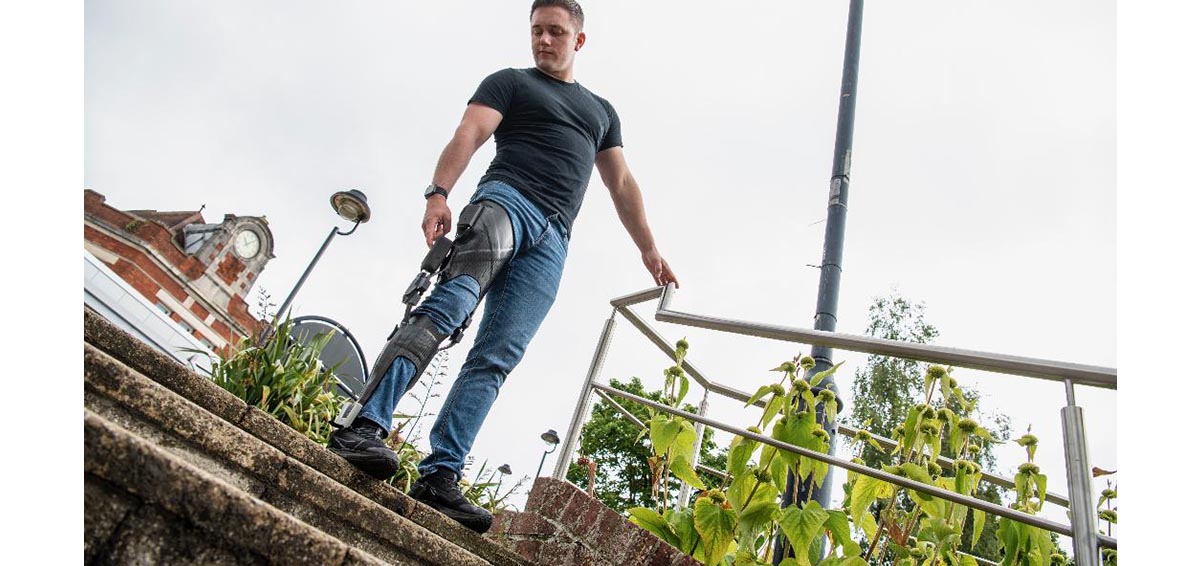
The risk of knee osteoarthritis in the intact limb of longtime unilateral amputees is much higher than in nonamputees, and the range of potential contributing factors is even more complex. Optimizing prosthetic fit and function, in addition to more conventional OA interventions, can help address gait issues that contribute to knee joint degeneration.
By Emily Delzell
Rocker-bottom footwear: effects on balance, gait
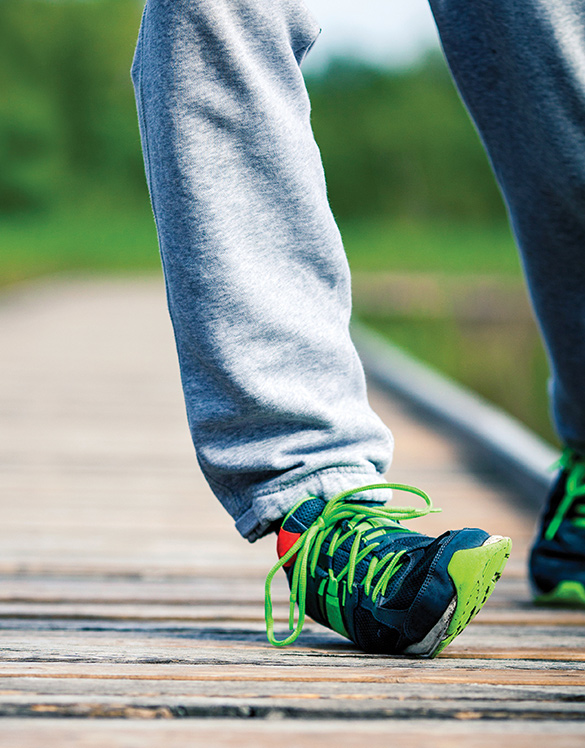
Footwear with rocker soles are best known for helping to redistribute plantar pressures during gait in patients with diabetes, but research suggests they also have clinically relevant effects on balance and gait that can be beneficial for some populations but potentially dangerous for others.
By Greg Gargiulo
Chronic ankle instability and self-reported function
Using patient-reported outcome tools can give lower extremity clinicians insight into the disability experienced by patients with chronic ankle instability. A combination of instruments may be necessary, as different assessments may capture different aspects of the condition.
By Adam B. Rosen PhD, ATC; and Cathleen N. Brown PhD, ATC
Foot posture, orthoses, and patellofemoral pain
Prescription of foot orthoses for runners with patellofemoral pain (PFP) is often based on the premise that individuals with excessive pronation are among those most likely to have a positive response. However, preliminary analyses indicate this may not be the case.
By Thomas Gus Almonroeder, DPT; and John Willson, PT, PhD
Putting prehab to the test highlights inconsistencies
The growing popularity of prehabilitation contrasts with mixed findings in the lower extremity literature: Specifically, the approach seems to be more effective in patients undergoing anterior cruciate ligament (ACL) reconstruction than those undergoing hip or knee replacement.
By Cary Groner
Injury risk gets clinical: Studies support value of inexpensive tests
Clinicians don’t often have expensive biomechanical testing equipment to improve their assessment of injury risk in athletes, but a growing body of research—including several studies presented in February at the American Physical Therapy Association’s Combined Sections meeting in San Antonio, TX—suggests standard clinical tests can help fill that void.
By Jordana Bieze Foster
Among high school girls, specialization makes playing sports more hazardous
High school girls who specialize in one sport are more than twice as likely to suffer a moderate to severe injury as their multisport counterparts, according to research from San Diego State University in California.
By Jordana Bieze Foster
Runners with PFP experience symptom improvement after gait modifications
Running gait modifications designed to reduce patellofemoral loading also have immediate symptomatic benefits in patients with patellofemoral pain, according to research from Laval University in Quebec City, Canada.
By Jordana Bieze Foster
Slip scores fall short: Testers take winter footwear to task
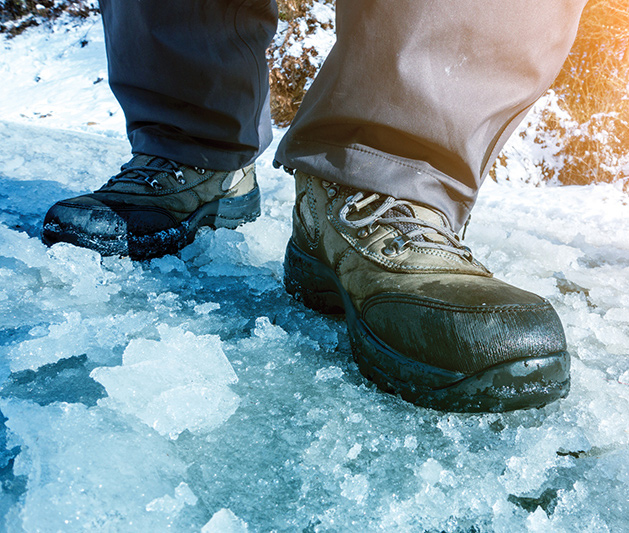
Although slip-resistant footwear can play a key role in preventing accidents related to wintry conditions, most styles don’t do the job, according to researchers from the Toronto Rehabilitation Institute in Canada who have set out to change the situation.
By Catherine M. Koetters
Early PT after hindfoot fracture surgery may help patients better address anxiety
Patients who undergo surgery for hindfoot fracture can safely start physical therapy two weeks later, which could provide an opportunity to improve outcomes, according to research from Utah presented at the American Physical Therapy Association’s Combined Sections Meeting.
By Jordana Bieze Foster
In diabetic neuropathy cases, pedal bone health declines along with renal function
In patients with diabetic peripheral neuropathy, pedal bone health declines progressively in conjunction with worsening renal function, according to research from Washington University School of Medicine in St. Louis, MO.
By Jordana Bieze Foster
Join
Subscribe For Updates
Stay in the loop with the latest news and updates! Subscribe now to receive exclusive content, special offers, and important announcements straight to your inbox. Don’t miss out – join our community today for all the latest updates delivered directly to you.