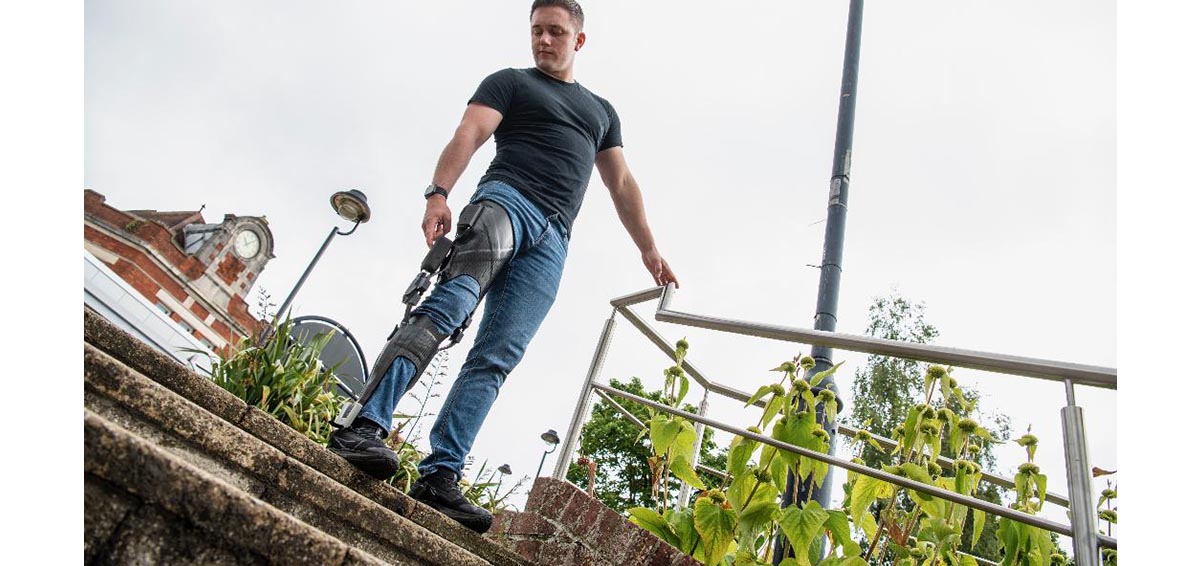
Gait speed improvements associated with 30 weeks of functional electrical stimulation (FES) in poststroke patients are maintained at 42 weeks, according to research presented in June at the 2015 ISPO World Congress.
Lower Extremity Review
OSTEOARTHRITIS: Orthotic options for knee OA focus on compliance issues
New research presented in June at the 2015 ISPO Congress underscored the potential long-term benefits of valgus knee bracing for relief of medial knee osteoarthritis (OA) symptoms when patient compliance is high, while…
PROSTHETICS: Foot strike pattern can affect load in amputee runners too
Foot strike pattern during running affects loading in unilateral lower limb amputees, as it does in able-bodied runners, according to research from the Chinese University of Hong Kong.
Speed trap: Slowest seniors have increased mortality
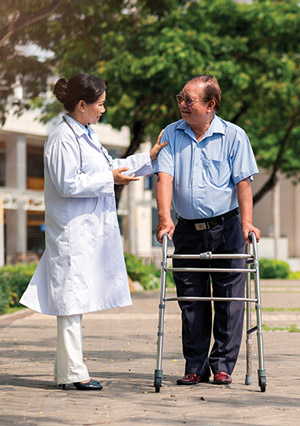
Gait speeds less than .6 m/s, a threshold that has been recommended as an indicator of mobility-related health problems, also confer a significantly increased risk of two-year mortality in hospitalized older patients, according to a recent prospective study.
In children with CP, gait impairment correlates with daily step activity level
In children with cerebral palsy (CP), gait impairment has a moderate relationship with daily step count and high daily activity levels, according to research from the University of Auckland in Australia.
Step width, length variables may help predict fall-related risks in older adults
Step width (SW), step length (SL), and a ratio of the two variables may help predict falls and fall-related injuries in older adults with and without diabetic peripheral neuropathy (DPN), according to research from the University of Michigan in Ann Arbor.
Out on a limb: The NBA takes on fatigue
After a season in which too many of its most marketable stars spent too much time in street clothes, the National Basketball Association (NBA) is making a commitment to injury prevention. Interesting, however…
By Jordana Bieze Foster, Editor
Publisher’s memo: One to grow on
Another year has passed, filled with new and exciting developments for LER. With all the growth that we have experienced in the past year, it was necessary to expand our editorial team with promotions to Emily Delzell and P.K. Daniel, who are now senior editor and associate editor, respectively.
By Richard Dubin
Improving compliance with diabetic footwear
Convincing patients with diabetes to wear their prescribed footwear presents a challenge, but experts agree that encouraging patient compliance requires lower extremity clinicians to look beyond the disease and gain insight into the person being treated.
By Shalmali Pal
Intricacies of metatarsal stress fracture treatment
A growing body of research on metatarsal stress fractures is helping lower extremity practitioners manage both the biomechanical and physiological effects of these frustrating injuries, as well as the expectations of patients who are eager to return to activity.
By Erin Boutwell
Driving safety: The effects of lower extremity impairment
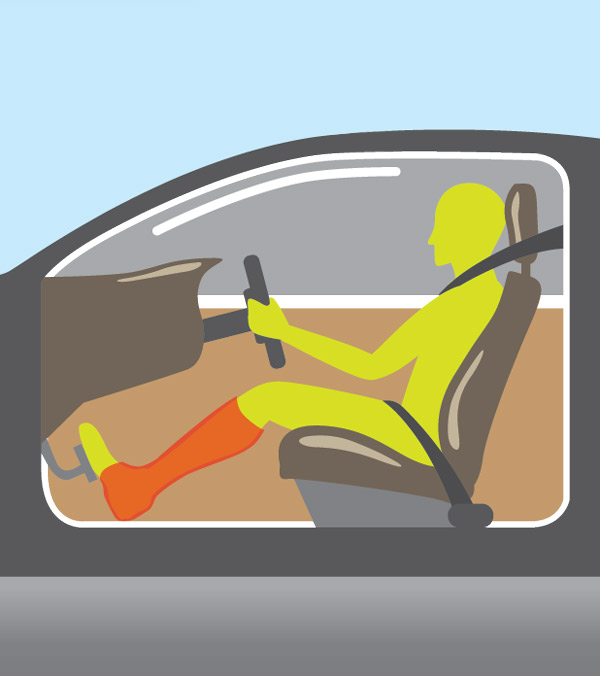
The question of when or if it’s safe for patients to drive after surgery or while wearing a lower extremity orthotic device is one practitioners should address. But, in the absence of formal guidelines, clinicians’ advice is often inconsistent.
By Hank Black
Iliotibial band syndrome and running mechanics
The mixed findings of several cross-sectional studies seem to suggest that no specific biomechanical variables are unequivocally associated with iliotibial band syndrome in either men or women, which underscores the importance of assessing each patient individually
By Eric Foch, PhD
Diabetic foot conference weighs offloading issues
Offloading was a hot topic at the recent meeting of the International Working Group on the Diabetic Foot in the Netherlands. Diabetic foot experts in attendance discussed new research on offloading strategies and updated the organization’s practice recommendations.
By Cary Groner
Role of early rehab stages after ACL reconstruction
Traditionally, anterior cruciate ligament reconstruction outcomes have been assessed preoperatively and several months postoperatively, but new research suggests the early postoperative stages of recovery may also significantly affect self-reported outcomes.
By Caitlin J. Miller, PT, DPT, and Jesse C. Christensen, PT, DPT, SCS
The future of footwear and orthoses is here. Now what?
A shift in tone was apparent at this year’s Ortho Technology Forum (OTF), and not just because the focus of the event has been expanded to include design and manufacturing technologies for footwear as well as foot orthoses…
Join
Subscribe For Updates
Stay in the loop with the latest news and updates! Subscribe now to receive exclusive content, special offers, and important announcements straight to your inbox. Don’t miss out – join our community today for all the latest updates delivered directly to you.