










Figure: On the left we have children at play, seemingly care free; on the right, we find a gathering of sedentary seniors in a nursing home riddled with foot and gait complaints and missing limbs.
By Jay Segel, DPM; Sally Crawford, MS
The medical field continues to experience rapid technological advancements, providing us with critical graphs and quantitative measurements that validate what we see, the qualitative findings. For healthcare professionals charged with understanding and addressing gait, recognizing the correlation of what happens during weightbearing and the challenges/costs to the musculoskeletal system is key. We now have sophisticated tools that offer detailed insights into the specific events, positionings, and timing of said events. Pressure analysis, a long-standing and valuable tool for podiatrists, orthopedic surgeons and physical therapists, should be considered an integral part of the history and physical of a patient concerned with musculoskeletal maladies. The ability to precisely measure and analyze data is crucial for diagnostic clarity and developing personalized treatment plans, further improving patient outcomes and advancing medical research at accelerated speeds.
The study of biomechanics is understanding that physical events happen at specified times and in a specific order. With the help of synchronized computers, sensors, and video, we can now quantify those gait patterns we used to just view qualitatively.
We define Computer Aided Gait Analysis (CAGA) in this way: A set of tools and components used to capture the way a person functions using technology to record and store patient specific data which can be examined and compared to normative data and evaluated therapeutic care plan efficacy.
Quantitative data via CAGA significantly enhances our understanding of human locomotion, driving innovation in diagnostic and therapeutic techniques. By embracing these advancements, healthcare professionals can offer the highest standard of care, leveraging precise measurements and analyses to improve patient outcomes in an increasingly data-driven world. Simply put, each article in this multi-part “column” will be filled with numerous golden nuggets for utilization of CAGA today and through the future. To that end, article number one is an introduction to the series with a tangent on movement toward the future, one none of us can avoid. At least to some degree.
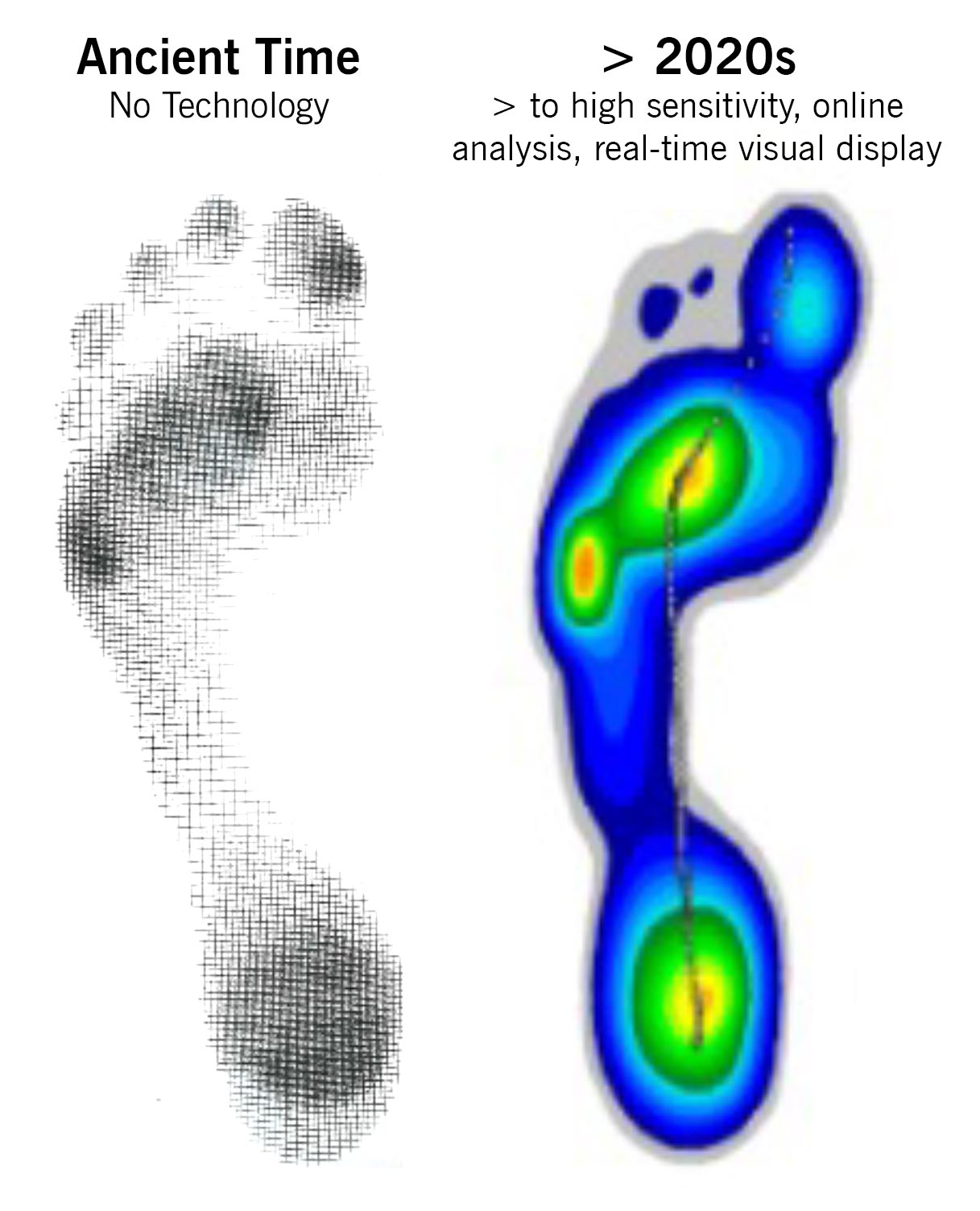
Figure: As we progress towards the future, technology becomes imperative—but luckily, data quality improves and the understanding that comes with it is unavoidable.
Mechanical maladies occur more often as we age as is evidenced by the documented use of medical services by an increasingly right shifted patient population. What has happened to our bodies, mechanically, as we age, is the result of a different kind of duel between 2 dissimilar bodies. This phenomenon is known medically as repetitive microtrauma, known more simply as wear and tear. The interaction between a 3-dimension foot of limited mass and a 2-dimension support surface of relatively unlimited mass is outcome easily defined by the laws of collision dynamics.
As we like to say, “it is a battle the foot doesn’t win, and it doesn’t win that battle millions of times a year”… and we carry the consequences of this war. We attack this principal dirty truth and the others herein, through use of CAGA tools and the integration of data for the benefit of our patients and with respect to our partners throughout the entire care teams. CAGA is imaging medicine required to see the body in motion throughout aging.
Through each article we will provide you with the tips to finally get to the root causes with computer aided gait analysis quantifying motion. You can’t manage what you can’t measure – quantification is key. Neither can you communicate, map, or monitor progress, or lack thereof, with precision and certainty.
So, please look forward to getting golden nuggets each month on CAGA concepts, that relate to your practice and the advancements, as well as journey to the next generation. The Dirty Truths include:
- Problematic anatomy: The foot isn’t symmetrical
- It’s a physics problem: Walking, running, and weight-bearing
- Computers are key, gait can’t be quantitated by eye alone
- Shock absorption is energy loss
- We pronate and supinate in the normal gait cycle
- Elastic to plastic – feet age
- Wear and tear over time – repetitive microtrauma and age
- Every step is different
- Fashion and idiocy
- Bottom up and top down – understanding the kinetic chain
- Cooperative & Collaborative communication with patient and care team
- What we do matters
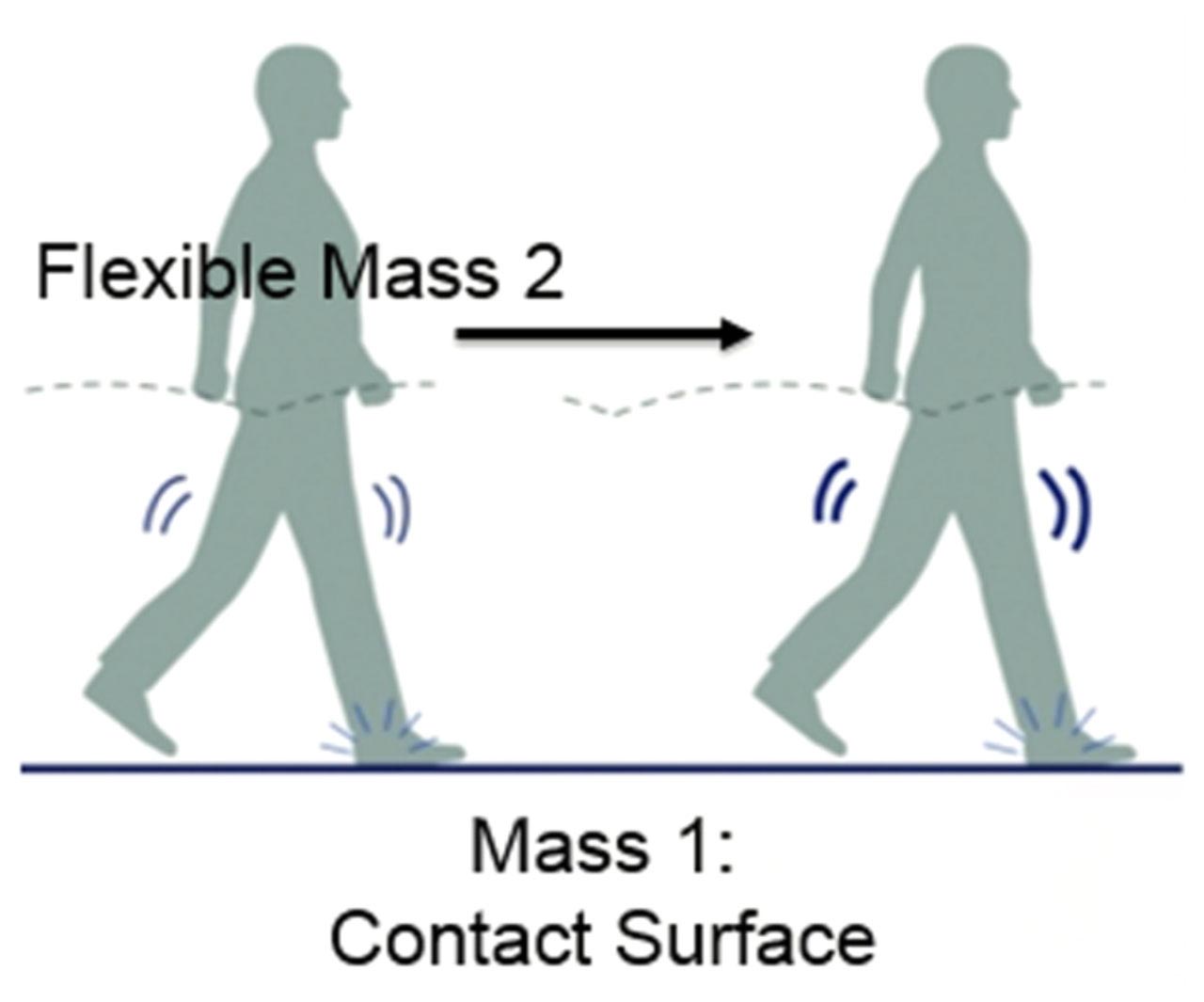
Figure: Laws of collision dynamics
Jay Segel, DPM, is a Podiatrist, Biomechanist, Orthotic and Gait Analysis Specialist, in Martha’s Vineyard, MA.
Sally Crawford, MS, is a Biomedical Engineer, IT director, and data manager.






Very useful and knowledge boosting post on New LER series in Biomechanics and CAGA. Definitely it will add new chapter of innovation and technology as many more professionals get benefitted. Thanks Jay Segel for sharing useful updates.
Nice dive into the future of foot care