







 By Keith Loria
Advances in ankle-foot orthoses (AFOs) are revolutionizing how podiatrists, physical therapists and O&P clinicians support lower-limb mobility and rehabilitation. In this 3-part series, we explore the latest evidence, cutting-edge materials, and innovative design strategies that are shaping the future of AFOs. This short series offers a look at how today’s breakthroughs are improving function, comfort and compliancy in the lower extremity world. Check back each month for the next installment.
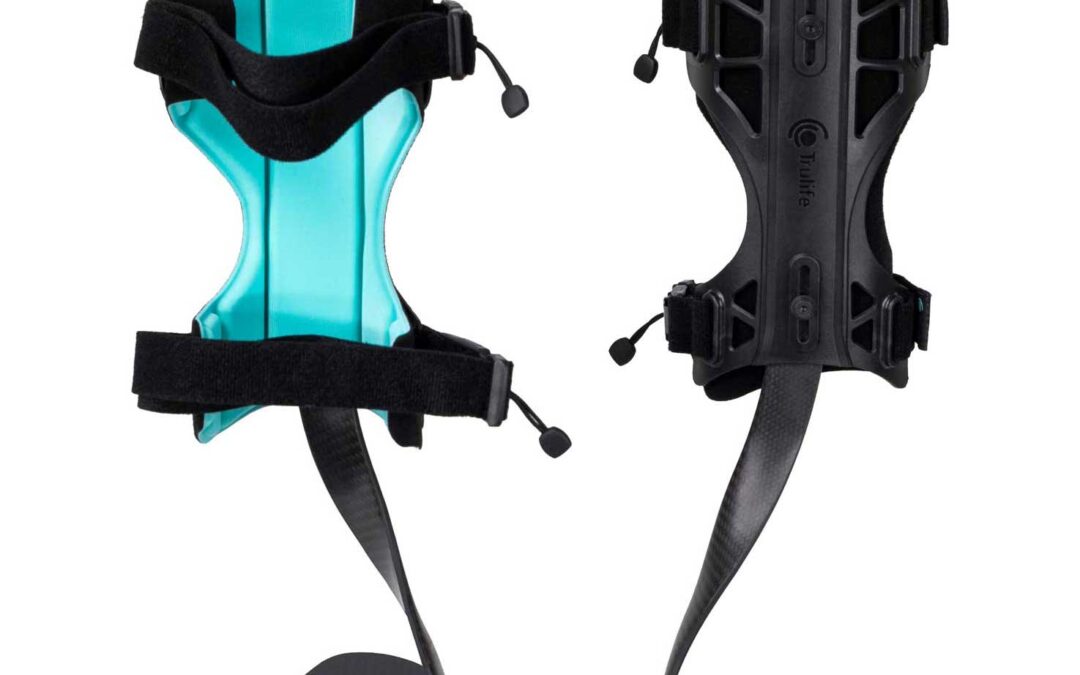
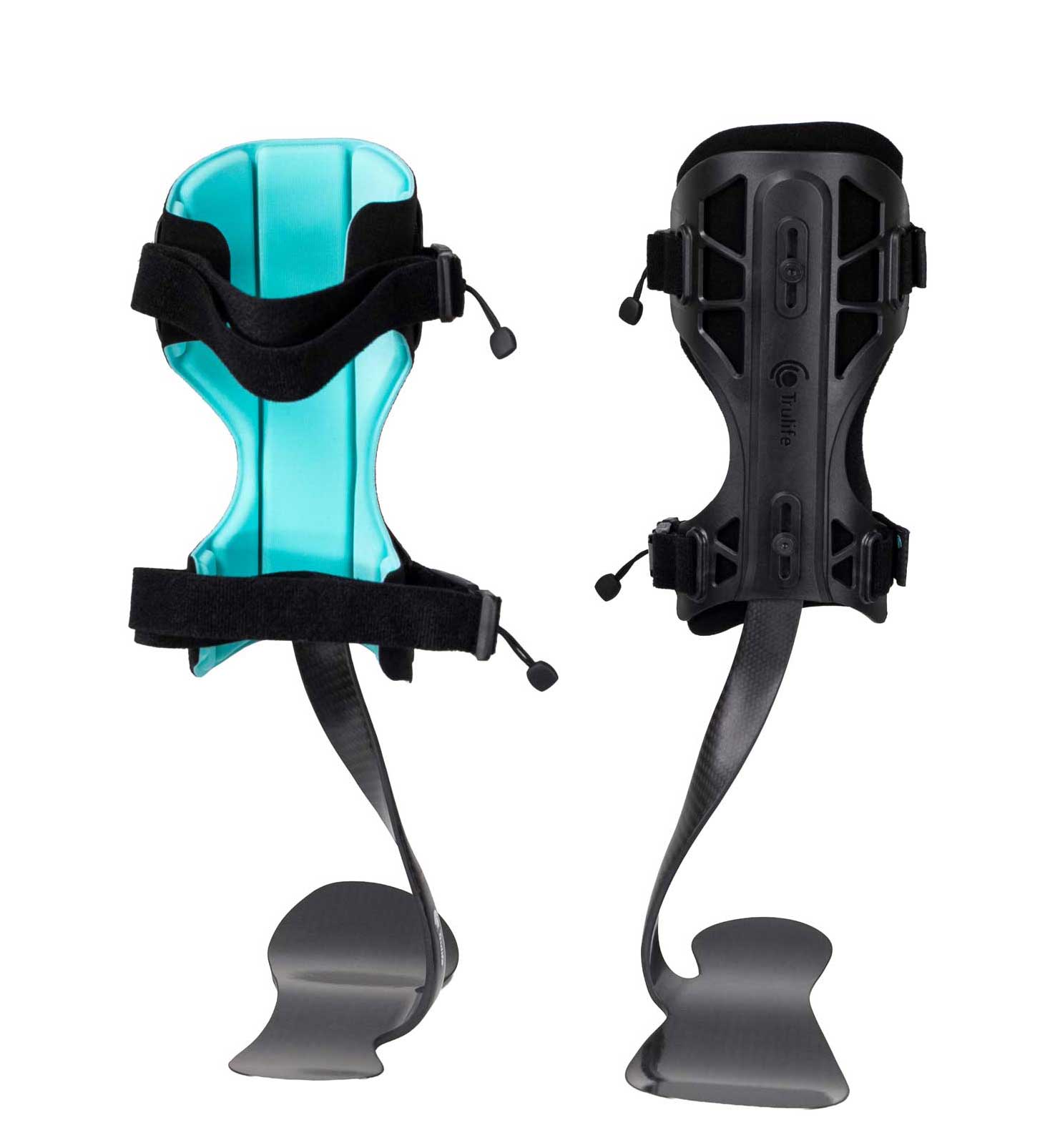
Carbon composite ankle foot orthoses (AFOs) are reshaping how clinicians think about lower-extremity bracing. Long viewed as devices reserved for advanced gait abnormalities, these newer AFOs are increasingly becoming primary tools for podiatrists managing neuromuscular conditions, diabetic complications, chronic instability and post-traumatic recovery.
Their rapid expansion into podiatric care is tied not only to performance, but also to advances in material science that allow far more control over stiffness, alignment, comfort and function than traditional thermoplastic designs.
To appreciate how carbon composite AFOs fit into podiatric practice, it helps to understand the engineering changes driving these improvements. Modern composites are built from layers of carbon, glass, Kevlar or other fibers embedded in a resin matrix, and these elements contribute to the device’s behavior. The orientation of the fibers determines where the structure will flex, where it will remain rigid, and how it will store and release energy. The resin affects the toughness and durability, influencing whether the device holds its shape during thousands of steps.
Personalized Solutions
As carbon composites have become more sophisticated, orthotists can now vary stiffness across different regions of the AFO, controlling how the device behaves during loading, push-off, and swing–something thermoplastics simply cannot match.
According to Eric Weber, LCPO, FAAOP, who co-chairs the American Academy of Orthotists & Prosthetists’ Lower Limb Orthotic Society, this ability to fine-tune performance is one of the most meaningful developments of the last decade. He notes that clinicians can now design a brace around the specific functional objective: whether they aim to assist motion, restrict harmful movement, accommodate deformities, realign the limb, or correct a biomechanical problem.
When the materials and layering are selected deliberately, the resulting AFO no longer functions as a rigid shell but as a dynamic tool that integrates with the patient’s gait.
Spencer Keane, DPM, a podiatrist with Northern Illinois Foot & Ankle Specialists noted advances in carbon composite AFO design has allowed a lighter and stronger supportive device.
“This aids in the functionality of the device and ultimately patient compliance,” he said. “They fit in patients’ shoes better and go more unnoticed than the previous larger bulky braces.” 
Additionally, because these devices offer a lightweight design that fits into typical footwear, they are excellent at providing energy return.
“There are different levels of support and flexibility to support the amount of lift and assist,” Keane said. “These items can be stocked in the office for same day dispensing, so the patient can achieve immediate results.”
Why Material Science Matters in Clinical Outcomes
This shift in material capability translates directly into more efficient, comfortable and predictable movement. Because composites can store and return energy, they reduce the workload on weakened muscles and help maintain smoother ankle progression throughout the gait cycle.
“The ability to orient fibers so some regions are strong and others are more flexible gives us control over how the AFO behaves throughout the gait cycle,” Weber said.
Patients often report reduced fatigue, more natural forward progression and greater stability during daily activities. The thinner profiles achievable with today’s composites also make these devices easier to fit into a wider range of footwear, which is a major consideration for podiatrists trying to balance function with real-world usability.
Another advantage is durability. Traditional plastics fatigue over time, especially under repetitive loads. Carbon composites maintain their structural integrity far longer because they distribute stress across multiple layers. The result is a more consistent stiffness profile over the life of the device and fewer unexpected failures. For podiatrists treating patients who will require bracing for years–sometimes for life–this reliability becomes central to long-term outcomes.
At the same time, enhanced structural control allows orthotists to design braces that align more closely with human anatomy. Strut position, footplate curvature and shank angle can be tailored to improve alignment and support natural knee motion. When these factors line up properly, the device supports the patient’s gait rather than fighting it, improving comfort and reducing the risk of compensatory movement patterns.