








From metal-free fixation to resorbable devices, new technologies are changing surgical decision-making
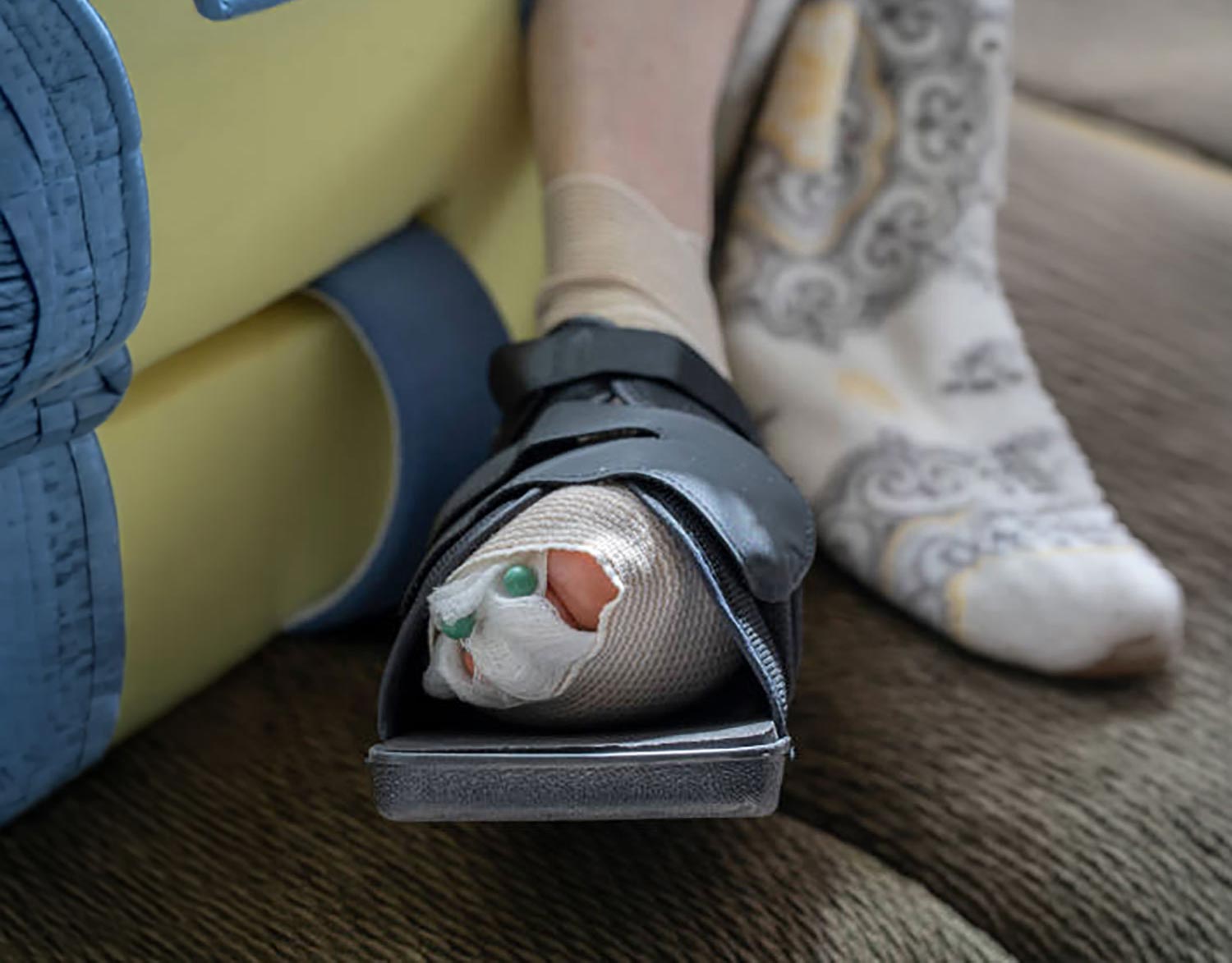
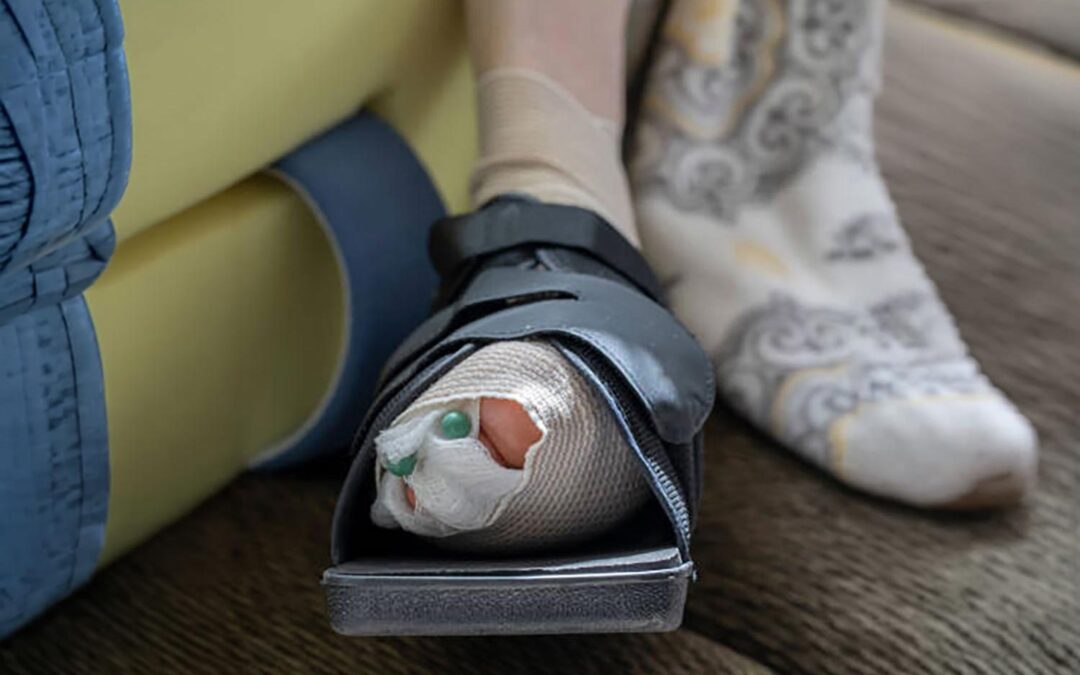
A healing foot with traditional pins.
By Keith Loria
For decades, metal hardware has been the standard in foot and ankle surgery. Screws, plates and pins have provided reliable fixation, enabling surgeons to stabilize bones and joints during healing. While effective, these materials often remain in the body permanently, and in some cases, require secondary procedures for removal due to irritation or complications.
Today, a new class of biointegrative implants is beginning to shift that paradigm. Designed to provide stability during the healing process and then gradually integrate into or be resorbed by the body, these implants offer an alternative to traditional metal hardware.
Justin Franson, DPM, a podiatric surgeon with the University Foot and Ankle Institute in Los Angeles, CA, noted he has increasingly incorporated biointegrative implants into his practice across a range of reconstructive procedures.
“As I describe a typical procedure to a patient and explain my preference to use non-metal biointegrative fixation, patients respond very favorably,” Franson said. “They appreciate the idea of not having permanent hardware in their body.”
Throughout the industry, biointegrative implants are now being used in a variety of procedures, including bunion correction, hammertoe repair, osteotomies and ligament stabilization. For many surgeons, these devices are becoming a viable option in cases where traditional hardware has long been the default.
Franson noted he has seen particularly strong results in forefoot procedures and certain reconstructive applications.
“I’ve had excellent results with hammertoe fusions and bunion procedures, and I’ve not had to return to surgery for hardware removal,” he said.
He added that eliminating secondary procedures is a significant advantage, noting that hardware removal rates with traditional metal implants can range from 5% to 10%.
Chandana Halaharvi, DPM, owner of Thrive Foot and Ankle in Houston, Texas, noted biointegrative implants are particularly well suited for cases where long-term hardware is unnecessary.
“Hammertoe fusions are a great example,” Halaharvi said. “Once the joint fuses, there’s no clinical reason to leave permanent hardware sitting in the toe.”
She added that these implants have also shown promise in procedures such as ankle ligament repairs and flatfoot reconstruction, where structural support is needed during healing but not beyond it.
Patient Perception and Surgical Experience
In addition to clinical performance, patient perception is playing a growing role in the adoption of biointegrative implants.
Franson noted many patients are hesitant about the idea of permanent metal implants and are more receptive when presented with a biointegrative option.
“From a patient-centric viewpoint, it’s a major advantage,” he said. “Patients like knowing that the implant will not be there long-term.”
He also noted differences in the surgical experience itself, particularly in how the implants interact with bone.
“Metal screws are hard and unforgiving, and they can stress the bone during tightening,” Franson said. “I’ve found biointegrative screws to have a more forgiving feel with bone engagement.”
These characteristics may contribute to improved surgical handling and potentially reduce complications, although long-term data is still emerging.
Balancing Innovation with Evidence
Despite growing enthusiasm, clinicians remain cautious about widespread adoption.
Halaharvi noted one of the biggest concerns is the lack of long-term data on biointegrative implants.
“We don’t have great data on long-term follow-up yet,” she said. “I think only time will tell how these implants perform over many years.”
Cost is another factor influencing adoption. Biointegrative implants are often more expensive than traditional hardware, and reimbursement can vary depending on the setting and payor.
Franson said that while the technology shows promise, cost considerations can limit its use in certain cases.
“In some settings, particularly with Medicare or certain insurance plans, the cost can be prohibitive,” he said.
He also pointed to surgeon familiarity as a barrier, noting that some clinicians may be hesitant to adopt new technologies without sufficient training or long-term evidence.
Adoption Trends and the Broader Shift
As awareness increases, biointegrative implants are gaining traction across the profession.
Leaders within large provider networks are helping drive this trend. Lowell Weil Jr., DPM, CEO of Weil Foot & Ankle Institute in Des Plaines, IL, and executive chairman of Balance Health, said interest in biointegrative fixation is growing as both surgeons and patients seek alternatives to traditional hardware.
“The ability to stabilize bone without leaving permanent implants aligns with what many patients are looking for today,” Weil said. “There’s a growing awareness and acceptance of these options.”
He added that in elective procedures such as bunion correction, patient preference is becoming an increasingly important factor in surgical planning.
“At the end of the day, patients want effective outcomes with fewer long-term concerns,” Weil said.
This shift reflects a broader trend toward patient-centered care, where treatment decisions are influenced not only by clinical outcomes but also by patient expectations and quality of life considerations.
Integration with Regenerative Principles
The rise of biointegrative implants is occurring alongside advances in regenerative medicine, and the 2 fields are beginning to intersect.
Emily Splichal, DPM, MS, CES, of the Center for Functional & Regenerative Medicine in Chandler, AZ, said there is growing interest in incorporating biologic therapies into surgical procedures to enhance healing.
“When the incision is open, that’s an opportunity to incorporate biologics to accelerate the healing course,” Splichal said.
This approach represents a shift toward more biologically driven surgery, where fixation and healing are considered part of a broader continuum.
A Changing Standard of Care
While traditional metal hardware remains a cornerstone of foot and ankle surgery, biointegrative implants are expanding the range of available options.
For surgeons, the challenge lies in determining which patients and procedures are best suited for these technologies. For patients, the appeal is clear: effective stabilization without permanent foreign material.
As research continues and clinical experience grows, biointegrative implants may play an increasingly prominent role in surgical care. However, their long-term impact will depend on continued evaluation, cost considerations and the development of robust clinical data.
For now, they represent an important step forward–one that reflects a broader shift toward more personalized, patient-centered approaches in foot and ankle surgery.
A graduate of the University of Miami, Keith Loria is a D.C.-based award-winning journalist who has been writing for major publications for more than 20 years on topics as diverse as healthcare, travel, sports and entertainment.
Related posts:

Exploring How Near-Infrared Light Therapy Could Help Diabetic Wounds Heal Faster
3D Scanning vs. Plaster Casting–Evolving Techniques in Orthotic Capture

Foot Drop Brace

TALAR Score: Using Early Red Flags to Predict the Failure of Conservative Management

I Asked Dr. Google… How Much Water Should You Drink?