








Visit Design, Coding, and Documentation That Support Comprehensive Care Without Burning Out Clinicians
 By Mikel D. Daniels, DPM, MBA, President and Chief Medical Officer, WeTreatFeet Podiatry
Like many physicians, coming out of residency I thought I’d fix the world one bunion at a time. Somewhere between my 745 and 746th bunion procedure, I came to the realization that while I was helping to relieve the pain my patients were feeling, this might not be a way for me to make a difference. Taking an objective look at my practice, I decided to focus on diabetics. That was the point that made me ask how I could make a practice financially viable with this as a focus. I needed a care model that improved outcomes and could pay for itself. But how?
Ensuring that diabetic foot care is both clinically thorough and financially sustainable requires more than good intentions or a strong technical skill. It demands a deliberate structure. Efficient visit design, strategic coding, and accurate documentation are essential elements that must be integrated into this process. All are necessary to protect reimbursement and reduce administrative strain. For many clinicians, the challenge is finding the right balance between patient-centered care and the financial realities of running a thriving practice, all in an environment of rising costs and declining reimbursement. Poorly structured programs burn out clinicians or lose money. Well-designed programs become one of the most sustainable service lines in the practice.
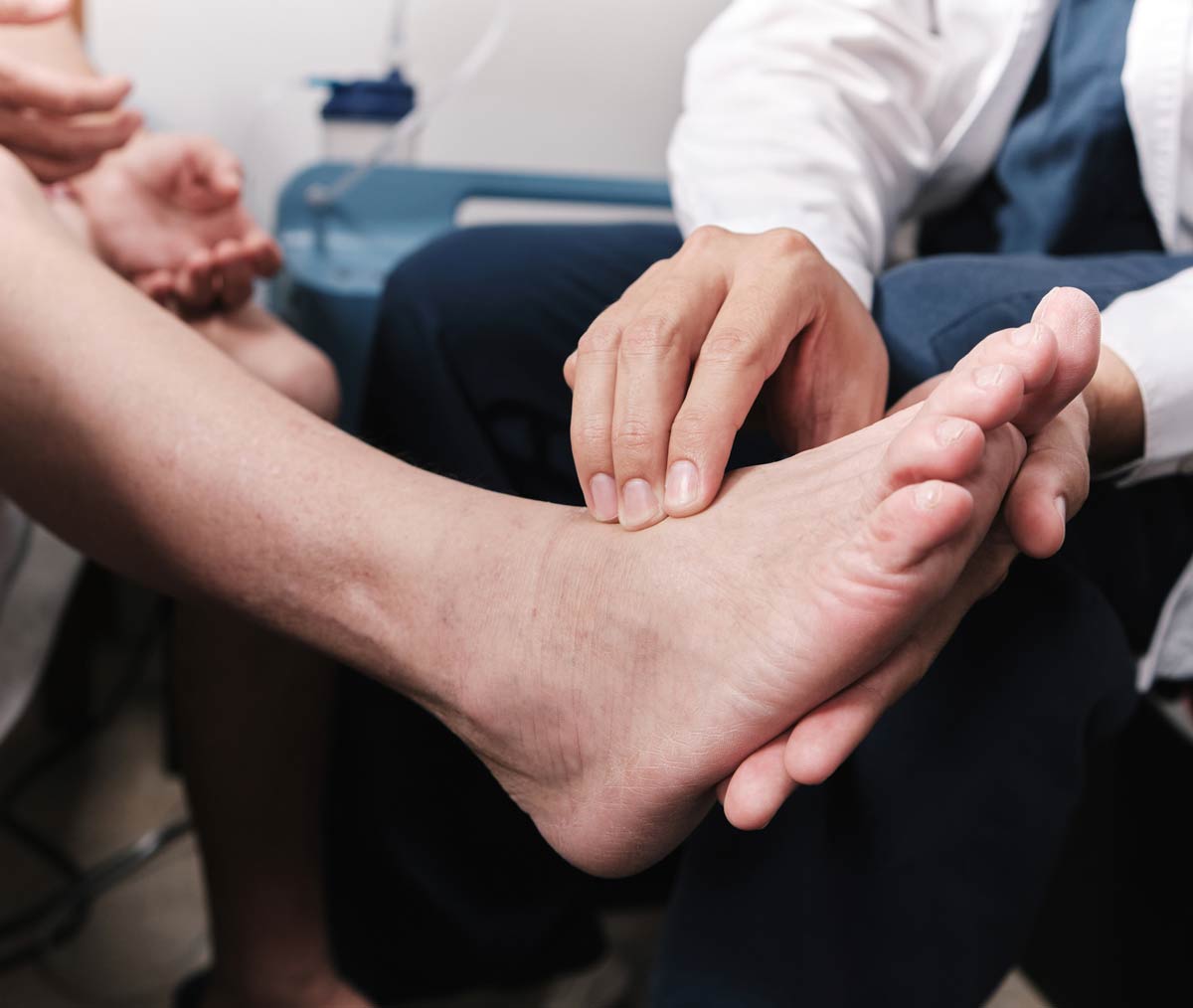
The foundation of sustainability begins with how visits are designed and executed. A well-structured visit allows for thorough assessments without overwhelming the clinician’s schedule. When providers spend most of their time on data entry or repetitive tasks, efficiency and morale plummet. Optimizing clinical workflow around the strengths of the care team helps prevent that. Medical assistants and nurses can handle standardized elements such as removing shoes and socks, performing basic vital signs, and completing a monofilament test before the clinician enters the room. This “rooming protocol” accomplishes 2 things. First, it ensures that key screening steps are never missed, and second, it frees the clinician to focus their time on interpreting findings, making decisions, and documenting results that require higher-level medical judgment.
Another critical piece is the use of structured electronic health record (EHR) templates designed specifically for diabetic foot assessments. With pre-populated fields for skin integrity, pulse quality, neurological status, loss of protective sensation, and footwear evaluation, these templates minimize cognitive load. They also make auditing and coding far more consistent. In practices where each provider documents differently, billing errors and under-coding are common. Standardized templates create a uniform language across the care team, streamline documentation, and provide clearer evidence of medical necessity. The efficiency we see here can now be supercharged with the use of ambient artificial intelligence, especially if clinically trained on the necessary items performed during the visit.
 Understanding and identifying risk stratification further strengthens this model. By applying an objective tool such as the Wagner Ulcer Classification System, clinicians can categorize patients by their level of risk, establishing a protocol to determine how frequently the patient should be seen. For example, a diabetic patient without any identifying risk factors should be seen once a year. However, a diabetic patient with minor neuropathy may return every 3 to 6 months, while someone with a prior ulcer or active loss of protective sensation may require visits every 61 to 90 days. This not only personalizes care but also distributes visit volume in a predictable way. All of which supports scheduling efficiency and financial planning. Over time, such systems reduce preventable hospitalizations and amputations, generating measurable value not only for the patient, but also for payers and healthcare systems.
Once the care model is streamlined, the next element that is needed is to understand and accurately perform documentation and coding. When it comes to the medical record, if it isn’t there, it didn’t happen, and this is exactly how reimbursement is defined. This simple concept determines a practice’s financial viability. Under Medicare’s rules, “routine foot care” by itself is not covered. However, when systemic conditions like diabetes and neuropathy are properly documented, coverage becomes possible and sustainable. This distinction makes accurate coding essential. Evaluation and Management (E/M) codes 99202 through 99205 for new patients and 99212 through 99215 for established patients must align with the complexity of medical decision-making. Documentation must clearly reflect why the level chosen is justified based on the work performed. In addition to E/M codes, procedural codes play a vital role in revenue integrity. Common ones such as 11055 to 11057 for paring or reducing corns and calluses, and G0127, 11917,11720 to 11721 for nail debridement, should be used accurately, and only when clinically indicated.
For patients with confirmed loss of protective sensation (LOPS), using the specific G-codes that Medicare established for this purpose is key. Code G0245 applies to the initial visit, G0246 for follow-up care, and G0247 for diabetic foot maintenance in patients with diabetes and neuropathy. Linking these accurately to documented findings removes ambiguity in reimbursement and prevents denials. Quality reporting codes further enhance sustainability when aligned with federal programs. For example, HCPCS code 2028F indicates that a diabetic foot exam was performed, which counts toward MIPS and other pay-for-performance metrics. Consistent use of this code benefits both practice benchmarking and eligibility for incentive payments.
These are the essential backbone of financial sustainability, and it all ends with sound documentation. Without it, claims are vulnerable to denials and audits, and even correct coding can fail. Each note must tell a clear story of medical necessity. The diagnosis must justify the intervention; a problem list must be included that reflects active conditions. The note must show that the care delivered was necessary to manage or prevent complications. One of the most critical steps in this process is appropriately connecting procedures to the diagnosis codes that accurately reflect diabetic complications such as E11.621 (Type 2 diabetes mellitus with foot ulcer). By using the correct ICD-10 pairing, clinicians protect reimbursement and ensure their documentation stands up to review.
Modifiers further refine accuracy. The -25 modifier should be applied whenever a significant, separately identifiable E/M service is performed on the same day as a procedure. Without it, payors may deny payment for one of the services, assuming overlap. Similarly, Q-modifiers (Q7, Q8, Q9) communicate the severity of systemic findings that justify coverage for foot care under Medicare. These small coding details collectively determine whether an encounter is reimbursed fairly or flagged for review.
Practices must also document the patient’s broader care context. Medicare requires that the provider record the date the patient last saw the physician managing their overall diabetes. This detail confirms that the patient is under active care for the systemic disease that qualifies them for coverage. It seems minor, but missing even a small detail like this can lead to missed revenue and rejected claims. Establishing internal workflows or EHR prompts to capture this information ensures not only compliance, but also consistency across providers.
Ancillary services are another essential part of a practice’s financial survival. Access to necessary tests such as x-ray or ultrasound ABI help with the diagnosis and accurate identification of diabetic patients risks. Providing durable medical equipment like diabetic shoes, bracing, orthotics, and compression garments provide patients with the necessary tools to reduce risks and treat active medical problems. Having these available in the office or clinic streamlines care, leading to reduced overall costs, while potentially adding to the bottom line of a practice.
 To sustain care financially, every member of the care team must understand their role in the process. Clinicians should feel confident in which codes apply, MAs and nurses should recognize how their work feeds into billing accuracy, and billing staff should be proficient in spotting documentation gaps. The goal is to create a circle of accountability that keeps the care model intact. When everyone knows that their documentation supports both patient safety and financial health, burnout decreases, and teamwork strengthens.
It’s also crucial to acknowledge that coding accuracy is not just a financial issue. It is both a legal, ethical, and even quality measure. Accurate documentation captures the true complexity of a patient’s condition, allowing public health data, payor analytics, and value-based programs to reflect the real burden of diabetic complications. This information shapes resource allocation and supports preventive initiatives at the population level. It also ensures that clinicians are recognized for the high level of medical decision-making involved in managing these chronic, risk-laden conditions.
One common pitfall is assuming that efficiency means rushing through visits. In all medical practice, optimization is about precision, not speed. This is essentially crucial in a diabetic foot practice. When each step of the visit, from rooming, data collection, exam, documentation, and coding are clearly defined, staff and provider have a more meaningful patient interaction. That results in fewer documentation errors, higher patient satisfaction, and sustained revenue. Over time, it builds resilience against burnout, as the burden of repetitive administrative tasks shifts off the provider.
Financial sustainability in diabetic foot care should also be viewed as part of a larger system of preventive health. Reducing ulceration and amputation rates saves enormous downstream costs for health systems and payors, thus reinforcing the importance of coverage for this preventive service. When clinicians document and bill accurately, they not only protect their own practice, but also justify the continuation and expansion of coverage for diabetic foot exams. In the end, this benefits the entire patient population.
Ultimately, making diabetic foot care financially sustainable comes down to aligning clinical excellence with administrative precision. Efficient visit design, strategic coding, and strong documentation processes form a comprehensive program that protects both the patient and the practice. The outcome is a healthier patient population and a stronger, more sustainable business model. All of which provide continuous care without compromising quality or burning out the professionals who provide it.
Dr. Mikel Daniels is a board-certified podiatrist and healthcare executive with more than 2 decades of experience in foot and ankle surgery, wound care, and medical economics. As President and Chief Medical Officer of WeTreatFeet Podiatry, he has grown the practice from 1 office into a regional network of surgical centers, and retail health services across Maryland, Pennsylvania, and Washington, D.C.
Dr. Daniels earned his Doctor of Podiatric Medicine from Temple University and an MBA in Healthcare Administration, combining clinical expertise with business strategy to deliver efficient, patient-centered care. His work focuses on complex reconstructive procedures, diabetic limb salvage, sports injuries, and minimally invasive techniques designed to accelerate recovery.
A Fellow of the American College of Foot and Ankle Surgeons and the American Professional Wound Care Association, Dr. Daniels also consults for biomedical technology firms and serves as a principal investigator in clinical research. His insights have appeared in Forbes, Parade Magazine, and CNN, and through his writing and mentorship, he continues to advance innovation
- American Diabetes Association. Diabetic foot care: standards of medical care in diabetes. Diabetes Journals. Published January 2026. Accessed March 16, 2026. https://diabetesjournals.org
- Glenwood Systems. Mastering behavioral health billing. Glenwood Systems. Published 2025. Accessed March 16, 2026. https://www.glenwoodsystems.com/post/billing-for-behavioral-health-services#
- TLD Systems. Annual diabetic foot exams. TLD Systems. Published 2025. Accessed March 16, 2026. https://tldsystems.com/annual-diabetic-foot-exams#
- Centers for Medicare & Medicaid Services. Medicare claims processing manual: chapter 12–physician/nonphysician practitioners. CMS.gov. Accessed March 16, 2026. https://www.cms.gov