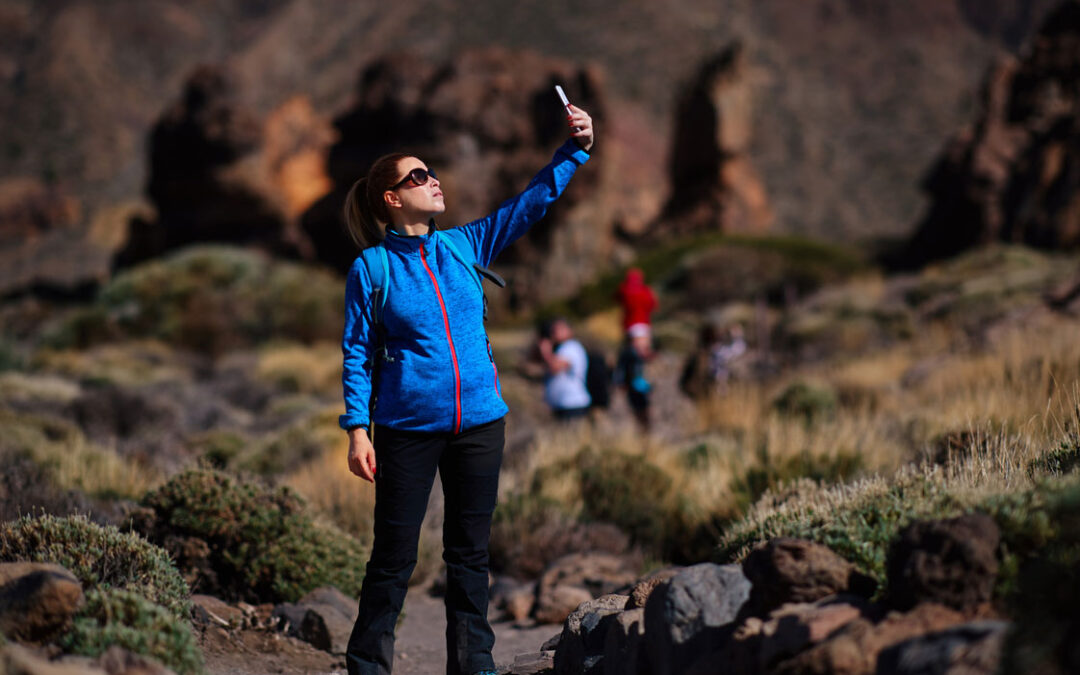








 Researchers from Arizona State University and Carnegie Mellon University have found that modern smartphone usage can negatively impact standing postural balance—and that impact varies by the type of ground condition.
They had 16 healthy young individuals perform 2 tasks on their smartphones while standing on 4 different types of ground surfaces: rigid, foam-based compliant, robot-stimulated, and robot-stimulated oscillatory. They measured center-of-pressure (CoP) in each foot via force plates and then calculated net CoP. Temporal, spatial, and control aspects of postural balance were analyzed by virtual time-to-contact (VTC, a relatively new approach for investigating postural balance control), CoP path length (PL) and sway area (SA), and switching rate (SR), respectively. Two-way repeated measures analysis of variance (ANOVA) tests were performed for each dependent variable to compare the mean differences between smartphone tasks and ground conditions and their interaction effect.
They found that during smartphone usage, VTC decreased significantly while CoP, PL, and SA increased significantly.
They concluded that their results identify the potential fall risks of smartphone usage related to standing balance. The said these findings open the door for assistive devices and mobile phone technologies to prevent falls and mitigate their negative outcomes.
Source: Noll WP, Phan V, Lee H. Modern smartphone usage can negatively impact postural balance while standing on dynamically challenging grounds. Gait Posture. 2024;107:233-239. doi: 10.1016/j.gaitpost.2023.10.010.