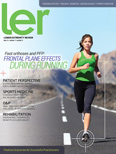
Download the Complete issue as a PDF (9mb)
Cover Story

Evidence supports the use of foot orthoses for PFP, but their mechanism of action is not well understood. New research suggests the effect of orthoses on timing of frontal plane moments may be an important variable.
By Thomas Gus Almonroeder, DPT, and Kristian O’Connor, PhD
Editor Message

Anterior cruciate ligament (ACL) injury experts are increasingly thinking outside the biomechanics box in an effort to better understand the factors that contribute to injury risk, which I think is admirable. But there’s one factor in particular that I wish was receiving more attention.
By Jordana Bieze Foster, Editor
Special Educational Series: Pediatrics
 From the editor: Don’t wait for them to outgrow it
One of the challenges of parenting is determining when the best course of action is to do nothing and wait for a child to outgrow a phase he or she is going through. And this may be a perfectly reasonable approach to a child’s invention of an imaginary friend or a teen’s obsession with Goth fashion.
Departments

My husband Phillip and I used to live in Manhattan Beach, CA, a charming and affluent coastal town just south of Los Angeles. We resided two blocks from the wide, sandy beach. We took advantage of The Strand—a pair of concrete pathways that run for about two miles in front of many multimillion-dollar homes.
By P.K. ...
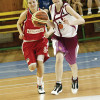
Anterior cruciate ligament injury experts met in Greensboro, NC, to examine the extent to which biomechanics and other less-familiar factors—including joint laxity, fatigue, neurocognitive function, and genetics—may contribute to noncontact injury risk.
By Jordana Bieze Foster
Clinicians know walking while performing a secondary task can be particularly difficult for elderly patients or those with neuromuscular impairments. But new research suggests the use of orthotic devices may improve dual-task gait, which could significantly improve quality of life.
By Cary Groner

Increasing numbers of studies are suggesting that exergaming can help improve strength, balance, and other variables in older adults, but clinicians also need to be aware that some aspects of exergaming can present challenges in this patient population.
By Ying-Yu Chao, RN, GNP-BC, PhD

Research suggests the use of rhythmic stimuli for gait rehabilitation can help improve gait and balance in patients with Parkinson disease, stroke, and other conditions, but some questions regarding its overall applicability and optimal delivery method remain.
By Greg Gargiulo
News
In the Moment: Sports Medicine
By P.K. Daniel
A new treatment algorithm for patients with patellofemoral pain syndrome (PFPS), designed by researchers at Nationwide Children’s Hospital in Columbus, OH, was associated with clinically significant improvement in pain and disability in a
recent pilot study.
By P.K. Daniel
Patients cleared to return to play six months after anterior cruciate ligament (ACL) reconstruction do not appear to have significantly better functional ability than those who are not cleared, according to research from Duke University Medical Center in Durham, NC.
By P.K. Daniel
Mild low back dysfunction and poor core muscle endurance are modifiable predictors of core and lower extremity sprains and strains in college football, according to a study from the University of Tennessee at Chattanooga that analyzed three seasons of data.
By P.K. Daniel
In the Moment: OA
By Larry Hand and Jordana Bieze Foster
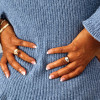
Practitioners treating a patient with ankle osteoarthritis (OA) may want to ask if the patient has a history of back pain, according to a recent study that found an association between lumbar disc degeneration and ankle OA in cadavers.
By Larry Hand
Adults aged between 20 and 55 years with hip or knee osteoarthritis (OA) report significantly higher levels of distress and disability and poorer health-related quality of life than the general population for that age range, according to research from the University of Melbourne in Australia.
By Jordana Bieze Foster
Incident radiographic knee OA is preceded by two to three years of prodromal symptoms, which may present an opportunity for intervention, according to research from Keele University in Staffordshire, UK.
By Jordana Bieze Foster
Market Mechanics
By Emily Delzell
Products
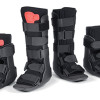
Newly introduced by DJO Global is the XcelTrax family of walking boots, designed for support and comfort following trauma or postoperative procedures involving the lower leg, ankle, or forefoot.
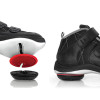
AposTherapy is a personalized, nonsurgical treatment program for knee and back pain, based on a biomechanical device worn on the foot that is individually calibrated by specially trained physical therapists.
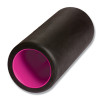
Pro-Tec Athletics offers Hollow Core Foam Rollers, available in contoured or smooth styles. The contoured high density foam roller features raised sections—long ridges and pronounced bumps—to stimulate blood flow and allow for a customized deep massage.
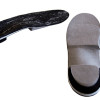
New from Earthwalk Orthotics is the Advantage orthosis, designed to address the additional impact a runner experiences at the first metatarsophalangeal joint. This encompasses an everted rearfoot and a pes planovalgus foot type.
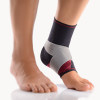
New from Bort-Swiss Orthopedic Supply is the Helix S Spiraldynamik Lower Ankle Support, designed to stabilize the ankle, activate the foot muscles through compression, and provide functional supportive restraint for classic foot deformities.
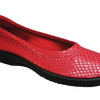
Arcopedico USA offers new styles and colors for women. Designed with travel in mind, the new L15 slip-on collection boasts a nonelastic upper for comfort, flexibility, and circulation support. The slide-on walking shoes are machine-washable.
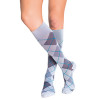
Dr. Comfort now offers fashionable compression legwear from Rejuva. Rejuva knee-high support socks are available in an assortment of styles and colors so that users can find a look that fits their style.
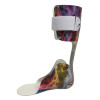
The new dynamic ankle foot orthosis from Motion Unlimited is fabricated completely out of prepreg material for an orthosis that is intimate-fitting, lightweight, high-functioning, and durable.