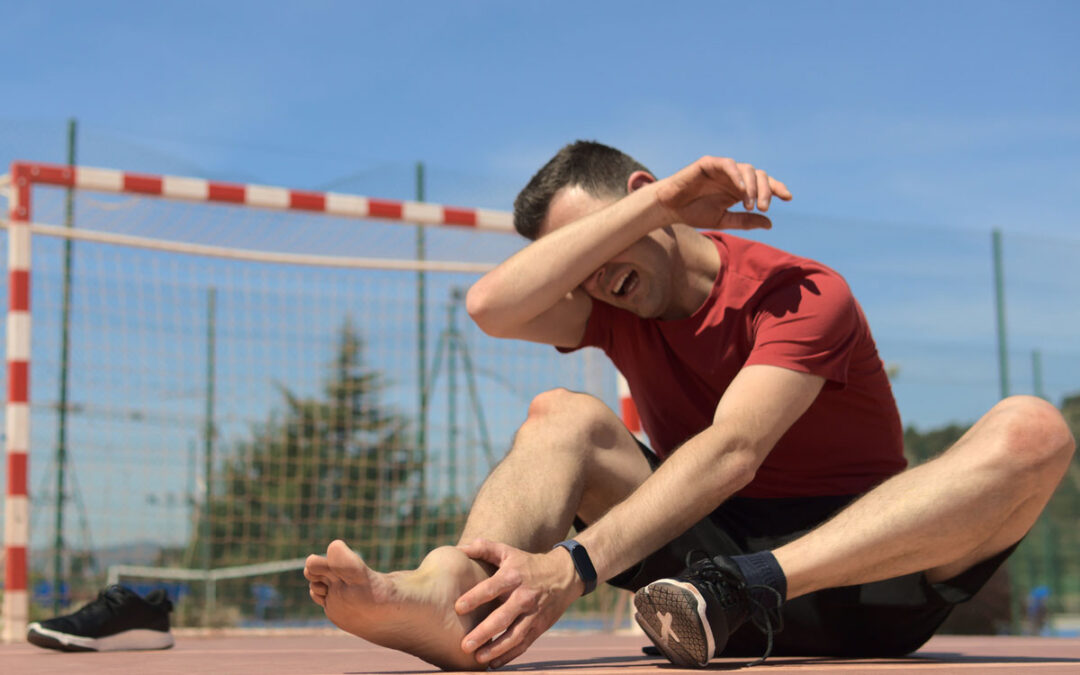








 Ankle sprains are the most common lower-leg musculoskeletal injuries, frequently occurring among athletes and other physical activity individuals. This study sought to compare the ankle range of motion and dynamic stability of healthy and injured athletes for their dominant and nondominant legs.
A cross-sectional study design was selected to investigate this study with 32 male soccer players with average age: 22.6 ± 3.3 years, weight: 69.6 ± 5.7 kg, height: 176.8 ± 5.32 cm,with a history of a lateral ankle sprain on the dominant leg for the past 2 years. Ankle range of motion was determined using dorsiflexion and plantar flexion by a goniometer. The dynamic stability was determined using the SWAY medical system. An independent t-test was used to study the differences between healthy and injured groups and between dominant and nondominant legs for dynamic stability, dorsiflexion, and plantar flexion range.
The authors found there were higher significant differences for dynamic stability in healthy participants than in injured participants for their dominant (P = 0.001) and nondominant (P = 0.001) legs. There were significant differences in dynamic stability in the dominant and nondominant leg (healthy [P = 0.033] and injured [P = 0.000] participants). The dominant leg shows higher dynamic stability in the healthy group, whereas nondominant leg shows higher dynamic stability in the injured group.
In their conclusion, the authors state that the study found significant differences between the injured and sound legs. The injured dominant and nondominant leg revealed a striking disparity in the ankle range of motion. Therefore, the study demonstrated that ankle sprain causes stiffness and tightness of the ankle joint, which limits ankle movements. Based on the findings, this study could be used as a return-to-play criterion for athletes after ankle sprain injury to determine whether they are ready to return to play or need to continue a specific rehabilitation training program.
Source: Alomar AI, Nuhmani S, Ahsan M, Muaidi QI. A comparison of the range of motion and dynamic stability of the ankle joint of athletes with an ankle sprain as compared to healthy controls: A cross-sectional study. Int J Crit Illness Injury Sci. 2023;13(3):p 138-144. DOI: 10.4103/ijciis.ijciis_2_23.