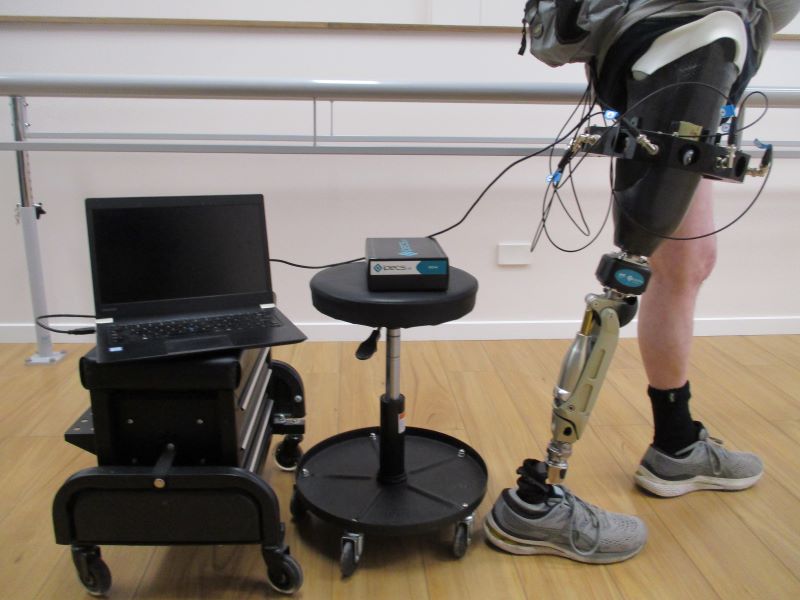








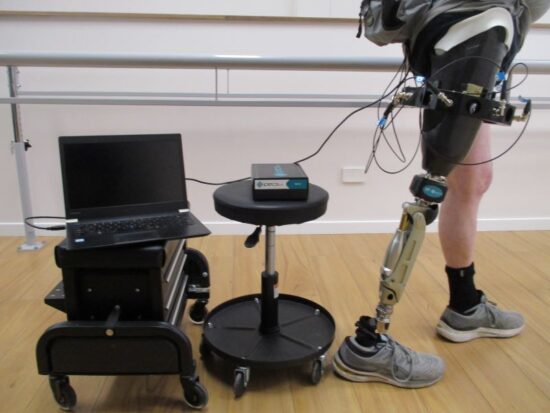
Griffith researchers have developed a diagnostic tool to streamline the custom fitting of bionic prosthetic legs, which usually involve an arduous process of trial and error.
Researchers with the Griffith Centre of Biomedical and Rehabilitation Engineering (GCORE) and Menzies Health Institute Queensland, Australia, have developed a groundbreaking diagnostic tool to streamline the fitting of bionic prosthetic legs.
The team generated a digital twin (virtual replica) of the patient’s residual limb to create a custom 3D-printed bionic limb. A direct skeletal attachment was surgically implanted into the patient’s living bone, which would enable the external attachment to the patient’s bionic prosthesis. The new artificial limb was then successfully fitted, and the specially designed diagnostic software was used to test and assess the fitting, measuring the movement of the patient’s bones, muscles, tendons, fat, and skin. The system aims to improve function and mobility, and thereby, the quality of life of prosthetic users while potentially reducing healthcare expenses associated with limb loss.
Griffith bionic limbs scientist Professor Laurent Frossard, PhD, is passionate about developing prosthetic solutions and said the new device was a cost-effective solution because it efficiently streamlines the patient’s care and fitting procedures. Traditionally, medical professionals have relied on a process of physical examinations, medical tests, and medical imaging to assess health issues affecting a patient’s residual limb.
“With the new technology, clinicians can help the patient understand how the load and pressure from the prosthesis stimulates the residuum during fitting of prosthesis and guide them to pain-free use during movements,” he said. The device provides a means to increase the ability of walking effortlessly and quality of life for individuals suffering from typical and regular issues that compromise the health of their residuum.”