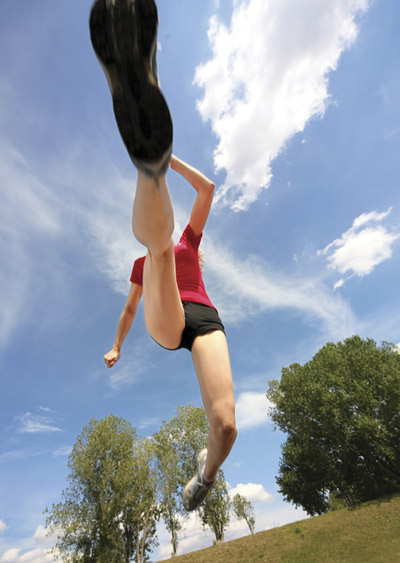
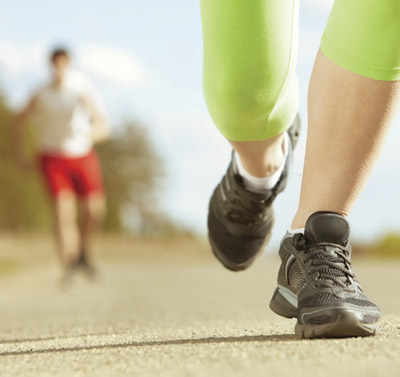
Cites lack of conclusive evidence – Joseph Hamill, PhD, is an avid runner who runs with a natural forefoot strike pattern. But Hamill, professor of kinesiology at the University of Massachusetts Amherst, says he wouldn’t recommend that running technique for most people, despite recent claims that the forefoot strike pattern associated with barefoot running is associated with a lower risk of injury than rearfoot-strike running.
Lower Extremity Review
Research links lower extremity symptoms of overuse to kinematics, training habits
Lower extremity kinematics and training habits affect risk of overuse injury in runners, according to research from the University of Tubingen in Germany.
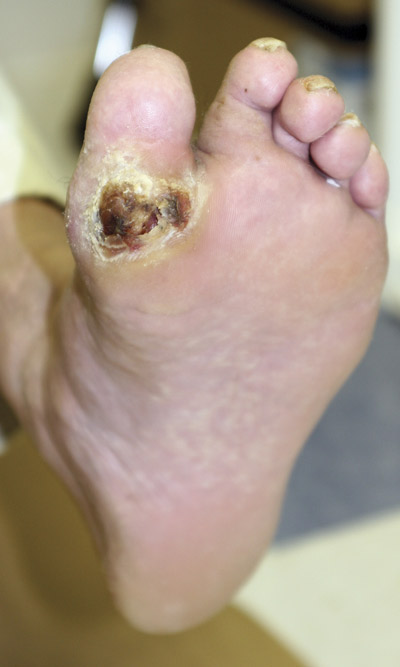
Footwear customized with pressure data fails to reduce diabetic reulceration rates
But ulcer severity may be decreased – In a Dutch randomized controlled trial of 171 high-risk diabetic patients, using plantar pressure measurements to confirm offloading below 200 kPa did not result in lower rates of ulcer recurrence over 18 months compared to standard custom shoes.
Sham debridement matches scalpel for relief of painful plantar calluses
Scalpel debridement of plantar calluses in elderly patients does not reduce plantar pressures and is no more effective than sham treatment for relieving pain, according to an Australian study.
Gait changes associated with footwear may explain foot complaints in children
Studies assess school shoes, flip-flops – Researchers from the University of Sydney in Australia have identified gait changes associated with pediatric footwear that may help explain foot complaints that have been reported in children.
Hand tremor as predictor of calf cramp in CMT patients perplexes researchers
Researchers from the University of Sydney remain perplexed by the emergence of hand tremor as a predictor of calf cramp in children with Charcot-Marie-Tooth disease but theorize that the relationship may involve fatigue.
Factors other than static curve influence rollover shape with rocker-bottom shoes
Data confirm kinetic, EMG changes – The static curve of a rocker-bottom shoe does not correlate strongly with its rollover shape during gait, suggesting that other factors such as material stiffness may also contribute, according to research from the University of Salford in the UK.
Benefits of variable-stiffness footwear may go beyond reducing knee OA risk
Variable-stiffness shoes may have performance benefits for athletes in addition to addressing kinetic risk factors for knee osteoarthritis, according to research from the National University of Singapore.
KID STUFF: Pediatric clinical news update
In this special section, LER updates you on the latest research and clinical news to help optimize management of your littlest lower extremity patients. Topics include pediatric flexible flatfoot, cerebral palsy, ACL injury, clubfoot, Charcot-Marie- Tooth disease, gait patterns in autism, and footwear for early walkers.
New papers revisit, rekindle flexible flatfoot controversy
“Other considerations” spark debate
In January 2010, when LER first covered the controversy, Australian podiatrist and researcher Angela Evans, PhD, had recently published a paper in the Journal of the American Podiatric Medical Association suggesting that children whose feet were flatter than expected, but asymptomatic, should be monitored rather than automatically treated with orthoses.
By Cary Groner
CP experts assess evidence for use of orthotic devices
Despite progress, research gaps remain
The January publication in NeuroRehabilitation of the recommendations from a consensus conference held in 2008 paints a less-than-perfect picture of the evidence underlying orthotic management of cerebral palsy (CP).
By Larry Hand
ACL injury prevention training focuses on younger athletes
Age-specific protocols are key to success
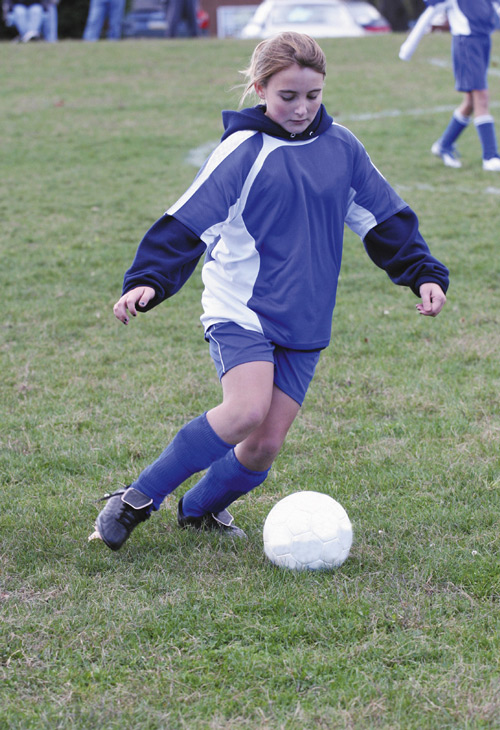
Training programs aimed at preventing anterior cruciate ligament injuries have been used for many years, but injury rates remain high. Injury prevention experts suggest such programs may be more effective if implemented before children reach the ages associated with highest injury risk and if the programs utilize age-specific protocols.
By Emily Delzell
Not all practitioners embrace soft soles for novice walkers
Barefoot-like isn’t necessarily best
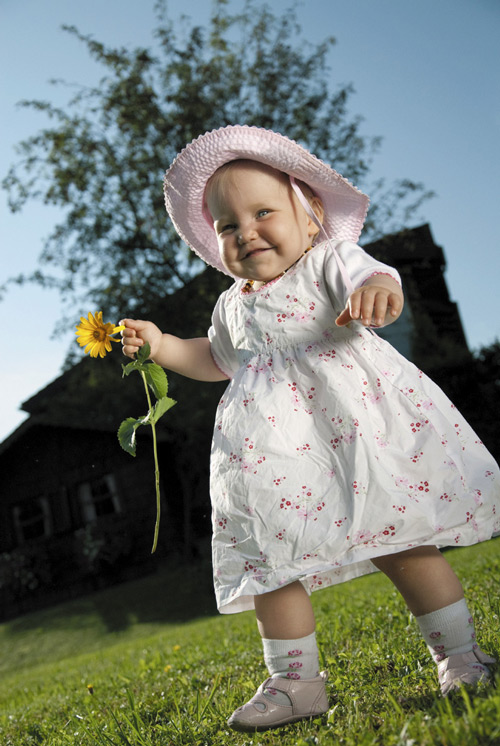
Barefoot is a biomechanics buzzword these days, but not all practitioners believe soft-soled shoes are best for very young children, even if such shoes do approximate the barefoot walking experience.
By Shalmali Pal
Charcot-Marie-Tooth patients respond to AFO management
But recognizing device limits is key
Muscle weakness and instability associated with Charcot-Marie-Tooth disease in children can be addressed with ankle foot orthoses, research suggests, but practitioners should be aware of the limitations of AFOs in this patient population as well as the ever-present challenge of compliance.
By Shalmali Pal
French study favors Ponseti over compatriots’ technique
Casting simplifies clubfoot management
In a comparative study published in the April/May issue of the Journal of Pediatric Orthopaedics, French researchers found that Ponseti casting compared favorably to French physiotherapy for initial treatment of idiopathic clubfoot.
By Emily Delzell
Join
Subscribe For Updates
Stay in the loop with the latest news and updates! Subscribe now to receive exclusive content, special offers, and important announcements straight to your inbox. Don’t miss out – join our community today for all the latest updates delivered directly to you.