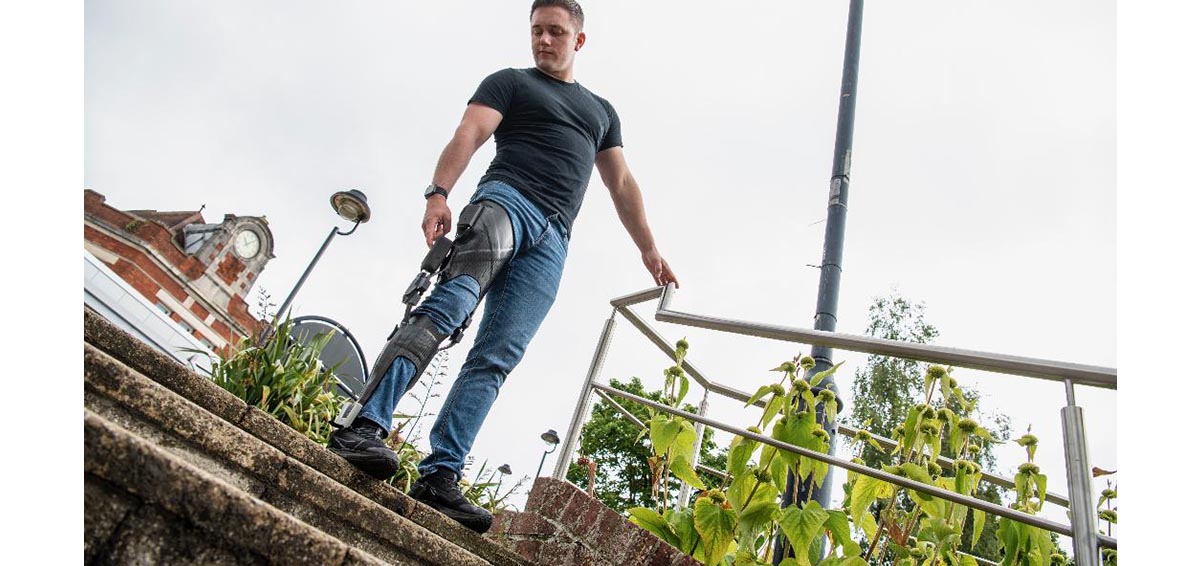
The mechanism by which ankle foot orthoses (AFOs) reduce drop foot in patients with Charcot-Marie-Tooth disease (CMT) involves proximal effects as well as the distal changes with which clinicians are more familiar, according to research from the UK.
Lower Extremity Review
Personalized data make a difference in additive manufacturing of insoles
Personalized insoles created using additive manufacturing technology are associated with improved biomechanics and comfort during running, according to research from Loughborough University in the UK.
Tibial bone health asymmetries persist in stroke survivors despite use of AFOs
Tibial bone mineral density in stroke survivors who use ankle foot orthoses (AFOs) remains significantly higher in the unaffected limb than the affected limb after more than a decade, according to research from the University of Oklahoma in Oklahoma City.
Off their toes: Lower-profile device aids toe-walkers
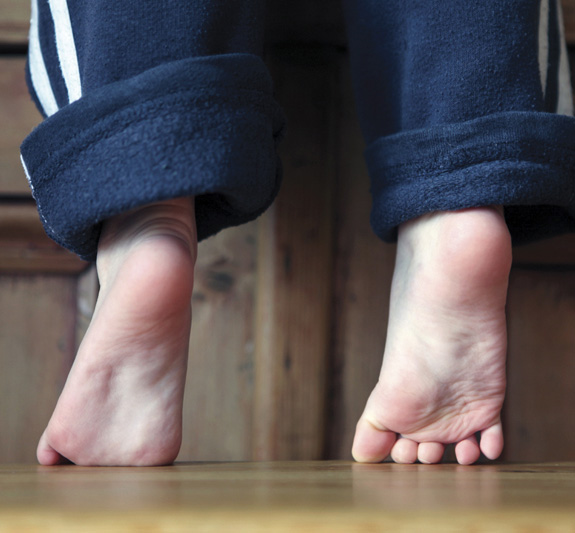
Idiopathic toe-walking is a bilateral toe-to-toe gait diagnosed when children continue this behavior, which is considered part of the normal spectrum of toddlers’ gait development, past age 2.
By Emily Delzell
Small study suggests no negative effect of rigid knee orthosis on performance
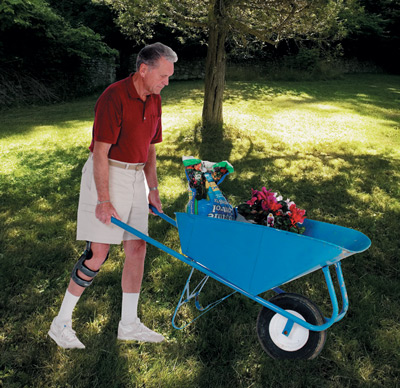
Findings presented at in March at the American Academy of Orthotists & Prosthetists annual meeting in Atlanta suggest rigid knee orthoses (KOs) likely have no negative impact on energy efficiency or performance.
AFOs may improve foot placement in patients with poststroke foot drop
Ankle foot orthoses (AFOs) designed to correct foot drop during swing and provide toe clearance may facilitate more accurate foot placement, according to preliminary data presented in March at the American Academy of Orthotists & Prosthetists annual meeting in Atlanta.
Ply trap: Prosthetic sock thickness varies
Recent research from the University of Washington in Seattle confirms what many practitioners have already learned from treating patients with lower limb amputations: Sock thickness varies among different sock products of the same ply and is also affected by biomechanical conditions.
By Emily Delzell
Dose response for OA brace wear includes hamstring strengthening
Research from Canadian investigators suggests brace wear may positively affect activity level without decreasing muscle strength in patients with medial compartment knee osteoarthritis (OA). Investigators from Dalhousie University in Nova Scotia followed 24 patients...
Study suggests rocker sole shoes help reduce circulatory calf pain
Researchers at the University of Salford in Manchester, UK, reported in March that a pilot study comparing two therapeutic shoe soles in eight individuals with claudication showed a reduction in calf pain with rocker sole wear. The investigators asked study...
AFO strap mapping
Study locates optimal position, angle – When researchers from the Georgia Institute of Technology were trying to determine the ideal position for a dorsal strap to prevent pistoning within an ankle foot orthosis, they approached the problem from multiple angles—literally. What they found was that the optimal angle for a dorsal strap position isn’t close to the angle most often used in practice.
By Jordana Bieze Foster
Prefabricated foot orthoses improve some balance measures but not all
A study from Northern Illinois University (NIU) mirrors the conflicting evidence regarding foot orthoses and balance, finding that prefabricated orthoses significantly improved some but not all postural control measures in healthy volunteers. Hamid Bateni, PhD, an...
Increases in gait speed with brace use vary in Charcot-Marie-Tooth patients
Patients with Charcot-Marie-Tooth (CMT) disease respond to the same custom ankle foot orthosis (AFO) in very different ways, according to research from the University of Nevada, Las Vegas presented in September at the annual AOPA meeting. Investigators assessed eight...
OA braces: Buying time
Long-term compliance data raise issues
A study published in the August issue of Orthopedics found that although unloader braces effectively relieve pain and improve function in patients with unicompartmental knee osteoarthritis, many patients stop wearing the devices after a few years and opt for total knee replacement.
By Emily Delzell
Orthotic clubfoot outcomes depend on complexity, not socioeconomics
The critical factor affecting compliance with the orthotic aspect of Ponseti clubfoot therapy—and its success—appears to be complexity of the therapy, not parents’ education and income levels, according to research published in the September issue of the Journal of...
Patients feel both electrical stimulation and AFOs have a place in stroke rehab
Although patients with drop foot show an overall preference for functional electrical stimulation over ankle foot orthoses, individuals familiar with both therapies recognize the benefits and drawbacks of the two modalities, according to research published in the...
Join
Subscribe For Updates
Stay in the loop with the latest news and updates! Subscribe now to receive exclusive content, special offers, and important announcements straight to your inbox. Don’t miss out – join our community today for all the latest updates delivered directly to you.