Brenau University’s three-year-old physical therapy (PT) doctoral degree program in May marked important milestones with the matriculation of 40 members of the new physical therapy cohort
Brenau DPT program marks milestone
read more

Lower Extremity Review
Brenau University’s three-year-old physical therapy (PT) doctoral degree program in May marked important milestones with the matriculation of 40 members of the new physical therapy cohort
Research from Elon University in North Carolina presented at the American College of Sports Medicine (ACSM) annual meeting held in late May and early June in Boulder, CO, validated Havertown, PA-based Protokinetics Zeno walkway for measuring spatiotemporal parameters of backward gait in older adults and breast cancer survivors.
Bronx, NY-based PhysiMax and the University of Maryland Department of Athletics in College Park announced in May that the department will follow a successful pilot program of the company’s movement assessment technology with a wider rollout.
Windsor, Canada-based TDL Systems’ OLT Footcare in May began a Kickstarter campaign for its 3D-printed custom sandals.
The Journal of Allied Health in June published a study of Buford, GA-based Evenup’s shoe lift, showing the device offered clinically meaningful improvements in lower extremity function and disability over usual care in individuals with temporary limb length inequality.
New Cumberland, PA-based Cure International, along with its partners in the Oxford, UK-based Global Clubfoot Initiative (GCI), on June 3—World Clubfoot Day—launched a strategy to end worldwide clubfoot disability by 2030.
Sanford Health, based in Sioux Falls, SD, and the University of North Dakota (UND) School of Medicine and Health Sciences (SMHS) in Grand Forks, ND, announced in May the organizations are collaborating on an Orthopedic Residency Program set to begin in summer 2018.

As slacklining’s popularity grows, researchers have begun to uncover physiological and neurological evidence for how and why the activity may be beneficial to people with balance, strength, and mobility issues.
By Brigid Elsken Galloway

Several studies presented in early June at the American College of Sports Medicine (ACSM) annual meeting in Denver add to the growing body of research suggesting some biomechanical deficits linger for a year after anterior cruciate ligament reconstruction (ACLR), even in athletes who have been cleared to return to sports.
Sensory feedback research from Colorado appears to challenge the popular belief that barefoot runners tend to adopt a forefoot-strike pattern to avoid the discomfort of landing on an unprotected heel.
A study of National Hockey League (NHL) injuries adds to the evidence suggesting concussion significantly increases the risk of lower body injury in athletes, and vice-versa.
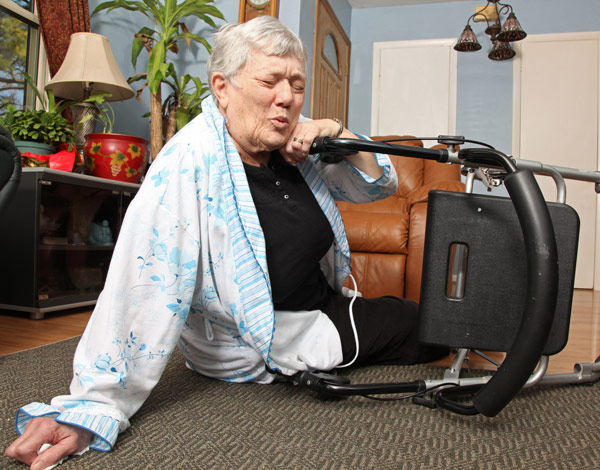
The multiple factors that contribute to the risk of falls in older adults present a complicated clinical puzzle, but researchers are making progress on putting some of those pieces together, as evidenced by several studies presented in late May and early June at the American College of Sports Medicine (ACSM) annual meeting in Denver.
Ankle proprioception peaks in young adulthood, and in elderly individuals—even the healthiest—declines to levels similar to those of adolescents, according to research presented in early June at the American College of Sports Medicine annual meeting in Denver.
Use of carbon-fiber ankle foot orthoses (AFOs) assists with propulsion in patients with peripheral arterial disease (PAD) without compromising calf muscle integrity, according to research from the University of Montana in Missoula.

A person’s testimony doesn’t always agree with objective evidence—that’s why some defense attorneys won’t allow their clients to take the stand during a trial, even in their own defense. Similarly, as most clinicians know, patient-reported outcomes aren’t always consistent with objective measures of function.
By Jordana Bieze Foster, Editor
Join
Stay in the loop with the latest news and updates! Subscribe now to receive exclusive content, special offers, and important announcements straight to your inbox. Don’t miss out – join our community today for all the latest updates delivered directly to you.