New Cumberland, PA-based Cure International, along with its partners in the Oxford, UK-based Global Clubfoot Initiative (GCI), on June 3—World Clubfoot Day—launched a strategy to end worldwide clubfoot disability by 2030.
Lower Extremity Review
Sanford, UND plan ortho residency program
Sanford Health, based in Sioux Falls, SD, and the University of North Dakota (UND) School of Medicine and Health Sciences (SMHS) in Grand Forks, ND, announced in May the organizations are collaborating on an Orthopedic Residency Program set to begin in summer 2018.
Slacklining: Trendy sport takes balance training to new heights
As slacklining’s popularity grows, researchers have begun to uncover physiological and neurological evidence for how and why the activity may be beneficial to people with balance, strength, and mobility issues.
By Brigid Elsken Galloway
ACLR aftershocks: Deficits linger after return to sports
Several studies presented in early June at the American College of Sports Medicine (ACSM) annual meeting in Denver add to the growing body of research suggesting some biomechanical deficits linger for a year after anterior cruciate ligament reconstruction (ACLR), even in athletes who have been cleared to return to sports.
Plantar sensation fails to explain shift in foot strike during barefoot running
Sensory feedback research from Colorado appears to challenge the popular belief that barefoot runners tend to adopt a forefoot-strike pattern to avoid the discomfort of landing on an unprotected heel.
NHL study adds to evidence linking concussion, lower body injury risks
A study of National Hockey League (NHL) injuries adds to the evidence suggesting concussion significantly increases the risk of lower body injury in athletes, and vice-versa.
Forward progress on falls: Studies explore risk factors, intervention
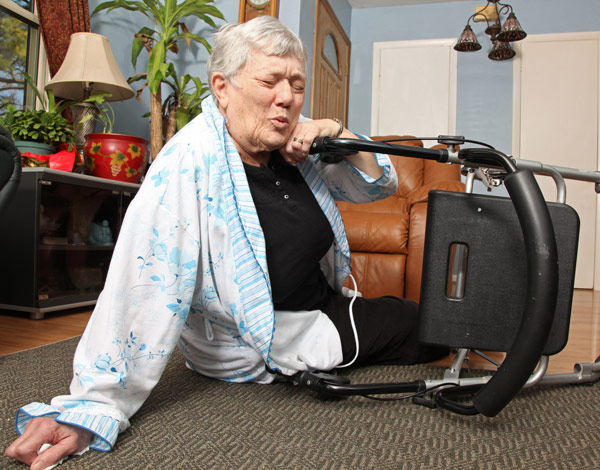
The multiple factors that contribute to the risk of falls in older adults present a complicated clinical puzzle, but researchers are making progress on putting some of those pieces together, as evidenced by several studies presented in late May and early June at the American College of Sports Medicine (ACSM) annual meeting in Denver.
Ankle proprioception in older adults diminishes to level of adolescents
Ankle proprioception peaks in young adulthood, and in elderly individuals—even the healthiest—declines to levels similar to those of adolescents, according to research presented in early June at the American College of Sports Medicine annual meeting in Denver.
Carbon-fiber AFOs help propel patients with PAD while preserving calf muscle
Use of carbon-fiber ankle foot orthoses (AFOs) assists with propulsion in patients with peripheral arterial disease (PAD) without compromising calf muscle integrity, according to research from the University of Montana in Missoula.
Out on a limb: Valuable testimony
A person’s testimony doesn’t always agree with objective evidence—that’s why some defense attorneys won’t allow their clients to take the stand during a trial, even in their own defense. Similarly, as most clinicians know, patient-reported outcomes aren’t always consistent with objective measures of function.
By Jordana Bieze Foster, Editor
ANKLE FOOT ORTHOSES: Efforts to optimize outcomes focus on stiffness, alignment
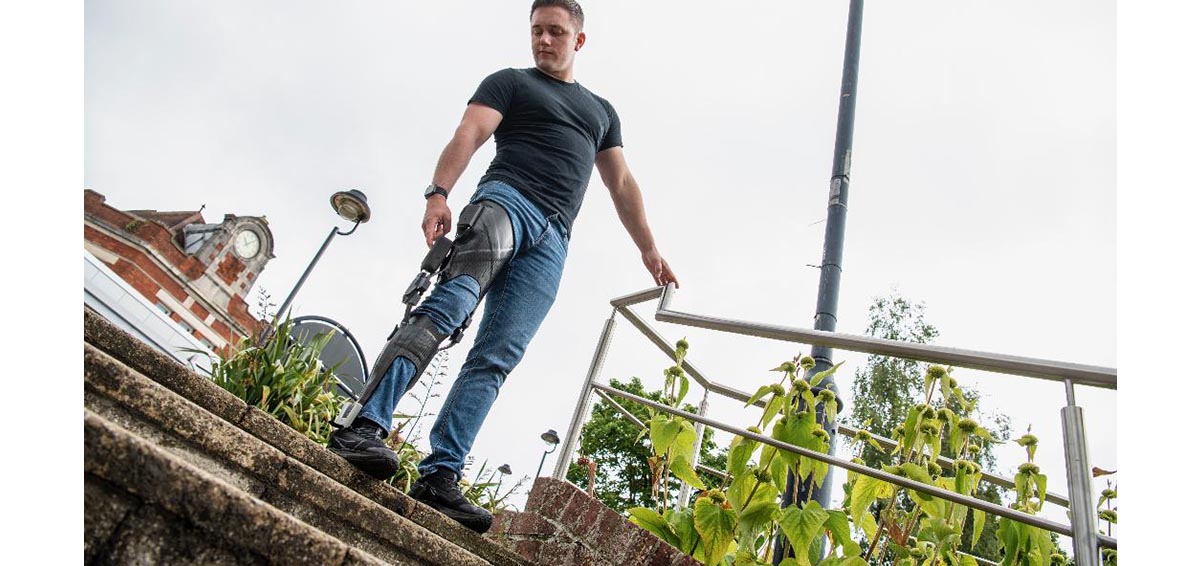
Given the heterogeneity of many patient populations for whom ankle foot orthoses (AFOs) are indicated, it’s not surprising that AFO experts are at the forefront of the current trend favoring customization of devices to meet individual patient needs. Research presented in May at the 2017 International Society of Prosthetics & Orthotics (ISPO) World Congress in Cape Town, South Africa, illustrated some of the many ways AFO stiffness and alignment can be optimized in the interest of patient-centric care.
NONMECHANICAL EFFECTS: Sleeves showcase softer side of knee pain management
Less may be more when it comes to knee bracing in some patients with knee osteoarthritis (OA) and patellofemoral pain (PFP), according to studies of soft knee braces presented in May at the 2017 ISPO World Congress in Cape Town, South Africa.
DIABETIC FOOTWEAR: Scientific approach to insole design helps reduce pressure
A scientific approach to insole design can help reduce plantar pressures associated with diabetic footwear, in turn reducing the risk of plantar ulcerations, according to research presented in May at the 2017 ISPO World Congress in Cape Town, South Africa.
OSTEOARTHRITIS: Studies explore mechanisms for distal knee OA therapies
Studies presented in May at the 2017 ISPO World Congress in Cape Town, South Africa, added to knee experts’ understanding of the mechanisms underlying distal interventions to reduce pain and joint loading in patients with medial knee osteoarthritis (OA).
INSOLE MODELING: Computer analysis facilitates foot orthosis development
Computer modeling is facilitating advances in insole development for patients with diabetic neuropathy and rheumatoid arthritis, according to data presented in May at the 2017 ISPO World Congress in Cape Town, South Africa.
Join
Subscribe For Updates
Stay in the loop with the latest news and updates! Subscribe now to receive exclusive content, special offers, and important announcements straight to your inbox. Don’t miss out – join our community today for all the latest updates delivered directly to you.