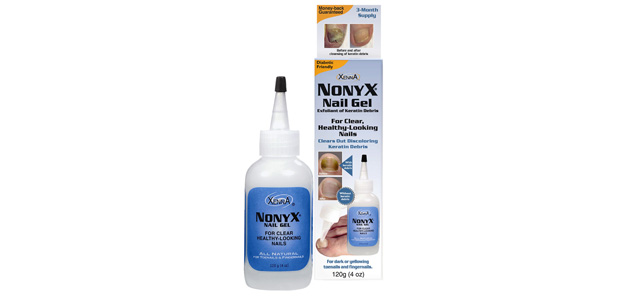
Xenna’s new NonyX nail gel is designed to clear discoloring keratin debris from under nails. When applied to dark or yellowed nails the clarifying nail gel breaks down and removes discolored build up. With regular use the gel helps keep nails clear. NonyX nail gel is...
Lower Extremity Review
KeepingPace Sport Sandal
KeepingPace, manufacturer of children’s orthopedic footwear, has launched a sport sandal designed to accommodate inserts and ankle foot orthoses. The KPSAND sandal has a rear heel Velcro strap for easy donning and doffing. An ultra lightweight EVA (ethyl vinyl...
Footwear Line From Langer
Langer’s therapeutic footwear line for 2011 is selected to provide the closest fit and maximum comfort. Langer’s catalog explains which shoes can accommodate foot orthotics and ankle foot orthoses, as well as those that meet Therapeutic Shoe Bill criteria. The 2011...
Fabrifoam Toe Fx Wrap
Fabrifoam introduces the Toe Fx wrap, a safe, conservative treatment for minor nondisplaced fractures or for postsurgical use. Its adjustable compression and support secures two or three toes, stabilizing fractures and immobilizing toes during healing. It can be...
Breg Square Toe Post-Op Shoe
The Post-Op Shoe with Square Toe is the latest entry in Breg’s line of shoes for foot protection. This post-op shoe features a square toe that acts as a bumper to maximize forefoot and toe protection. The shoe has a firm rocker sole, easy-to-use forefoot strapping...
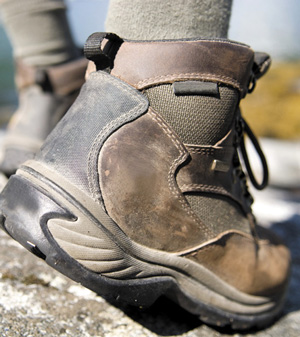
Pronation in runners: Implications for injury
Pronation is a necessary component of normal running biomechanics, facilitating shock absorption and stabilization. But abnormal levels of pronation, whether restricted or excessive, can alter gait patterns in ways that can potentially increase the risk of running-related injuries.
By Tracy A. Dierks, PhD
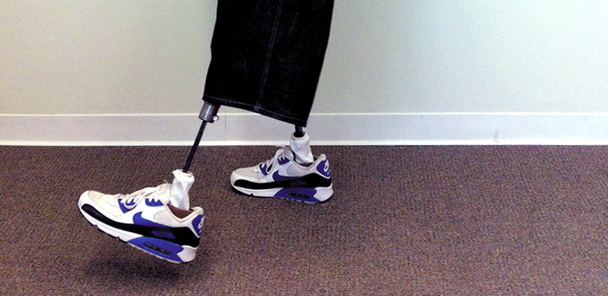
Mysteries of O&P devices and energy expenditure
Ankle foot orthoses and other O&P devices allow patients to walk faster, for longer periods of time, with a more biomechanically efficient gait. It seems logical that energy costs would decrease as a result. But that’s been surprisingly difficult for researchers to prove.
By Cary Groner
Global lessons improve amputation prevention
Interdisciplinary foot screening and limb salvage programs in this country and around the world have successfully reduced diabetic foot ulceration and amputation rates, and in doing so have inspired others to initiate similar prevention programs in their own countries.
By Emily Delzell
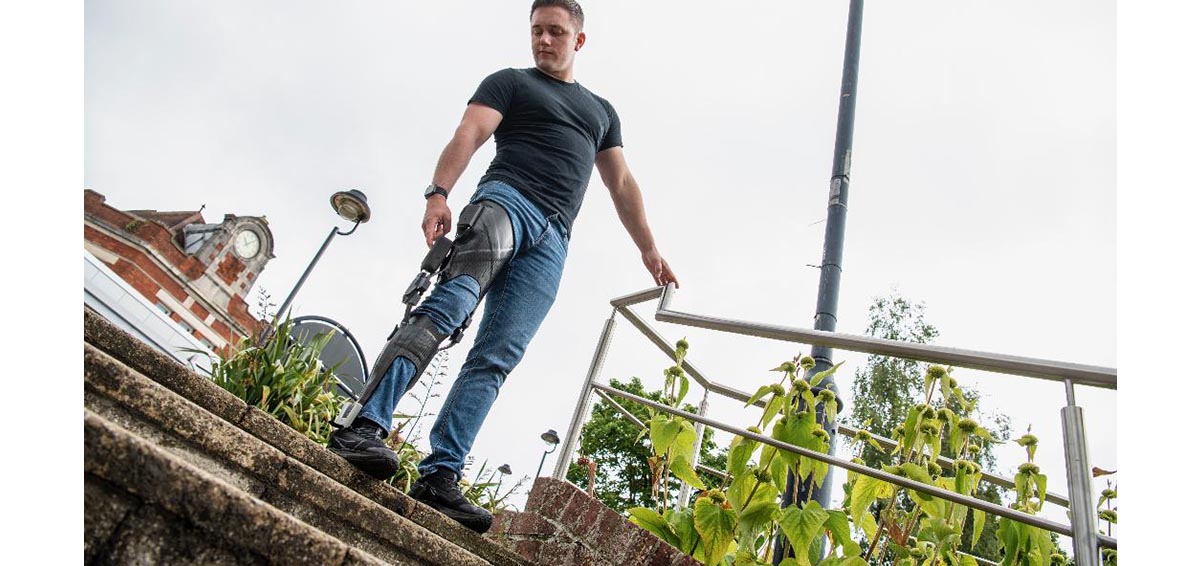
Functional knee bracing and athletic performance
Functional knee braces can’t be effective if athletes won’t wear them, and many athletes won’t wear them because they fear their athletic performance will be negatively affected. But early research suggests that athletes accommodate to knee brace wear almost immediately.
By Neetu Rishiraj, ATC, PhD, Jack E. Taunton, MSc, MD, Robert Lloyd-Smith, MD, William Regan, MD, and Navin Prasad, MSc, MD
Lack of laxity in CAI
Revised approach may be needed
Patients with chronic ankle instability demonstrate impaired plantar sensation but, surprisingly, do not exhibit increased ligament laxity, according to two studies presented in June at the annual meeting of the American College of Sports Medicine.
Data suggest lateral patellar mobility differentiates tendinopathy, PFPS
Lateral mobility of the patella is associated with patellar tendinopathy and may be a key determinant of whether an at-risk athlete develops PT as opposed to patellofemoral pain syndrome, according to research from the University of California, San Francisco presented...
Single-season neuromuscular training benefits disappear three months later
A single sports season of neuromuscular training is not long enough for athletes to have retained any adjustments to landing technique three months later, according to a study from the University of North Carolina at Chapel Hill presented in June at the ACSM meeting....
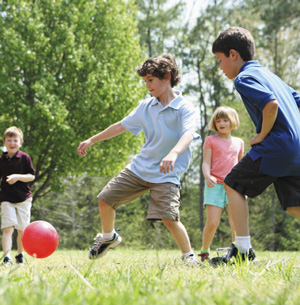
Angling for at-risk kids
Predicting flexible flatfoot symptoms
A recent paper on variations in midfoot alignment offers a tantalizing new piece of information in the treat-or-don’t-treat puzzle that has long been an issue in management of asymptomatic pediatric flexible flatfoot.
Older patients with toe deformities exhibit reduced soft tissue thickness
Thinning of the plantar soft tissue under the metatarsal heads in older adults is linked to both hallux valgus and lesser toe deformities, according to a case-controlled study published in the July 2011 issue of the Journal of Orthopedic Research. Researchers from the...
Findings link poor physical function outcome scores to painful or stiff feet
Treating aching or stiff feet may help patients prevent or cope with declines in physical function, report researchers from the University of North Carolina at Chapel Hill. In more than 2500 participants, investigators looked at three measures of physical function:...
Join
Subscribe For Updates
Stay in the loop with the latest news and updates! Subscribe now to receive exclusive content, special offers, and important announcements straight to your inbox. Don’t miss out – join our community today for all the latest updates delivered directly to you.