







 By Keith Loria
Advances in ankle-foot orthoses (AFOs) are revolutionizing how podiatrists, physical therapists and O&P clinicians support lower-limb mobility and rehabilitation. In this 3-part series, we explore the latest evidence, cutting-edge materials, and innovative design strategies that are shaping the future of AFOs. This short series offers a look at how today’s breakthroughs are improving function, comfort and compliancy in the lower extremity world.
In today’s outcomes-focused clinical environment, podiatrists are expected not only to diagnose gait deficits and mobility problems but also to deliver solutions that patients will use consistently.
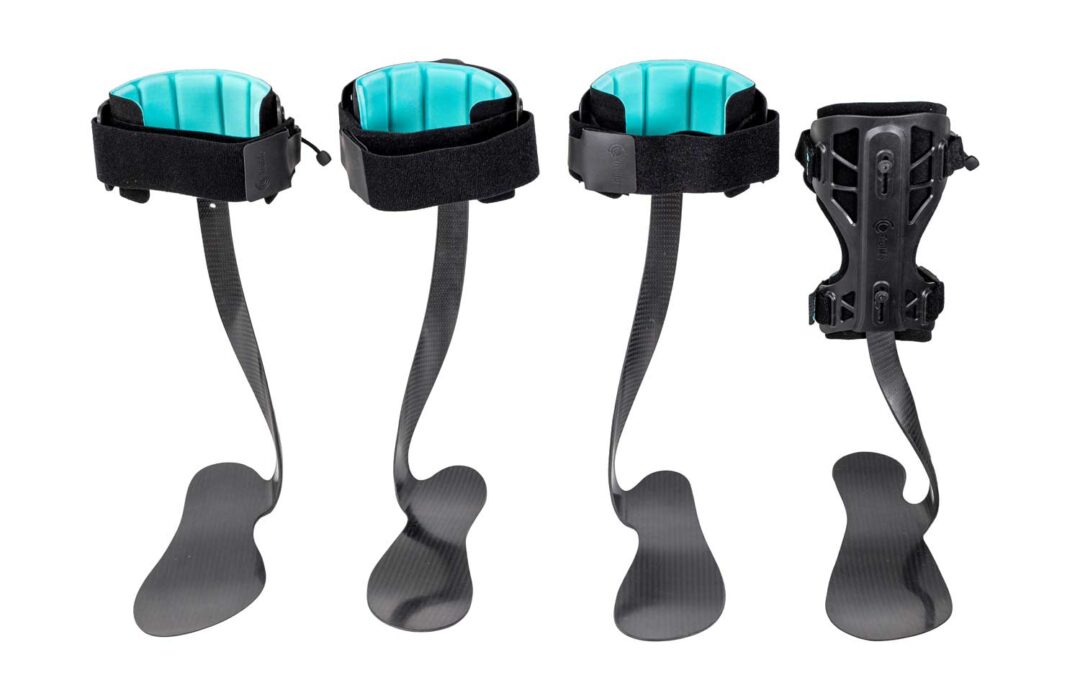
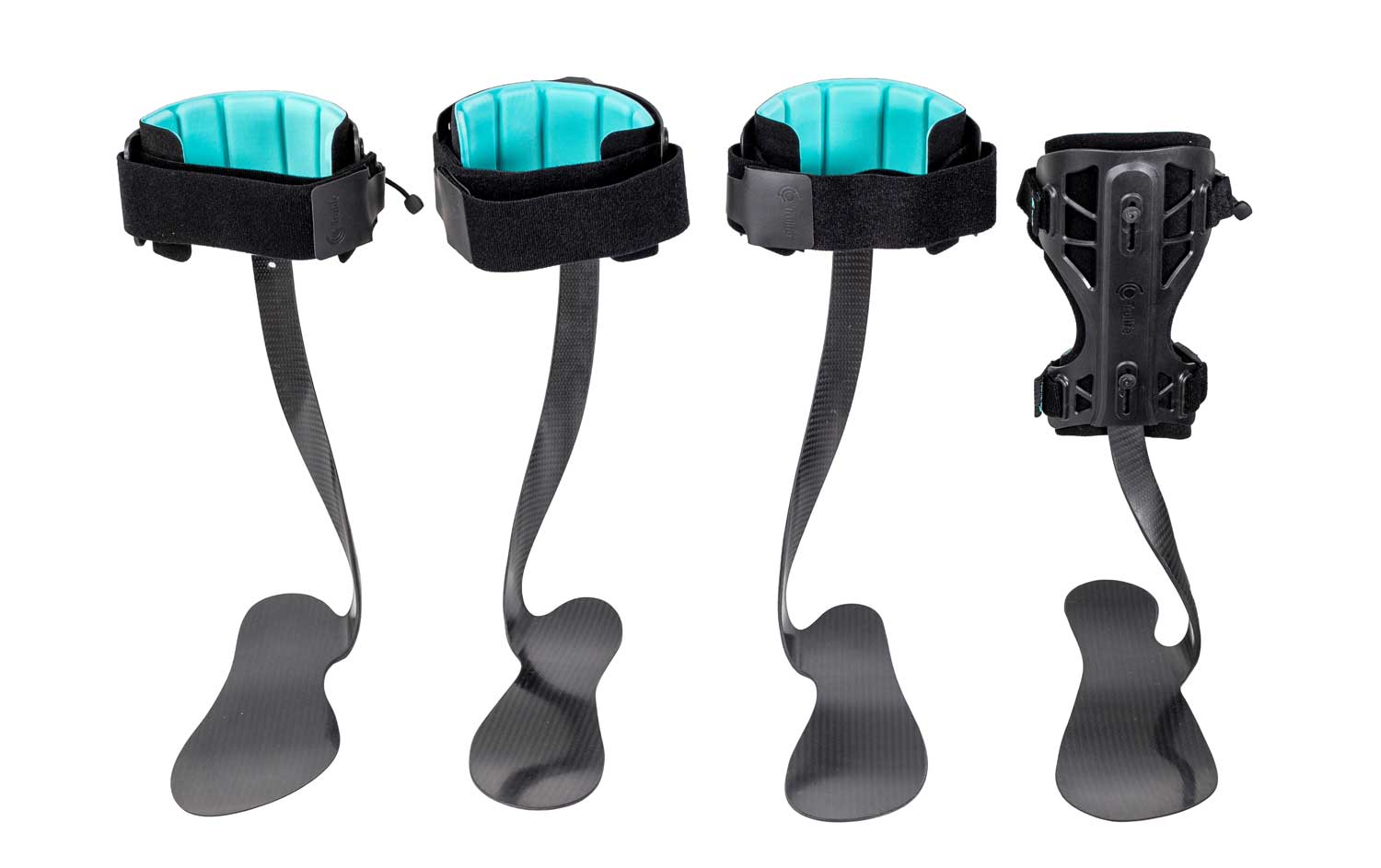
Compliance has long been a challenge in AFO management, particularly when older devices were bulky, rigid or difficult to fit into everyday footwear. Carbon composite AFOs are changing that landscape, offering comfort, function and durability that directly influence real-world use.
Why Comfort Shapes Long-Term Use
Achieving meaningful outcomes still requires careful attention to design, communication and patient expectations.
Compliance begins with understanding what motivates patients to wear or abandon a brace. Many patients are willing to modify their footwear or adjust to a slightly stiffer or more structured device if they perceive that the functional benefits outweigh the inconvenience.
Eric Weber, LCPO, FAAOP, co-chair of the American Academy of Orthotists & Prosthetists’ Lower Limb Orthotic Society, noted that patients often weigh what they are receiving against what it costs them. For instance, a thinner composite AFO may fit seamlessly into their shoes, while a custom device may require different footwear but deliver better energy return or stability.
“When the functional gain is clear–fewer falls, less fatigue, more endurance–patients tend to accept these adjustments,” he said. ““If a device gives them better energy return or lowers the metabolic cost of walking, patients are usually willing to make the changes needed to wear it.”
Michael Lacey, DPM, of Northern Illinois Foot & Ankle Specialists, shared that these advancements have significantly changed his approach to managing gait instability and neuromuscular weakness.
“Modern carbon designs offer a favorable strength-to-weight ratio, allowing for more dynamic response during gait compared to traditional polypropylene or leather AFOs,” he said. “Carbon composites store and return energy during stance and push-off, which can improve overall gait efficiency. This is especially beneficial for patients with conditions such as foot drop, peripheral neuropathy or post-stroke weakness where propulsion and balance are compromised.”
After all, the lighter weight from the carbon fiber material, reduces the metabolic cost of walking. 
“Many patients with neuromuscular weakness report less fatigue over longer distances when using carbon composite devices,” Lacey said. “Carbon AFOs can be designed with lower profiles that fit into a broader range of shoes, which improves function in daily life and expands options for patients who want a more discreet orthotic solution.”
Daily wearability is influenced strongly by material and design choices. Lightweight composites reduce the energy required to lift and clear the limb, improving endurance for individuals with neurologic or muscular weakness. Footplates designed around contemporary footwear dimensions make it easier for patients to integrate the device into their daily routines.
“For someone who’s been falling or can’t advance their tibia without collapsing, the right composite design can make the difference between confidence and fear every time they take a step,” Weber said.
Anatomically shaped padding and well-aligned strut placement reduce skin irritation and prevent the pressure points that often doom older designs. When the brace feels more like an assistive partner than an imposed restriction, compliance naturally improves.
Prefabricated vs Custom: Matching the Device to the Deficit
The differences between prefabricated and custom composite AFOs also influence wear patterns. Prefabricated devices often excel in managing swing-phase deficits such as foot drop. They are thin, unobtrusive, and typically fit easily into most shoes, which makes patients more willing to use them immediately.
Custom composite AFOs are essential when more complex gait deviations are present. Although they may require a modest shoe adjustment, the trade-off is a device tuned specifically for that patient’s motion pattern, strength profile, and structural needs. When custom devices provide noticeable improvements in stability or reduce pain associated with orthopedic anomalies, patients generally become more invested in wearing them.
Certain patient groups demonstrate especially strong long-term compliance with composite AFOs. Individuals recovering from stroke or managing chronic neuromuscular weakness often struggle with fatigue, making the lightweight properties of composites an important advantage.
Rebecca Stack, DPM, a podiatrist at Northwestern Medicine in Illinois, noted carbon fiber has allowed for higher energy return during gait, which improves function while reducing the muscle wasting often associated with more static braces.
“Patients with foot drop and post-operative patients have benefited the most,” she said. “These braces allow for a more natural gait while encouraging continued muscle use to prevent fatigue and weakness.”
These devices can be tuned to encourage smoother motion, helping patients maintain confidence and reduce fall risk. On the other end of the spectrum, patients with limb-salvage needs–such as those recovering from trauma or partial-foot amputation–often require significant stiffness to protect compromised structures. Carbon composites provide that level of control without producing the excessive weight associated with heavily reinforced plastics. When pain is reduced and mobility improves, adherence follows.
Durability is another factor tied closely to compliance and outcomes.
A brace that maintains its stiffness and structural properties over time gives patients predictability, which is especially important for those relying on the device for balance or endurance. Breakage or fatigue-related failures interrupt continuity of care and can lead to setbacks in strength and confidence. Modern composites, when properly engineered, withstand repeated loading far better than thermoplastics, particularly in long-term users who depend on their AFO daily.
Reimbursement Matters
Reimbursement has become an increasingly important factor in how podiatrists integrate AFOs into their care pathways. Carbon composite AFOs fall under established DME coding, but authorization often hinges on the clarity of documentation rather than the material itself. Insurers typically want to see a functional justification, such as instability, fall risk, difficulty with swing clearance or the inability to perform daily activities without assistive support rather than a device-driven request.
“Podiatrists who describe the patient’s mobility limitations in practical, observable terms tend to see smoother approvals,” Weber said. “Explaining that a patient cannot maintain endurance during ambulation, loses balance during mid-stance, or demonstrates unsafe foot slap provides a clear rationale for bracing and aligns with payer expectations.”
Orthotists report that when this documentation accompanies the referral, the authorization process becomes far more straightforward.
Another factor podiatrists should be aware of is that the cost of manufacturing advanced composite devices is generally higher than that of thermoplastic AFOs, due to the labor involved in lamination, layering and digital fabrication. Although these devices are reimbursed under existing code structures, the margins for providers vary depending on a patient’s insurance plan and regional payer policies. Because of this, it is essential to match the complexity of the device to the functional need described in the chart.
“The most important elements are clear documentation of gait deficits, functional limitations, diagnosis, activity level (K-level) and why a carbon composite AFO is medically necessary over a standard plastic AFO–especially for energy return, endurance and dynamic gait assistance,” said Tonyclinton Nweke, DPM, a podiatrist based in New York.
For podiatrists considering whether to offer AFOs within their own practice rather than outsourcing to an orthotist, understanding the reimbursement landscape is part of the equation. Many clinicians find that bracing can serve as a consistent DME service line when documentation is thorough and the device prescribed aligns with the patient’s clinical presentation. However, the most successful practices approach bracing as an extension of patient care, not merely a revenue channel, ensuring that the device selected is justified by the functional outcomes they are trying to achieve.
Clear Documentation Drives Better Outcomes
Documentation and reimbursement play a role in the success of composite AFOs. Podiatrists who clearly articulate functional goals in their notes help orthotists justify device selection and secure approvals.
Rather than prescribing a specific brace, describing the patient’s challenges–frequent falls, inability to maintain endurance, difficulty navigating uneven ground–makes it easier to match the device to the need. This clarity not only speeds authorization but also improves the orthotist’s ability to design a brace that the patient will actually use.
Background interviews suggest that many clinicians are becoming more attuned to the economic aspect of bracing, recognizing that a well-chosen AFO can be both clinically and financially meaningful when integrated thoughtfully into a podiatric practice.
Perhaps the most important factor linking compliance to outcomes is communication. When podiatrists and orthotists share a clear understanding of a patient’s functional limitations, lifestyle and goals, the resulting device is more likely to perform as intended.
“Shifting from device-specific prescriptions to clear functional goals–such as improved toe clearance, dynamic propulsion, reduced energy expenditure–has dramatically improved outcomes,” said Nweke. “Orthotists can customize stiffness, alignment and design more precisely, resulting in better fit, higher patient compliance, fewer revisions, and superior gait efficiency and satisfaction.”
A brace chosen solely because it appears lightweight or modern may not address the underlying biomechanical issues. Conversely, a device designed around specific functional objectives–improved tibial progression, reduced foot-slap, relief of midfoot pain–helps patients experience the improvement they’re seeking, reinforcing consistent use.
As carbon composite AFO technology continues to evolve, particularly through advances in digital modeling, additive manufacturing, and material optimization, podiatrists have new opportunities to improve mobility and independence for their patients. But technology alone does not guarantee outcomes. The best results occur when clinicians view the AFO not as a commodity but as a functional tool that must integrate seamlessly into a patient’s daily life.