







Functional outcomes in a foot and ankle surgical practice using the Trulife L-Pace Carbon Fiber Ankle-Foot Orthosis during return-to-activity progression
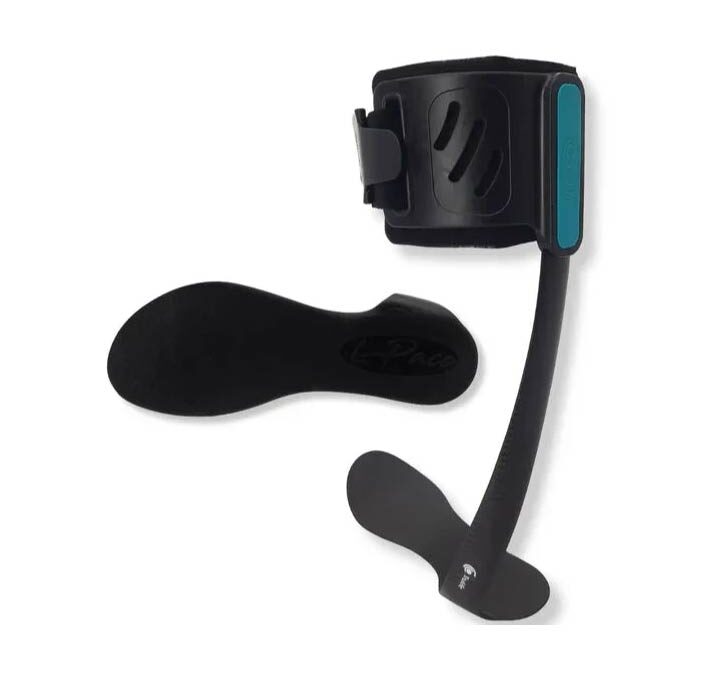
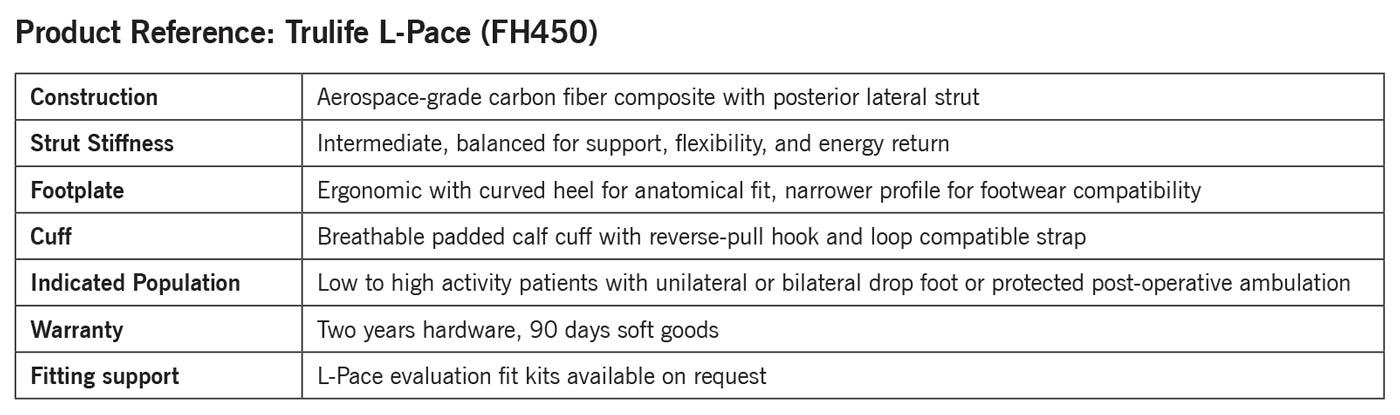
 This case study documents the transition from rigid post-operative immobilization to dynamic carbon fiber bracing in a 46-year-old patient following primary open Achilles tendon repair performed in a foot and ankle surgical practice. At 6 weeks post-op, the patient was transitioned out of a tall controlled-ankle-motion boot into the Trulife L-Pace, a posterior lateral strut carbon fiber AFO selected for its intermediate stiffness, energy return characteristics, and compatibility with standard footwear.
Over the course of the 14-week bracing period, the patient demonstrated measurable gains in push-off symmetry, calf endurance, and patient-reported function, while avoiding the common setbacks of premature tendon loading. The L-Pace functioned as a protective but progressive loading device, permitting controlled dorsiflexion resistance during stance phase while storing and returning energy at toe-off. The patient returned to recreational running at week 22, approximately 4 weeks ahead of the practice’s typical timeline for this repair pattern.
Clinical Background
Achilles tendon repair in the podiatric practice
Acute Achilles tendon ruptures are a high-volume presentation in foot and ankle surgical practices, with an incidence that has continued to rise alongside increased participation in recreational sport among patients in the third through fifth decades of life. Surgical repair, whether open, percutaneous, or mini-open, is frequently selected for active patients where restoration of pre-injury push-off strength and reduction of re-rupture risk are prioritized. Post-operative protocols have shifted meaningfully over the past decade toward early functional rehabilitation, with weight-bearing introduced within the first 2 weeks under the protection of a controlled-ankle-motion boot with progressive wedge reduction.
The clinical question that follows is where to go next. The standard pathway transitions patients from the boot into a standard shoe with a heel lift around the 6-week mark. For a sedentary patient this is often sufficient. For active patients returning to running, sports, or occupations that demand sustained standing and walking on variable terrain, the gap between boot and shoe is too wide. This is the gap the L-Pace is designed to fill.
Biomechanical rationale for a dynamic AFO
A carbon fiber posterior strut AFO addresses the transition phase through 2 mechanisms. First, the stiffness of the strut resists terminal dorsiflexion during stance, which reduces the peak eccentric load at the repair site during the portion of gait where the tendon is most vulnerable. Second, the elastic properties of the carbon composite store energy during mid-stance and release it at push-off, preserving a more symmetrical gait pattern and limiting the compensatory hip hike and circumduction that often develop during a prolonged heel-lift phase.
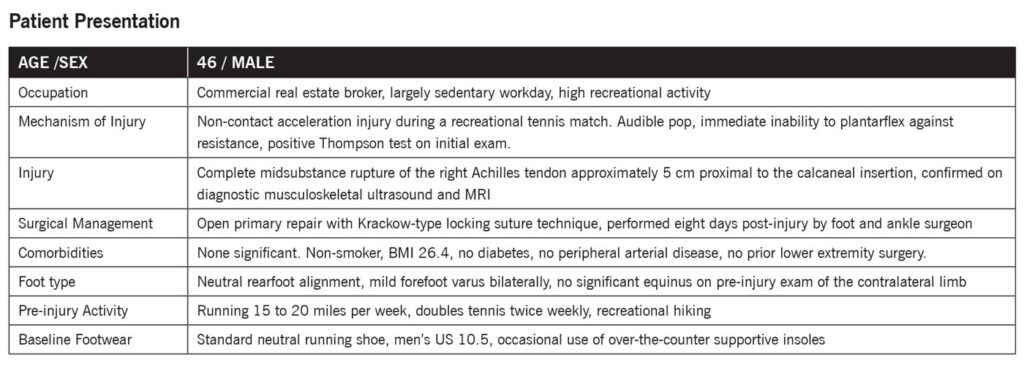
The Trulife L-Pace was selected for this case for 3 reasons that matter in the podiatric setting. The posterior lateral strut geometry preserves the medial column for patients with normal alignment and does not interfere with any concurrent custom foot orthotic if one is in use. The intermediate stiffness rating is appropriate for a patient progressing from partial toward unrestricted loading. The narrow ergonomic footplate is compatible with the athletic footwear the patient planned to use during return-to-run, which preserves continuity between bracing and post-bracing activity.
Patient Presentation
Initial Post-Operative Course
 The patient was placed in a plantar-flexed posterior splint in the operating room and transitioned at 2 weeks into a controlled-ankle-motion boot with a 30-degree heel wedge stack. Wedges were removed progressively over the next 4 weeks per the surgeon’s protocol, with weight-bearing advanced from toe-touch at week 2 to full weight-bearing in the boot by week 4. Suture removal occurred at the 2-week post-op visit, with wound healing progressing without complication.
At the 6-week follow-up, the repair was assessed as clinically sound. Thompson test was negative, diagnostic ultrasound demonstrated intact tendon continuity with appropriate vascularity at the repair site and no evidence of gap formation, and there was no pain with gentle resisted plantarflexion. At this visit, the decision was made to transition the patient out of the boot. The standard clinic pathway at this point would be a heel lift in a standard shoe paired with progressive physical therapy. For this patient, given his activity goals and the residual dorsiflexion strength deficit on the involved side, the L-Pace was introduced as a bridging device.
Orthotic Intervention
Device selection and fitting
The patient was fitted with a Trulife L-Pace FH450 posterior lateral strut carbon fibre AFO, sized according to the fitting guide based on shoe size and calf circumference. An evaluation fit kit was used chairside to confirm that the intermediate stiffness strut provided appropriate terminal dorsiflexion resistance without eliminating mid-stance progression. Padding was adjusted at the tibial crest and the posterior calf cuff to accommodate residual gastrocnemius atrophy without creating pistoning during swing phase.
 The patient was instructed on a break-in schedule of 2 hours on day 1, increasing by 1 hour daily until full-day wear was tolerated. He was fitted into his standard running shoe over the L-Pace footplate without significant adjustment. No additional heel lift was required, as the dynamic response of the carbon strut reduced end-range dorsiflexion strain at the repair site. The patient’s over-the-counter insole was retained underneath the L-Pace footplate.
Integration with physical therapy
The L-Pace was integrated into the patient’s physical therapy progression, coordinated with the referring PT’s post-Achilles protocol, as follows:
- Weeks 6 through 8: Full-day wear during all ambulation. PT focused on gait normalization, isolated plantarflexion isometrics, and proximal hip and core strengthening.
- Weeks 9 through 12: Continued wear during community ambulation and work. Bilateral heel raises introduced out of brace in clinic under supervision. Single-leg balance progressions on the involved side with the brace donned.
- Weeks 13 through 16: Brace worn during any ambulation exceeding 30 minutes or on uneven terrain. Progressive eccentric loading out of brace in structured PT sessions. Initiation of elliptical work unbraced.
- Weeks 17 through 20: Brace reserved for long walks, yard work, and any situation with unpredictable terrain. Return-to-jog protocol initiated on treadmill without brace, starting with a 1-1 walk-to-jog ratio.
- Week 20 onward: Unrestricted community ambulation without brace. L-Pace retained for long hikes during the first 12 months post-op.
Outcomes
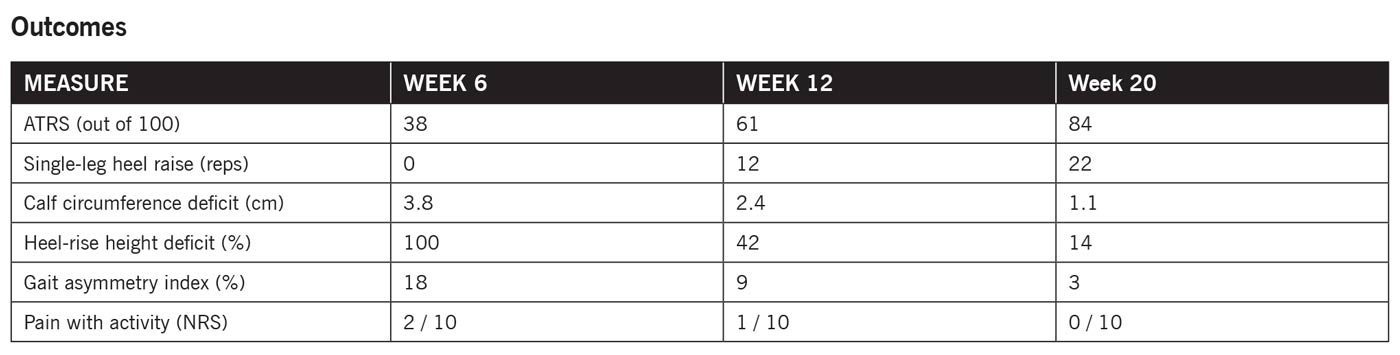
Functional outcomes were tracked at 4 time points: week 6 (initial brace fit), week 12 (midpoint), week 20 (end of primary bracing phase), and week 26 (4 weeks post-bracing, return to running). The Achilles Tendon Total Rupture Score (ATRS) was used as the primary patient-reported outcome measure, supported by objective measures of calf symmetry and gait mechanics.
The most clinically meaningful gains were in the week 6 to week 12 window, where the patient moved from zero single-leg heel raises to 12, and where gait asymmetry dropped by half. This aligns with the hypothesis that dynamic bracing during this period preserves the neuromuscular coupling between the posterior chain and the repaired tendon, rather than allowing the disuse pattern that a standard shoe or continued boot would permit.
Discussion
Three observations from this case are worth highlighting for DPMs and foot and ankle surgeons considering a dynamic AFO in the post-Achilles-repair population.
Protected loading is not the same as immobilization
The L-Pace does not prevent ankle motion. It resists terminal dorsiflexion through stiffness, and it returns energy at toe-off. This is a fundamentally different mechanical environment than a boot. For a repaired Achilles, that distinction matters. The tendon is loaded, but it is loaded in a range and at a magnitude that the carbon strut modulates. The patient is doing the work of walking, not being carried through the stance phase by a rigid shell.
Compliance is higher than with a boot
Patient-reported wear time with the L-Pace exceeded 10 hours per day for the majority of the bracing period. By contrast, boot compliance in the same practice in the weeks immediately prior to transition typically runs closer to 6 to 8 hours, with patients frequently removing the boot at work or at home. The low profile of the L-Pace, compatibility with standard footwear, and the absence of the leg-length discrepancy created by a tall boot all contribute to this.
The transition to unbraced ambulation is smoother
Patients coming out of a boot often describe a period of apprehension when walking without it. The ankle feels vulnerable. The L-Pace phase produced a more graded experience. The patient had been walking in normal shoes with the brace for weeks. Removing it was a reduction in support, not an elimination of it. Clinically, this manifested as faster restoration of confident gait mechanics in the first unbraced sessions.
Clinical Takeaways
- The Trulife L-Pace is a viable bridge device between controlled-ankle-motion boot and unsupported footwear in the post-operative Achilles repair protocol within a podiatric surgical practice.
- Intermediate stiffness of the posterior lateral strut is appropriate for patients progressing from partial to full loading.
- Energy return from the carbon composite preserves push-off mechanics and reduces compensatory gait deviations during the mid-recovery window.
- Fit into standard athletic footwear supports higher compliance and easier integration with work, activity, and any existing custom or over-the-counter foot orthotic.
- In this case, return to recreational running was achieved at week 22, approximately 4 weeks earlier than the practice’s prior benchmark for comparable repairs managed without a dynamic AFO phase.
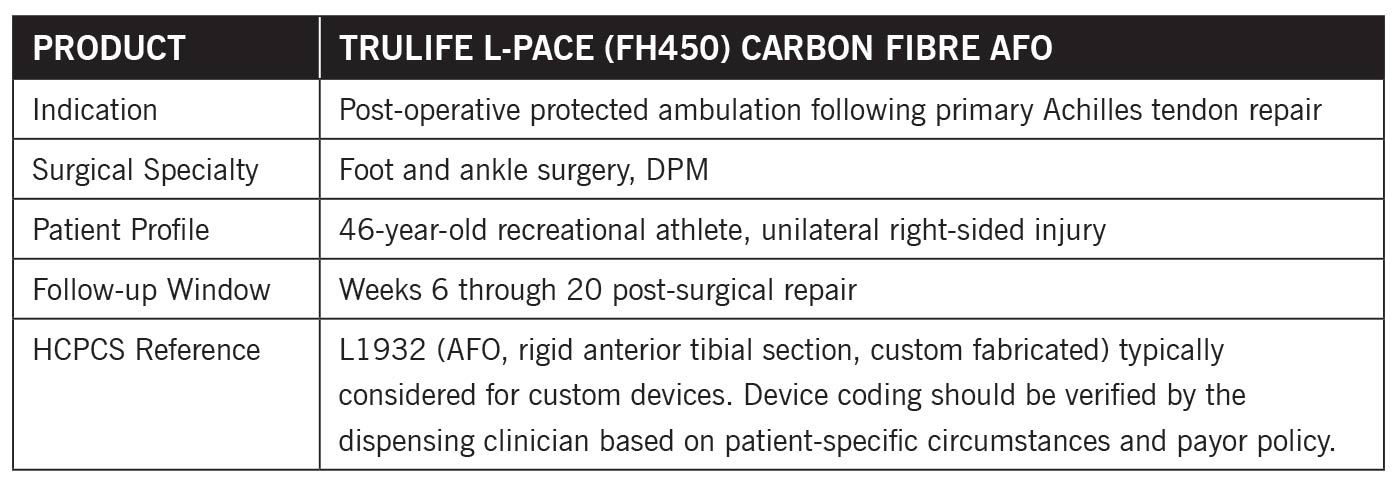
Product Reference: Trulife L-Pace (FH450
Disclaimers and Methodology Notes
This case study is presented for clinical education purposes and is directed at a podiatric and foot and ankle surgical audience. Individual patient outcomes vary based on injury pattern, surgical technique, rehabilitation adherence, and pre-injury condition. The outcome measures reported reflect a single case and should not be interpreted as representative of population-level performance. Clinicians should select orthotic devices based on individual patient presentation and in accordance with the manufacturer’s instructions for use. The Trulife Pace Line products should be specified by a qualified clinician. HCPCS coding and payor coverage determinations are the responsibility of the dispensing clinician based on patient-specific circumstances and applicable payor policy.
Patient demographic details have been modified to protect identity. Clinical findings and outcome measurements reflect a de-identified representative case from the author’s caseload.