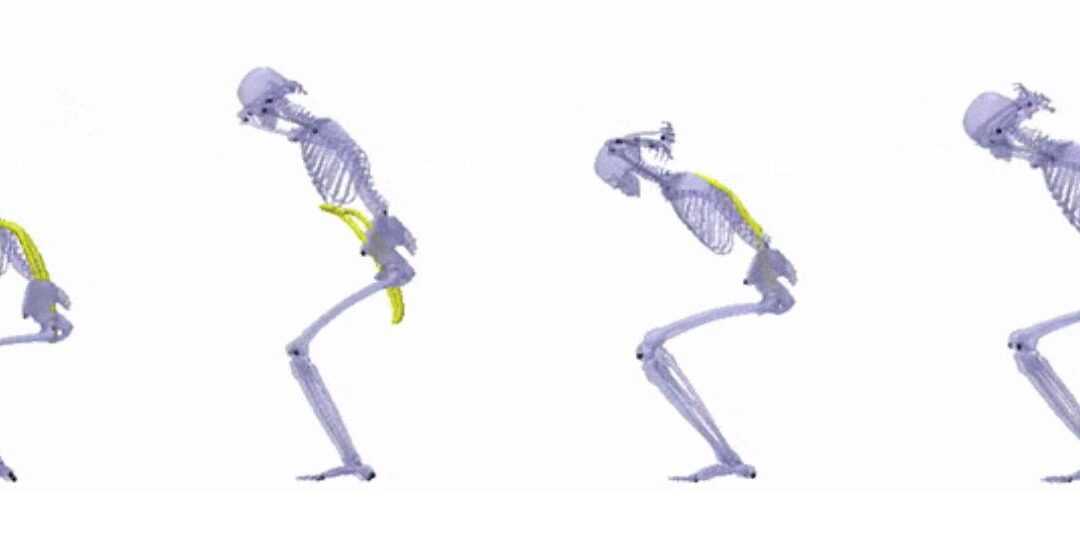








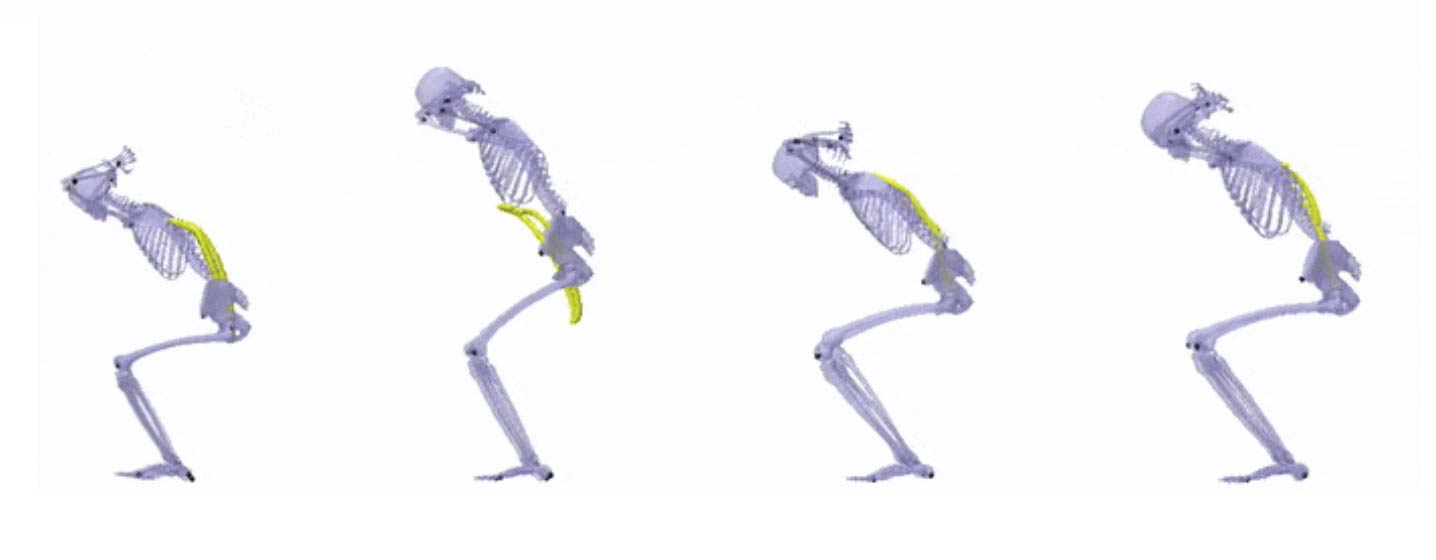
The model can create simulations with different levels of muscle activation. Image courtesy of UCSD.
Researchers at the University of California San Diego (UCSD) have created a model driven by generative artificial intelligence (AI) that will help prevent injuries in athletes and also aid in rehabilitation after an injury. The model could also help athletes train better.
The model, called BIGE (for Biomechanics-informed GenAI for Exercise Science), was trained with athlete movements together with information about the biomechanical constraints on the human body, such as how much force a muscle can develop. The model can generate videos of motions that athletes can mimic to avoid injury when they train and can generate motions that athletes can execute to keep exercising when they are injured. It can also be used to generate the best motions athletes can execute during exercise to avoid injury and improve performance, or the best motions for athletes that need rehabilitation after an injury.
To the best of the researchers’ knowledge, BIGE is the only model that brings together generative AI and realistic biomechanics. Most generative AI models tasked with generating movements such as squats produce results that are not consistent with the anatomical and mechanical constraints that limit real human movements. Meanwhile, methods that do not rely on generative AI to generate these movements require a prohibitive amount of computation.
To train the model, researchers used data from motion-capture videos of people performing squats. They then translated the motions onto 3D skeletal models and used the computed forces to generate more physically realistic motions.
Next steps include using the model for movements beyond squats and personalizing the models for specific individuals. For example, the model could be used to determine fall risks in the elderly.