
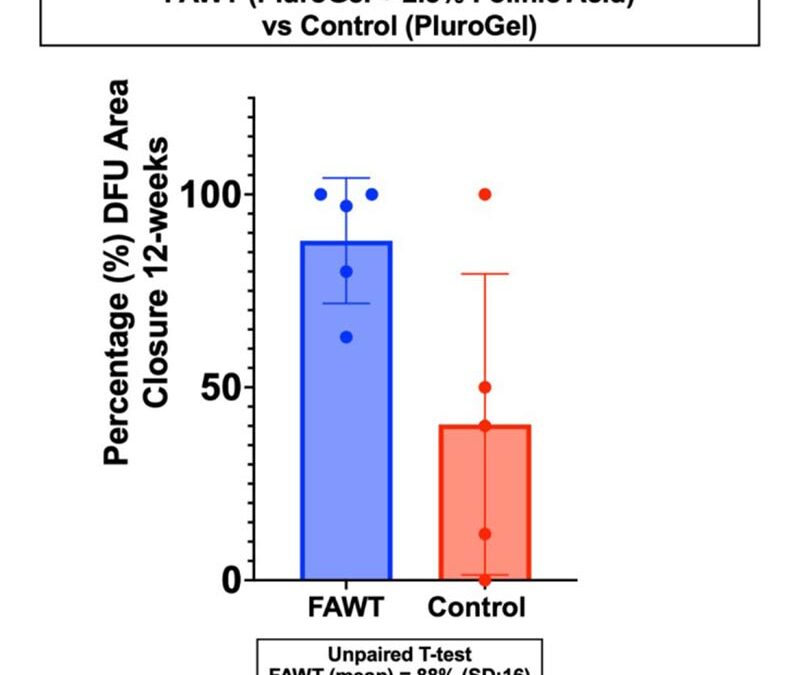








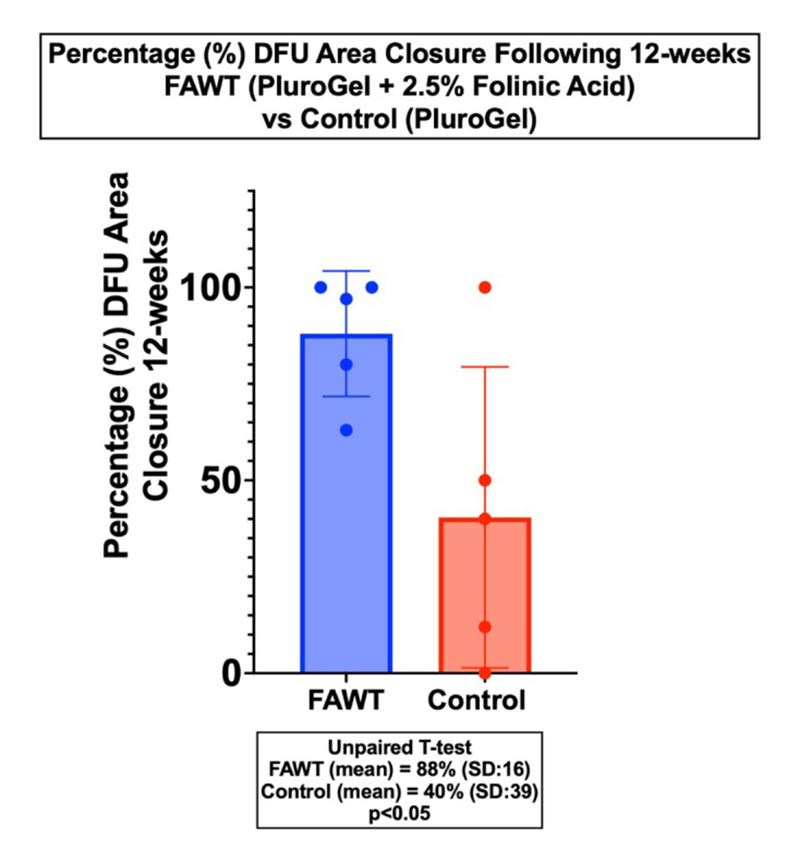
 A novel folinic acid (FA) wound treatment (FAWT) significantly (P < 0.05) improved healing of chronic diabetic foot ulcers (DFUs). In a double-blind randomized controlled trial, 10 subjects with chronic DFUs were treated daily with either control therapy (n = 5; PluroGel) or FAWT (n = 5; PluroGel containing 2.5% FA). After 12 weeks, the FAWT group demonstrated significantly greater DFU area reduction compared with controls (88% [SD 16] vs 40% [SD 39], respectively).
Mechanistically, FAWT was associated with decreased activation of NFκB/p65 and p38 MAPK, suggesting reduced pro-inflammatory signaling. Genomic DNA methylation analysis of keratinocytes revealed significantly decreased FAWT-induced methylation at regulatory sites of multiple microRNAs associated with inflammatory regulation. Reduced methylation suggests increased expression of these microRNAs, which may inhibit translation of proteins involved in MAPK signaling pathways. These pathways mediate signaling from pro-inflammatory receptors such as RAGE, TLRs, and IL-1R and regulate downstream gene expression.
Inhibition of MAPK signaling following FAWT may therefore reduce NFκB/p65 and p38-mediated pro-inflammatory gene expression, consistent with the observed decreases in HMGB1 and IL-1β protein levels. Collectively, these findings suggest that FAWT promotes coordinated expression of anti-inflammatory microRNAs, suppresses MAPK signaling, and facilitates the transition of DFUs from a chronic inflammatory state to wound repair, enabling keratinocyte proliferation, migration, and re-epithelialization.
Source: Hoke GD, Stone A, Bauer MA, Carter WC, Newsom MR, Boykin JV Jr. Folinic acid improves healing of diabetic foot ulcers. wound repair regen. 2026;34(2):e70141. doi: 10.1111/wrr.70141.