







By Keith Loria
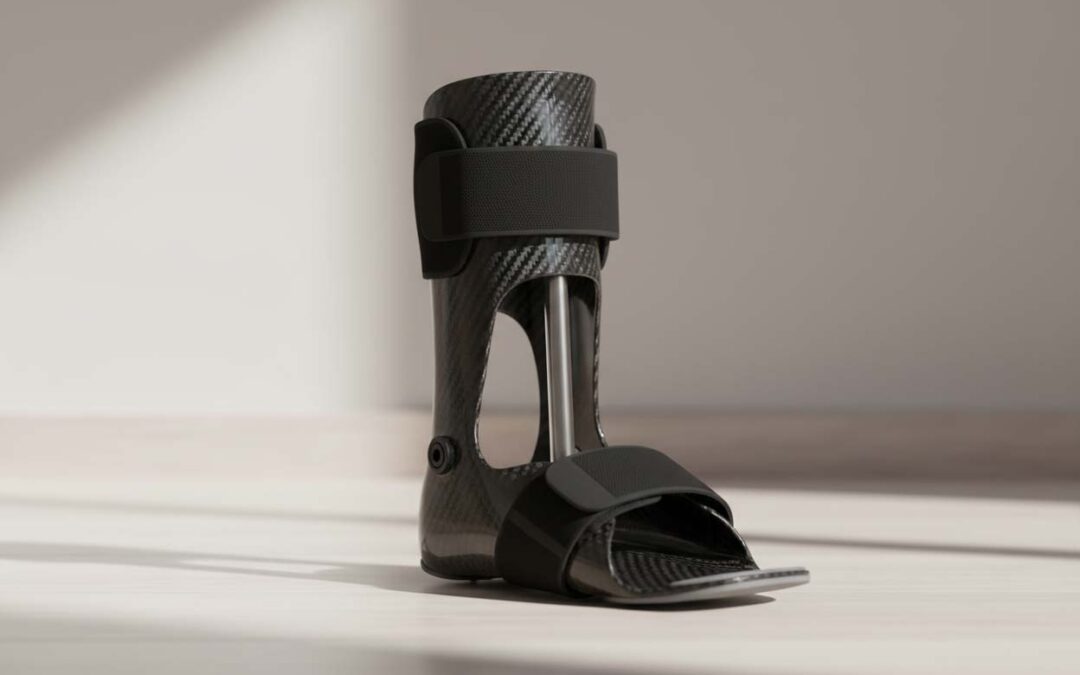
 Advances in ankle-foot orthoses (AFOs) are revolutionizing how podiatrists, physical therapists and O&P clinicians support lower-limb mobility and rehabilitation. In this 3-part series, we explore the latest evidence, cutting-edge materials, and innovative design strategies that are shaping the future of AFOs. This short series offers a look at how today’s breakthroughs are improving function, comfort and compliancy in the lower extremity world. Check back each month for the next installment.
Identifying the Right Patients for Composite Bracing
While carbon composite AFOs can be appropriate for a wide range of podiatric patients, certain groups benefit particularly strongly. Neuromuscular conditions, including stroke, post-polio syndrome, peripheral neuropathy and some forms of muscular weakness, often respond well because these patients need support without added bulk. Eric Weber, LCPO, FAAOP, who co-chairs the American Academy of Orthotists & Prosthetists’ Lower Limb Orthotic Society explains that for smaller steps or cautious gait patterns, composites can be tuned to encourage more natural movement by adding the exact amount of flexibility required.
Suzanne Fuchs, DPM, a podiatrist at Luxe Podiatry in Jupiter, Florida, noted advances in carbon composite AFO design have enhanced patient management by providing lightweight, more durable options that improve gait stability and reduce fatigue.
“These AFOs contribute to better alignment and biomechanics, enabling greater mobility in patients with gait instability or neuromuscular weakness,” she said. “Carbon composite AFOs benefit patients with post-stroke foot drop, diabetic partial-foot amputations, and chronic ankle instability. They address specific biomechanical challenges in these populations, enhancing ambulation and quality of life.”
From her experience, patients using carbon composite AFOs generally show higher compliance and improved long-term outcomes compared to traditional AFOs.
“The comfort, reduced weight, and enhanced functionality of carbon composite designs encourage more consistent use,” she said. “The ability to fine-tune stiffness or flexibility in various regions of a carbon composite AFO allows for customized solutions based on an individual’s needs. This fine-tuning can help optimize support and movement patterns, making it a critical consideration in the brace selection and prescription process.”
Orthopedic and limb-salvage patients form another key population. Individuals recovering from trauma, fractures, partial-foot amputations or severe arthritic pain may require highly controlled stiffness to reduce strain on compromised joints. Composites provide that stability more effectively than plastics, particularly when the goal is to bypass painful segments or limit motion in a specific region. Many of these techniques originated in military medicine, where protecting fragile or reconstructed limbs demanded materials capable of absorbing significant loads without excessive flex.
Podiatrists managing diabetic patients with forefoot amputations or chronic ulcer risk can also benefit from the energy-return properties of composite AFOs. These devices support rollover, protect the residual foot, and assist with propulsion in ways traditional designs cannot achieve.
Improving Collaboration Between Podiatry and O&P
Choosing the right carbon composite AFO requires strong communication between podiatrists and orthotists. Weber noted that podiatrists should describe the functional problem they want solved, rather than prescribing a specific device. For example, a referral that outlines balance difficulties, fall frequency, gait endurance, or pain thresholds gives the orthotist the information needed to design or select the appropriate stiffness and structure.
Clear documentation is useful not only for clinical precision but also for streamlining authorization. Podiatrists can help ensure smoother approvals by tying medical necessity to functional goals rather than device type. A description of a patient who cannot navigate uneven surfaces, loses balance during mid-stance, or cannot maintain endurance during activities of daily living is far more compelling than a simple request for a specific AFO model.
Ultimately, the rise of carbon composite AFOs represents a meaningful step forward in podiatric bracing. As materials engineering continues to evolve and digital design tools become more precise, clinicians have more opportunities to align bracing with biomechanical goals. For podiatrists, understanding these advances and working closely with orthotists to apply them offers an expanded toolkit for improving mobility, safety and long-term quality of life.