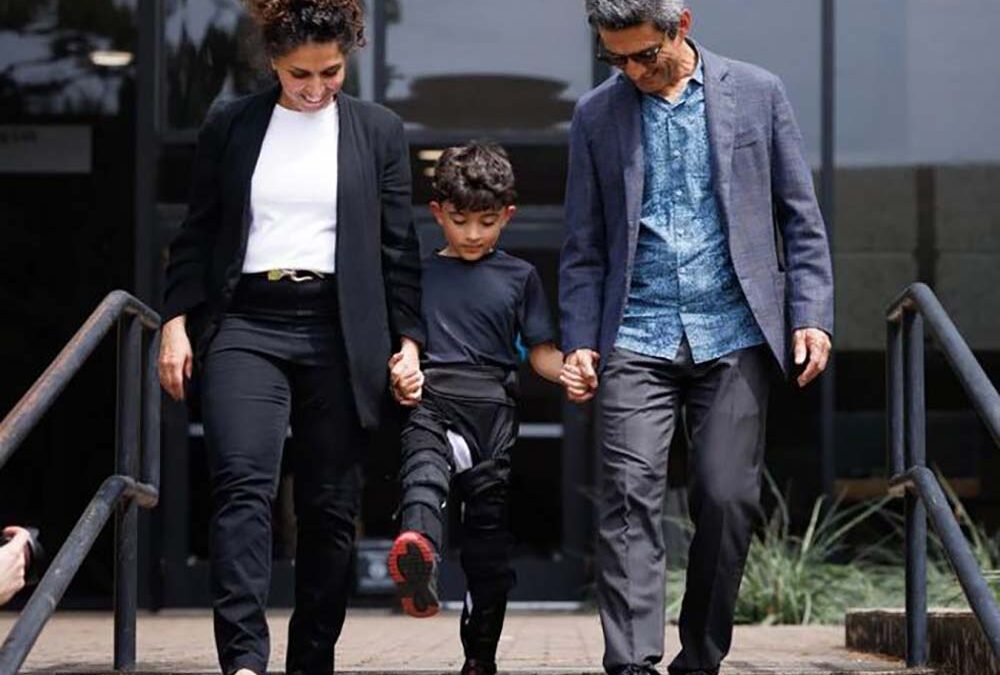








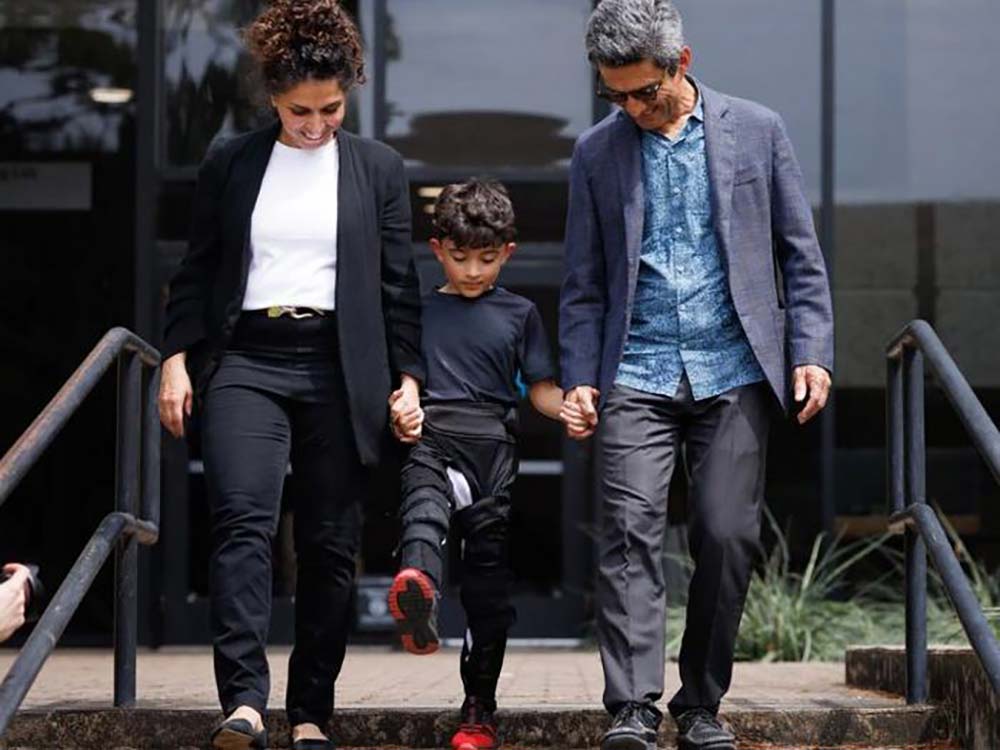
The MyoStep soft exoskeleton addressing motor impairments caused by CP. Image courtesy of UH.
A next-generation lightweight, soft exoskeleton for children with cerebral palsy (CP) was developed to help children walk. The MyoStep addresses motor impairments that severely restrict children’s participation in physical activities, self-care, and academic pursuits. Developed by a team from the National Science Foundation (NSF) University of Houston (UH) Building Reliable Advances and Innovation in Neurotechnology (BRAIN) Center, an Industry–University Cooperative Research Center (IUCRC), and TIRR Memorial Hermann, the project represents a significant advancement in the field of pediatric mobility aids, particularly for children with CP, said Jose Luis Contreras-Vidal, PhD, director of the NSF BRAIN Center and Hugh Roy and Lillie Cranz Cullen Distinguished Professor of Electrical and Computer Engineering.
The team tailored the MyoStep to be lightweight, discreet, and tailored to fit seamlessly into the lives of children and their families. The wireless sensor network, embedded inside the smart and flexible fabrics, is the backbone of the suit, collecting and sending real-time data about the user’s movements so the device knows when to assist their arms or legs. It also includes safety features such as temperature monitoring and emergency shut-off mechanisms. All electronics and actuators are fully isolated from the user’s skin to prevent direct contact and reduce the risk of irritation or discomfort. Integrated temperature sensors continuously monitor the device’s surface temperature, automatically deactivating the system if it exceeds safe limits to protect against overheating or burns. The various sensors in the network communicate with each other using Bluetooth technology.
Coordination across the ankle, knee, and hip was vital in producing the prototype. Continually improving how the ankle moves could make walking more efficient, allowing children to use less energy to walk.