







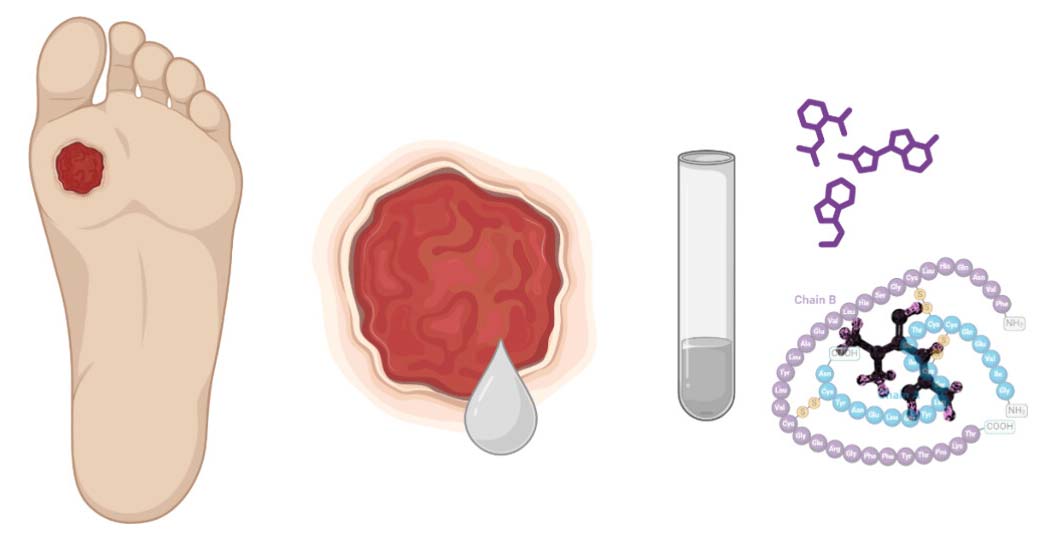
The researchers discovered that the combined use of insulin and metformin administered systemically significantly increased the concentration of metformin in the wound exudates (from 0.3% ± 0.0 to 3.1% ± 3.4; P = 0.0049). This work highlights the complexity of DFU exudate composition and underscores the potential for targeted metabolic profiling to develop personalized wound care strategies. Image courtesy of the researchers.
Researchers from Michigan State University (MSU), East Lansing, and South Shore Hospital, Weymouth, Massachusetts, have uncovered that the combination of 2 common diabetes drugs—injectable insulin and orally administered metformin—increases the amount of metformin at the wound site. As metformin can accelerate wound healing, this could be welcome news for people who develop diabetic foot ulcers (DFUs). While analyzing wound exudate (the fluid the body moves and secretes to the site of an injury), researchers discovered the presence of metformin in patients who take the drug orally. The researchers then explored metformin’s relationship to insulin. They found that for patients who take both insulin injections and oral metformin, the amount of metformin found in wounds significantly increases. It was previously believed that there was no interaction between insulin and metformin.
“Our study shows that there could be at least an indirect role of consuming both insulin and metformin in a way that metformin can end up in a wound area where it enhances the body’s capacity to heal,” said Morteza Mahmoudi, PHD, an associate professor in the department of radiology and precision health program in the MSU College of Human Medicine.
The team’s findings may have immediate relevance to healthcare professionals treating patients with DFUs and biotech developers of wound dressings.
“Our findings can affect the way that clinicians approach healing chronic wounds,” said Mahmoudi said. “Additionally, wound dressing developers need to consider the interactions of anything they put on top of wounds with exudates. Exudates can interact with the wound dressings and affect their safety and therapeutic efficacy. Additional research will be evaluating this.”