







This study forms the basis of a digital twin system of the knee joint, using advanced quantitative MRI (qMRI) and machine learning to advance precision health in osteoarthritis (OA) management and knee replacement (KR) prediction. The study authors combined deep learning–based segmentation of knee joint structures with dimensionality reduction to create an embedded feature space of imaging biomarkers. Through cross-sectional cohort analysis and statistical modeling, specific biomarkers were identified, including variations in cartilage thickness and medial meniscus shape, that are significantly associated with OA incidence and KR outcomes. Integrating these findings into a comprehensive framework represents a considerable step toward personalized knee-joint digital twins, which could enhance therapeutic strategies and inform clinical decision-making in rheumatological care. This versatile and reliable infrastructure has the potential to be extended to broader clinical applications in precision health.
Source: Hoyer G, Gao KT, Gassert FG, et al. Foundations of a knee joint digital twin from qMRI biomarkers for osteoarthritis and knee replacement. NPJ Digit Med. 2025 Feb 21;8(1):118. doi: 10.1038/s41746-025-01507-3. Use is per CC BY 4.0.
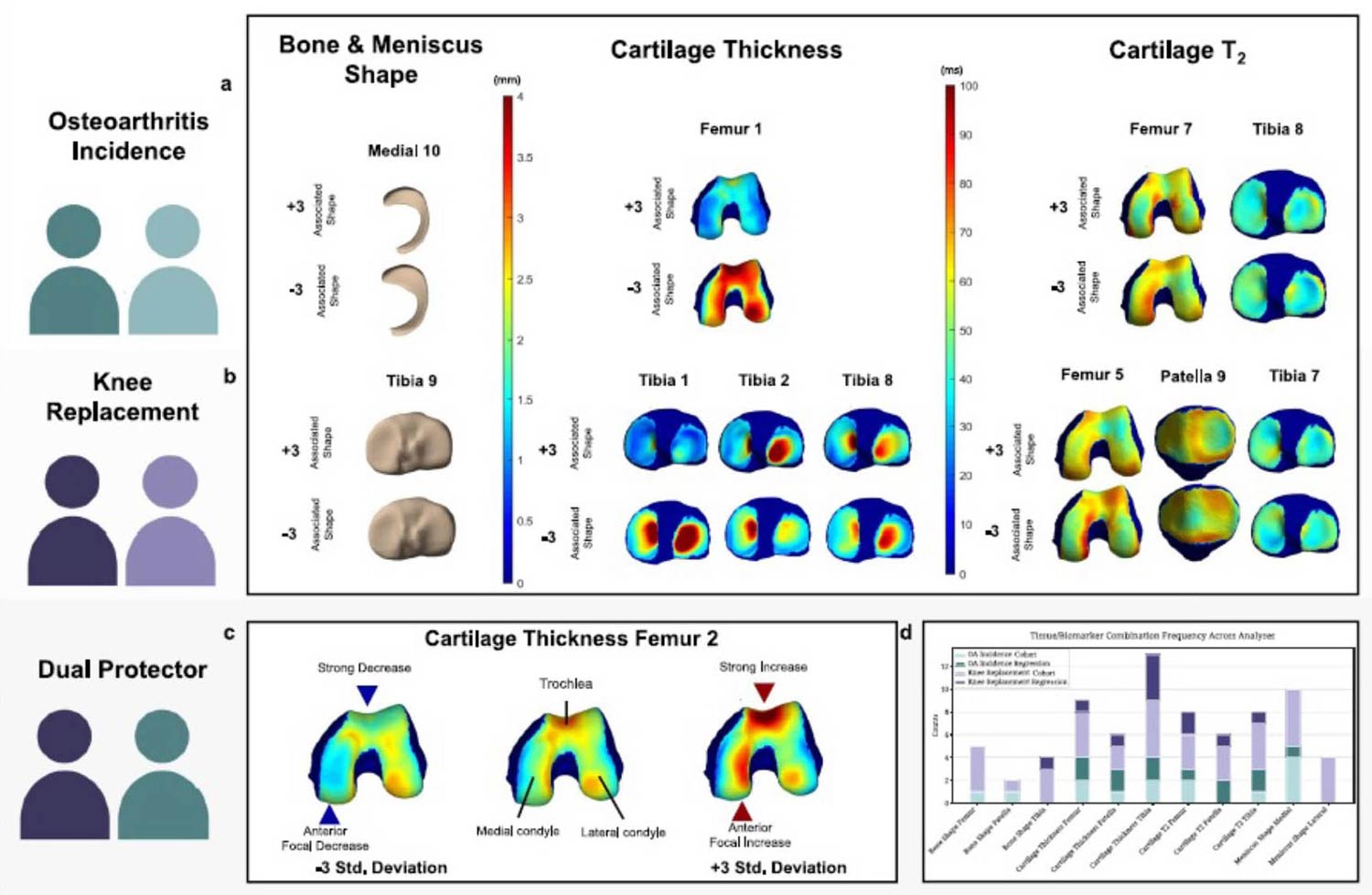
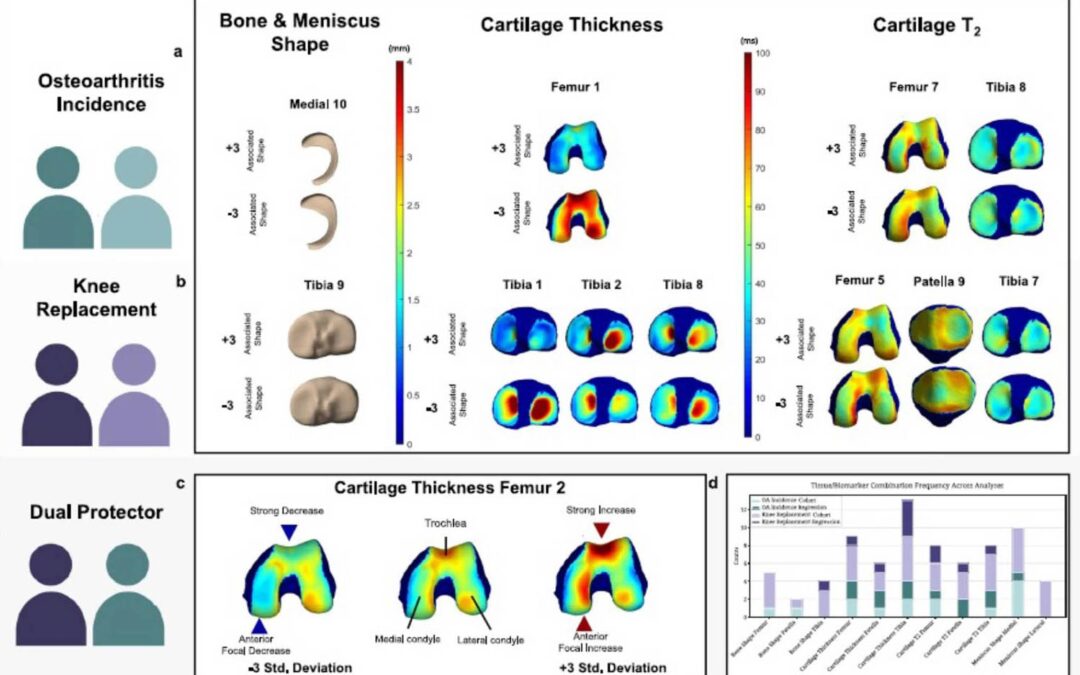
Figure. Core biomarkers identified across analytical approaches for OA incidence and knee replacement outcomes in digital twin development. This figure integrates findings from cohort matching and multivariate regression analyses, identifying imaging biomarkers consistently associated with OA incidence and knee replacement outcomes, which serve as foundational components for building a knee joint digital twin system. a OA Incidence Biomarkers: Emphasizes biomarkers significantly associated with the incidence of osteoarthritis, identified through Clinical Cohort Matching and Multivariate Regression Analyses. Emphasizes specific anatomical and molecular changes linked to the early detection and progression of OA. b Knee Replacement Biomarkers: Presents biomarkers that distinguish between Control subjects and those who underwent knee replacement surgery. These bio-markers were identified as the most impactful for predicting surgical outcomes through cohort matching and regression. c Dual Protective Biomarker: Features a biomarker that consistently demonstrates protective effects against both the onset of OA and the need for knee replacement. Based on cohort comparisons and multi-variate models, the findings suggest potential therapeutic intervention targets. d Biomarker Selection Overview: Synthesizes the tissue-biomarker combinations identified as significant across analyses for both OA incidence and knee replacement. The repeated recognition of these biomarkers across analyses accentuates their influence on knee health outcomes and posits their utility for further investigation.