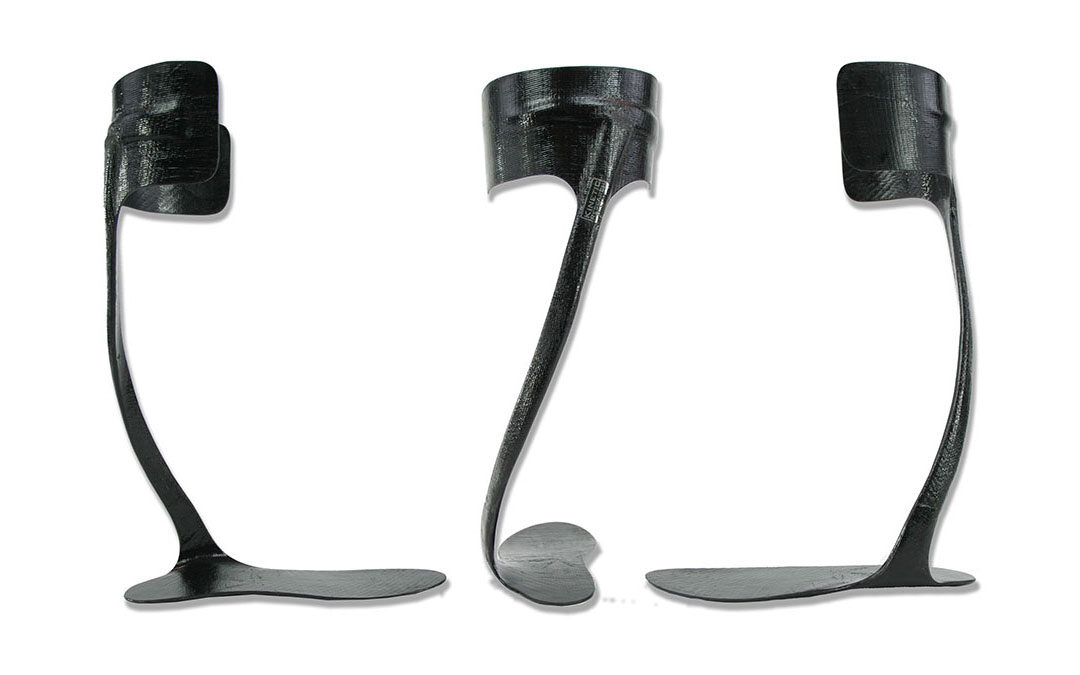








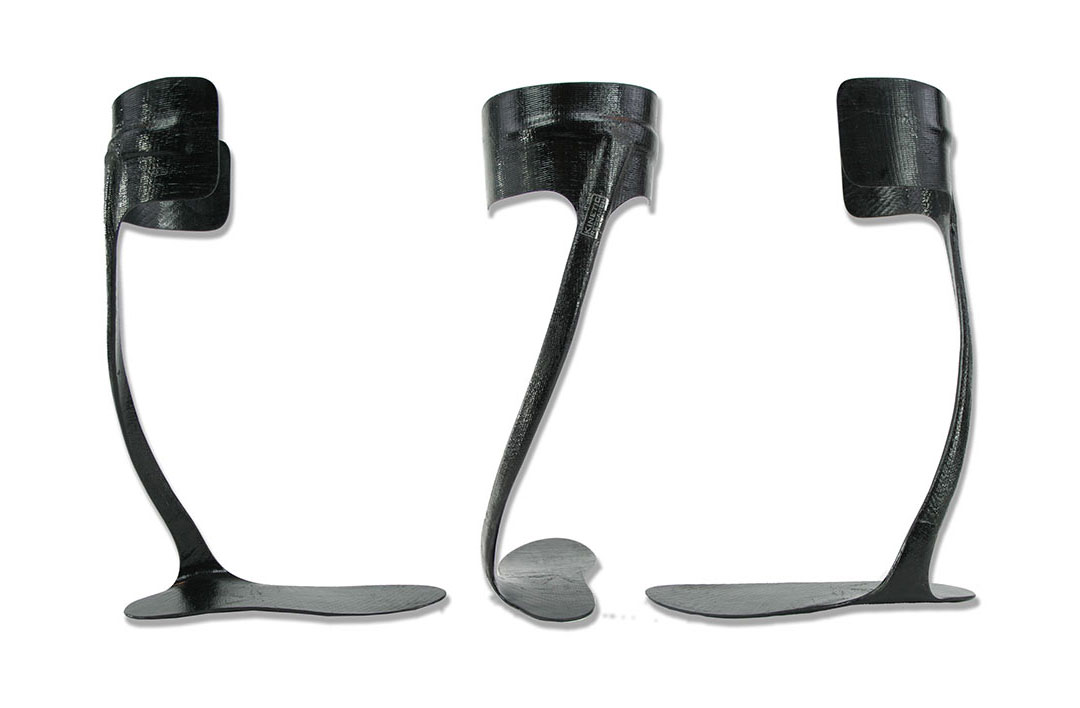
The Noodle Classic AFO from Kinetic Research
By Wade Bader, CPO
Technology stems from the inherent human desire to improve on what we already know. As our pool of knowledge grows, new bases are formed that set the stage for the next innovation.
The desire to find better, cheaper, faster solutions transcends every field. People sometimes notice the big changes and reflect on how crude it was before, not always realizing how many steps it took to make that change happen. We remember the monumental achievement of landing a man on the moon in 1969, but that 1 event was the culmination of over 1,000 new technologies brought together to make the mission possible. Thirty-three years later, Space-X was born, and 20 years thereafter, with some failures along the way, they have revolutionized how we work in space. SpaceX didn’t invent the rocket, but they made it efficient and reliable. Over the years, the company’s expanding understanding and mastery of their work allowed them to address even more complex needs of their customers. SpaceX continues to innovate and expand with the Starlink system that was only made possible through the milestones achieved at SpaceX.
When I relate this to my experience at Kinetic Research, we started in the early 1990s using our knowledge of that time to create composite ankle-foot-orthoses (AFOs). As our understanding and mastery expanded, our ability to address complex deformities expanded. In 2009, we introduced the Noodle AFO, a dynamic, energy-storing AFO that was reliable, durable, and efficient. Expanding on the Noodle, in 2015 we introduced the SOTO design, which has at its core a Noodle AFO, but then we integrate a flexible hemi-supramalleolar orthosis (SMO) into the AFO, making it a game changer for medio/lateral control. Could we have skipped the first 20 years and jumped straight to the SOTO? The answer is obviously no. To get where we are today, we needed those years of experience and an environment of continuous quality improvement.
Wade Bader, CPO, is President of Kinetic Research in Tampa, Florida.