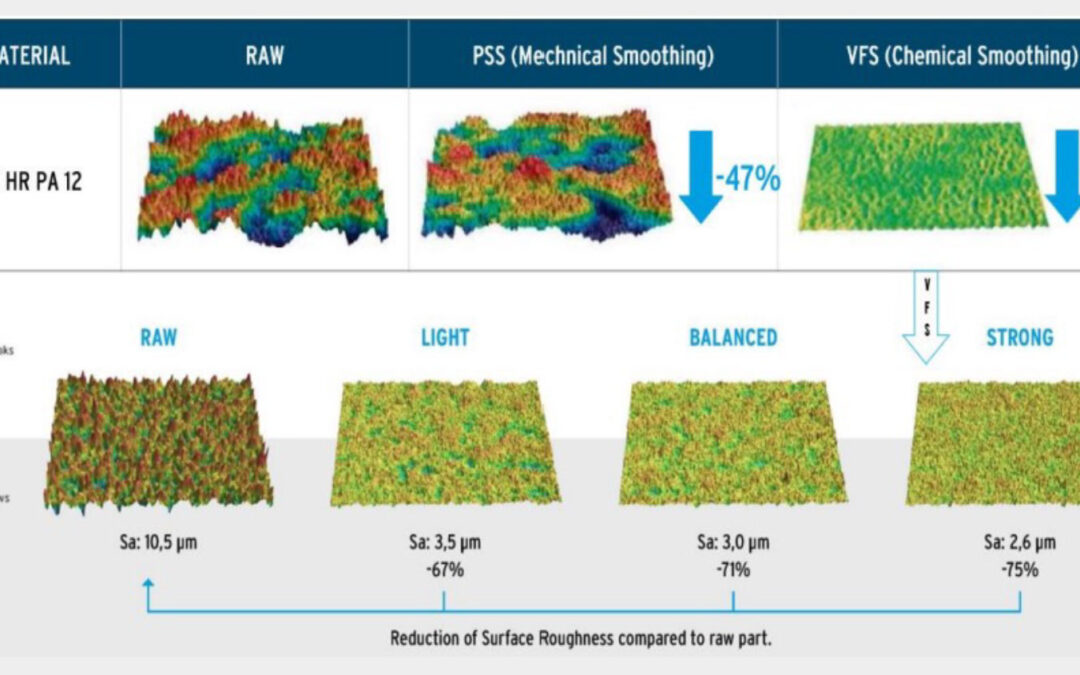









Surface finishing techniques increase scratch resistance and/or create a sealed, airtight surface therefore removing the porosity from the raw 3D printed part. Image courtesy of Dye Mansion North American Inc.
While 3D printing has dramatically accelerated the customization process for manufacturing orthotics and prosthetics, it’s often today’s post-processing technologies that make those applications possible. The ability to create washable and sealed surfaces that maintain material properties or the chance to add any color you want – from Pantone to customized skin colors and all of that matching the standards for biocompatibility is a real game changer.
Source: Simpson E. Tailor-Made O&P—How 3D Printing and Post-Processing of Powder Bed Fusion Parts are Setting New Standards in the Medical Industry. Poster presented at AOPA 2023 National Assembly; Indianapolis, IN; Sept. 6-9, 2023.