








 By Preshy Varghese, MBBS, MMed, FRCS, FRACGP
Case Report
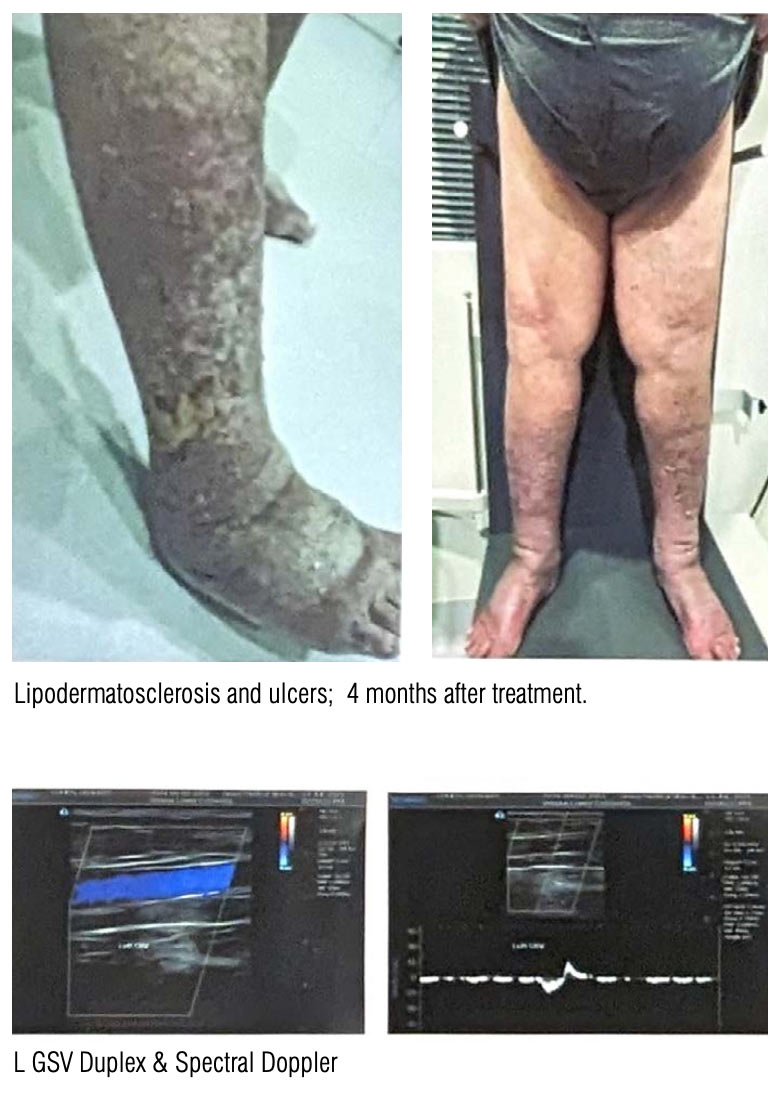
70-year-old man with a BMI of 57.1 presenting with bilateral symptomatic tributary varicose veins, chronic lipodermatosclerosis and venous ulcers of both lower limbs. There was no history of DVT or PE. He has central obesity with overhanging anterior abdominal wall. Duplex ultrasound showed no GSV or SSV reflux, deep venous thrombosis, reflux or obstruction. Duplex ultrasound revealed only reflux of tributary veins from GSV and SSV. He has been treated by ultrasound-guided sclerotherapy with 1% STS foam of incompetent tributary veins and thigh high class 2 (30mm Hg) compression stockings. He continued to wear compression stockings for 4 months. After 4 months his leg edema has improved, and the ulcers healed.
In the absence of obstruction or reflux in the superficial or deep veins in the lower limbs, he was considered to have functional venous disease causing lipodermatosclerosis and ulcers.
Discussion
Functional venous disease can be described as the situation in which symptoms and signs typical of venous hypertension [are present] in the absence of overt venous pathology. The increased intra-abdominal pressure in morbidly obese patients would cause an elevated iliofemoral venous pressure by 20cm H20 which transmits via incompetent femoral veins causing venous stasis in the lower limbs. The decreased vein wall tone and stasis microangiopathy are associated with the symptoms (heaviness, tension, and pain) and signs (lower-limb edema, hyperpigmentation, lipodermatosclerosis, and venous ulcers) of venous hypertension in the absence of superficial or deep vein refluxes. The association of increasing limb symptoms with increasing obesity suggested that the obesity itself contributes to the morbidity. This resistance to the venous drainage can be overcome with appropriate compression. If available, short stretch compression would further improve venous drainage.
Source: Varghese P. Chronic Lipodermatosclerosis in a Patient with Functional Venous Disease. Poster presented at 2023 Union of International Phlebotomy World Congress and 37th Annual Congress of the American Vein & Lymphatic Society. Sept. 17-21, 2023; Miami Beach, FL.



It’s helpful to see an honest breakdown of what it takes to get rid of veins on legs. Between lifestyle changes and in-office treatments, there’s more than one path. This kind of info really helps set realistic expectations