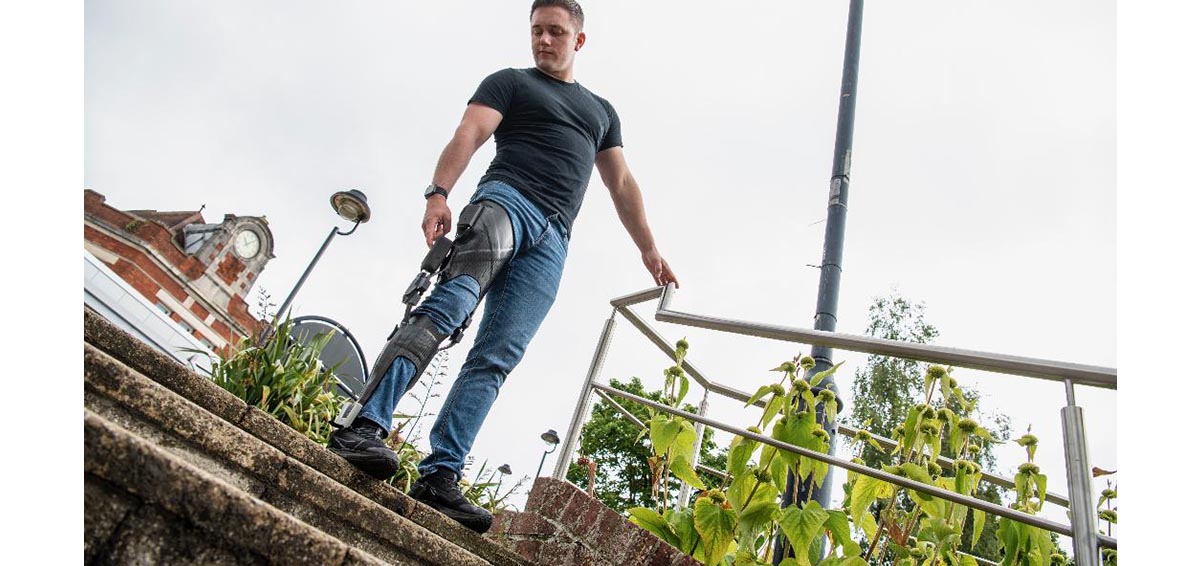
New from Cascade Orthopedic Supply, ProComp is a polypropylene-based composite, stabilized with discontinuous carbon fiber, for the custom fabrication of lower extremity orthoses. The 3D carbon fiber matrix is discretely imbedded into the core of the laminate, which…
Lower Extremity Review
Outcomes after ACL surgery: The importance of graft type
In an attempt to decrease the risk of re-rupture and revision surgery after anterior cruciate ligament reconstruction, practitioners are refining the decision process regarding which procedure is best for which patient.
By Cary Groner
GlideWear Shear Protection Socks
New from Tamarack Habilitation Technologies, GlideWear Shear Protection Socks provide targeted protection from friction and shear to help prevent skin breakdown. Featuring dual-layer, low-friction fabric technology, GlideWear is engineered to provide…
KanoPrint Direct Forming Station
Kano-Labs has updated its KanoPrint Direct Forming Station, designed for the creation of custom total contact corrective orthotic devices—with the foot either in a subtalar-neutral, nonweightbearing position or in a corrected position—while accounting for soft tissue expansion.
Plantar fasciitis: Clinical concerns in basketball
Basketball is associated with a high number of lower extremity injuries, often related to footwear and the unique biomechanics and repetitious motion of the sport. This reflects the evolution of basketball from a refined sport to one of extreme physical contact and leverage. At elite levels of competition, the joint loading that comes with…
By Patricia Pande, MClScPT, CSCS, CPed
Foot and ankle surgeons name officers and board of directors at annual meeting
The American College of Foot and Ankle Surgeons (ACFAS) on February 12 installed its 2016-2017 board of directors at the organization’s 74th Annual Scientific Conference in Austin, TX.
Microfiber Shades Socks
Sigvaris North America has announced Microfiber Shades, a fun new line of microfiber compression socks for people who need to wear graduated compression but want more playful socks with a pop of color.
Running modifications and reducing injury risk
Evidence suggests that no one foot strike style can be expected to decrease injury risk in all runners, and that switching foot strike patterns can have unintended consequences. Using a shorter stride length, however, can be an effective alternative for some runners.
By Elizabeth Boyer, PhD, and Tim Derrick, PhD
Guidelines address diabetic foot ulcer care
The American Podiatric Medical Association and the Society for Vascular Medicine in February published in the Journal of Vascular Surgery new recommendations for five key aspects of diabetic foot ulcer (DFU) care.
Unequal Insoles from Spenco
Spenco and Unequal Technologies have collaborated to produce insoles for athletes at risk for lower extremity stress injuries. Unequal Protective Cushioning provides ultra-thin comfort, and Unequal Protective Stability has a lightweight orthotic cradle.
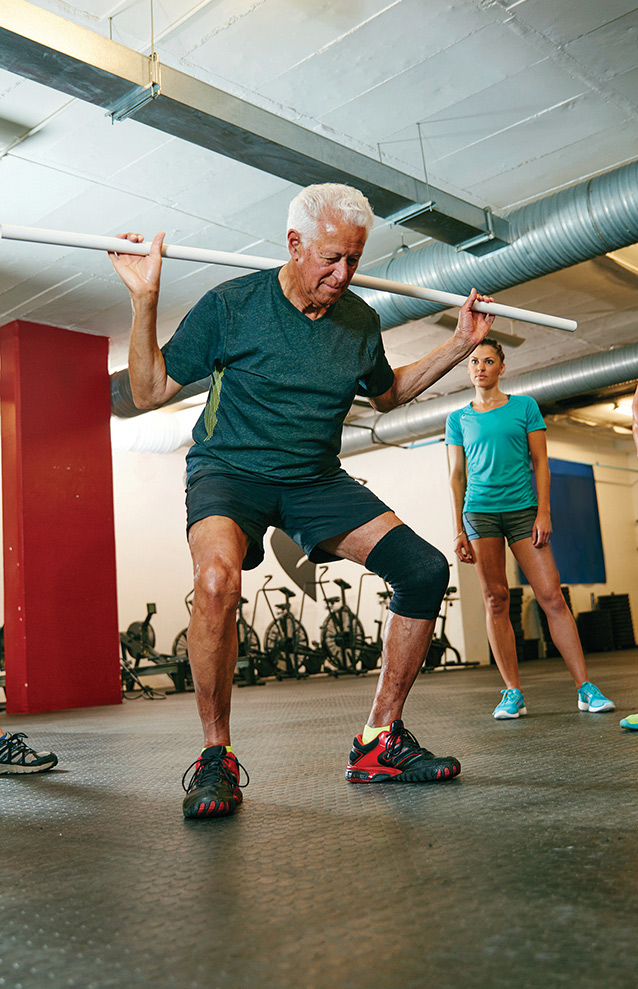
Strength training: Bone health benefits for men
Men with low bone mass are much less likely than their female counterparts to receive treatment. But research suggests that resistance exercise is a safe and effective way to improve bone mineral density in men and, in turn, reduce the risk of fracture and related complications
By Pamela S. Hinton, PhD
Spenco acquires Canadian distributor
Spenco announced in January its acquisition of a Canadian distributor, Spenco Canada. Spenco Canada, which operated independently for more than 20 years, is now under the umbrella of Spenco’s North American headquarters in Waco, TX, as a wholly owned subsidiary.
OdysseyK2 Prosthetic Foot
The OdysseyK2 from College Park has a curved hydraulic ankle, Intelliweave composite foot base, and customizable dual StrideControl. The ankle provides 12° of smooth hydraulic motion that works in tandem with the foot base.
AAOP webinar teaches evidence use
The American Academy of Orthotists & Prosthetists (AAOP) in December released a webinar designed to help practitioners understand systematic reviews and bridge the gap between evidence and practice.
Ankle instability rehab emphasizes individuality
Research presented at the most recent International Ankle Symposium indicates that rehabilitation for chronic ankle instability is evolving from a one-size-fits-all approach to an increased focus on matching specific interventions to the patients who are most likely to benefit.
By Lori Roniger
Join
Subscribe For Updates
Stay in the loop with the latest news and updates! Subscribe now to receive exclusive content, special offers, and important announcements straight to your inbox. Don’t miss out – join our community today for all the latest updates delivered directly to you.