The International Olympic Committee’s fourth Advanced Team Physician Course is scheduled for May 30-June 1 at the Soria Moria Hotel in Oslo, Norway. The course, geared toward the practical issues of working with high-level athletes in a team sports setting, is being...
Lower Extremity Review
RehabTech Asia will debut in 2013
RehabTech Asia is the region’s only trade gathering for the assistive technology, integrated care, and rehabilitation engineering industries. The inaugural event, which includes a trade exhibition, conference, hosted buyer program, and business forums, is scheduled...
AOPA hosts 2012 audio conferences
Practitioners who want to learn the latest in O&P and earn CE credits can dial in to the American Orthotic and Prosthetic Association’s (AOPA) telephone seminars the second Wednesday of each month at 1 pm EST. Practitioners can receive 1.5 CEs per audio...
COPA reprises educational event
The California Orthotic & Prosthetic Association (COPA) will hold its second annual COPA Educational Event on Friday, March 2, at California State University, Dominguez Hills’s O&P Program in Long Beach. The one-day event will include three concurrent tracks:...
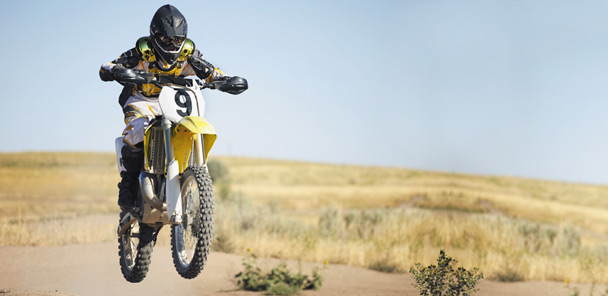
Knee bracing benefits off-road motorcyclists
New research suggests that serious injuries occur as frequently in off-road motorcycle racing as they do in football, but such injuries occur less frequently in riders who wear knee braces.This may be why, although it is not well studied, knee bracing is widespread among off-road motorcycle riders.
By Wesley M.Gladin, BS, Robert A.Cates, BA, and Mark S.Sanders, MD, FACS
Adult acquired flatfoot: Nonoperative options
Adult acquired flatfoot deformity, primarily posterior tibial tendon dysfunction, in many cases can be successfully managed with conservative treatment modalities including early immobilization, long-term bracing, physical therapy, and anti-inflammatory medications.
By Robert W. Mendicino, DPM, FACFAS, Alan R. Catanzariti, DPM, FACFAS, and Kyle S. Peterson, DPM
Knee OA: The evidence for gait modification
Gait retraining can potentially alter walking biomechanics such that knee adduction moment is reduced, an inexpensive offloading option that does not require device wear. Gait modification studies to date have primarily focused on foot rotation, trunk lean, and knee medialization.
By Michael A. Hunt, PT, PhD
Biomechanical analysis of ankle sprain ‘copers’
Researchers are investigating why some people develop chronic ankle instabilty after a sprain while others seem to heal normally. Biomechanical differences between the two cohorts may offer clues to the mechanisms underlying CAI and enhance preventive efforts.
By Adam Rosen, MS, ATC, and Cathleen N. Brown, PhD, ATC
Monofilament testing withstands critiques
Experts continue to debate the relative merits of the Semmes-Weinstein monofilament for assessing diabetic foot ulcer risk, including how many sites on the foot should be tested, and which ones. But it’s tough to argue with the technique’s cost-effectiveness.
By Cary Groner
Breaking pointe: Foot and ankle injuries in dance
Essential to the beauty of dance are the demanding biomechanics of the dancer, particularly at the foot and ankle. Injuries and pain are almost inevitable. But an understanding of the underlying issues—artistic as well as anatomical—can help practitioners keep dancers on their toes for as long as possible.
By Jeffrey A. Russell, PhD, ATC
Join
Subscribe For Updates
Stay in the loop with the latest news and updates! Subscribe now to receive exclusive content, special offers, and important announcements straight to your inbox. Don’t miss out – join our community today for all the latest updates delivered directly to you.