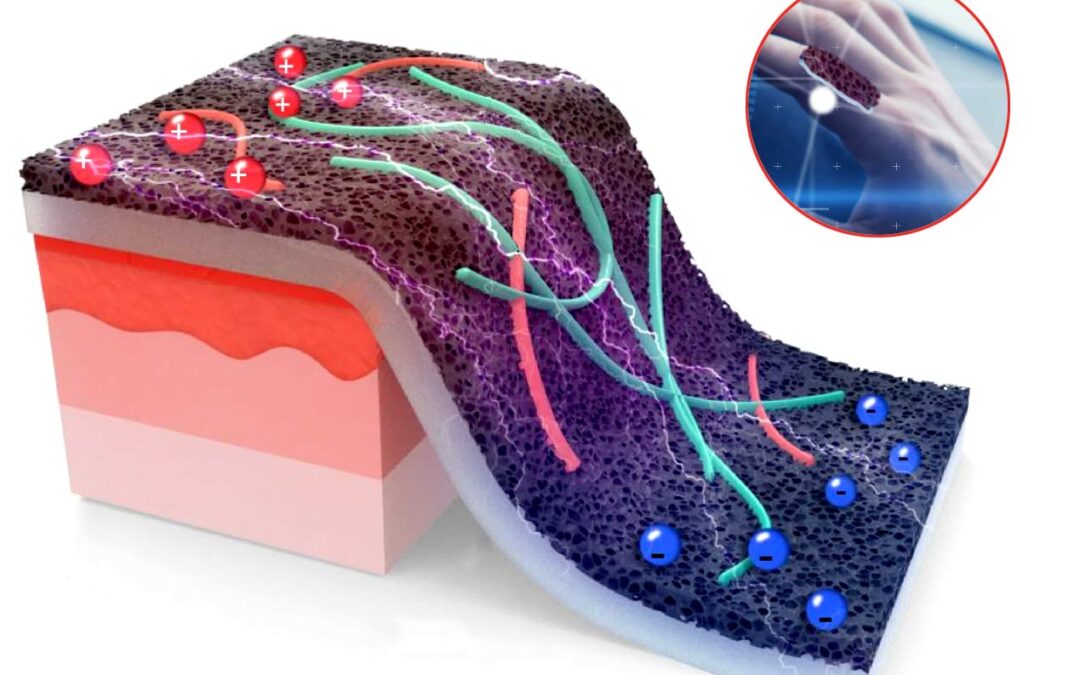








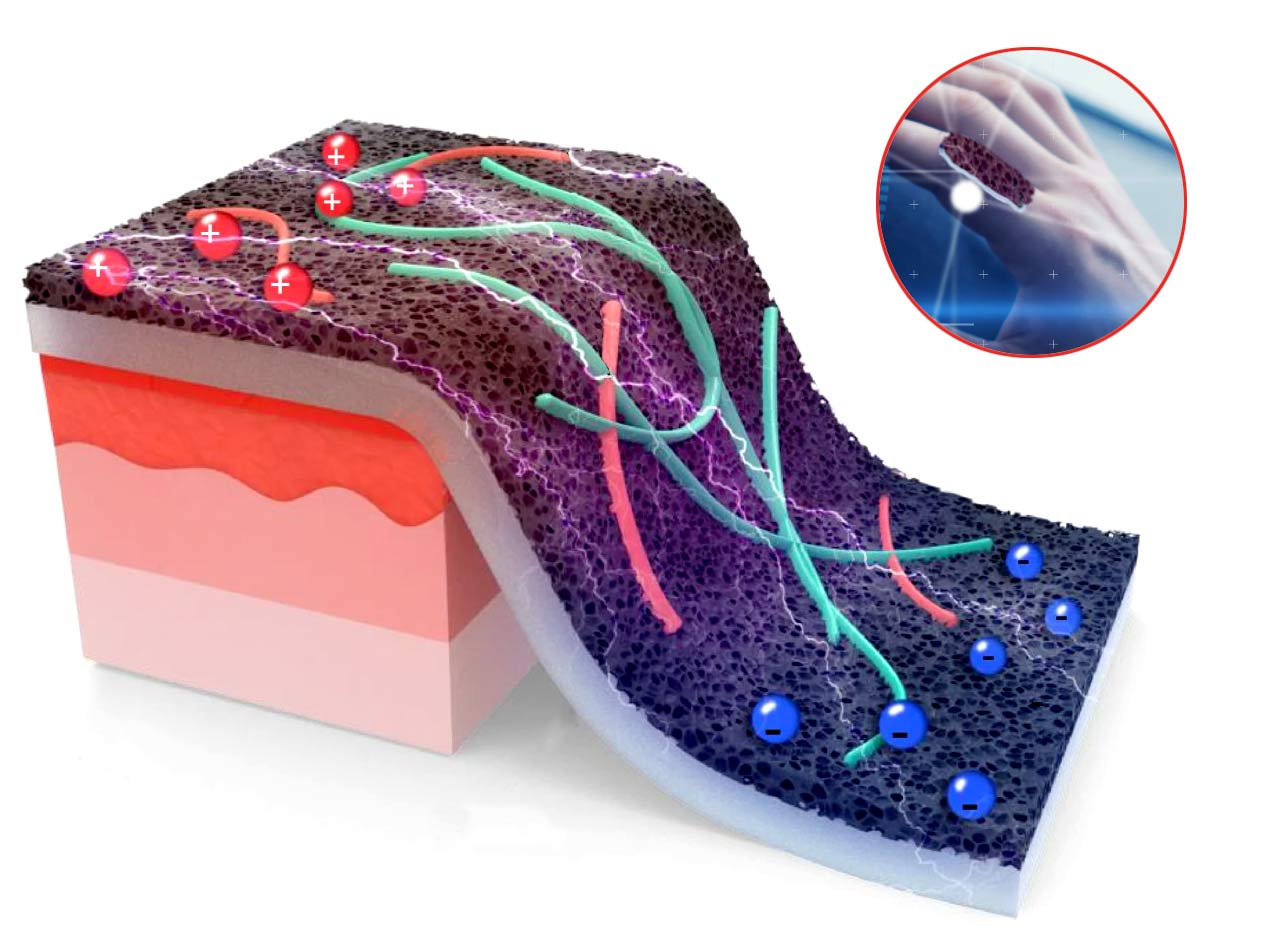
The flexible sensor, ideal for use in the human body, uses laser-induced graphene to simultaneously but separately measure temperature and strain, potentially enabling better wound healing monitoring by providing clearer insights into inflammation and recovery. Image courtesy of the researchers.
Researchers from Pennsylvania State University (Penn State) and China’s Hebei University of Technology aimed to accurately measure temperature and strain signals without crosstalk by using laser-induced graphene (LIG), a 2-dimensional (2D) material. In doing so, they stumbled upon the fact that this material also has thermoelectric properties, said Huanyu “Larry” Cheng, James L. Henderson, Jr. memorial associate professor of engineering science and mechanics (ESM) at Penn State. Thermoelectric properties in a material refer to the ability to convert temperature differences into electrical voltage and vice versa, enabling such materials to be used for applications like energy harvesting and temperature sensing. According to Cheng, this newly identified thermoelectric property of LIG makes it easy to separate the 2 sensor measurements and ideal for healthcare applications such as a sensor embedded in a bandage.
“[B]y using this thermoelectric effect…we can look at the electrical resistance to get information about the strain, while also measuring the thermal voltage to determine the temperature,” said Cheng. “This is why doctors could use it to track both temperature fluctuations and physical changes in the wound site and give a much clearer picture of how the healing is progressing.”
He also noted that the sensor is highly sensitive, detecting temperature changes as small as 0.5 degrees Celsius. The material’s design takes advantage of the way porous graphene and thermoelectric components work together, making it nearly 4 times better at converting heat into electricity. The sensor can also stretch up to 45%, as well as conform to different shapes and surfaces, without losing function.
Since the thermoelectric aspect of LIG also means it can generate electrical power when there is a temperature difference, LIG sensors are self-powered. This could be particularly useful for continuous monitoring in clinical settings and for other applications, such as helping to detect fires in remote locations.
In addition to refining the sensor, the team is developing a wireless system that will allow people to monitor the data from the sensor remotely. This will make it possible to track important information, such as temperature or strain, in real time using smartphones or other devices.