Download the Complete issue as a PDF (5.6 mb)
Cover Story

Multiple studies suggest that mouthguards, designed to protect athletes from dental injuries during contact sports, may also help improve muscle force and power. But plenty of other studies have found no such benefits, and even the experts aren’t sure what to believe.
By Cary Groner
Editor Message

The concept of foot-strike pattern during running—something rarely discussed a decade ago, even in research circles—is now pervasive among runners as well as biomechanics experts and lower extremity clinicians. But that’s not necessarily a good thing.
By Jordana Bieze Foster, Editor
LER Pediatrics
 Making it personal
Personalized medicine, holistic care, and patient-centered management can all imply slightly different things, but beneath the differences one central tenet is the same—the importance of tailoring treatment to individual patients’ unique conditions, needs, and goals.
In this issue several articles discuss some of the varied ways in which lower extremity practitioners are taking an individualized approach to orthotic management of young patients, who are undergoing rapid physical changes, developing interests, and facing other childhood challenges.
Departments

Although not as common as Achilles tendinitis, peroneal tendinitis is seen in a certain group of patients with chronic ankle instability or with a cavovarus foot.1 Peroneal tendinitis presents as lateral foot pain and may also be of unknown etiology or associated with an acute inversion injury.
By Patricia Pande, MClScPT, CSCS, CPed

Decisions related to the stiffness of an ankle foot orthosis (AFO)—whether they involve device design or the materials from which it’s fabricated—can help lower extremity clinicians customize stability, biomechanics, and muscle function to meet individual patients’ needs.
By Lori Roniger

Professional football players are enduring higher levels of force than ever, and foot and ankle injury rates are increasing as a result. Advances in surgery and rehabilitation have helped get players back on the field more quickly, but injury prevention remains a significant challenge.
By Will Carroll

Altered biomechanics after ankle arthrodesis often increase stress on the adjacent joints in the foot, which can cause or exacerbate osteoarthritic degeneration in those joints. Clinicians and researchers are working to better understand this process and how to minimize patients’ risk.
By Cary Groner

The ability to identify and treat patients at risk for mental health issues after anterior cruciate ligament (ACL) injury may help improve psychological readiness for reconstructive surgery, attitudes toward postoperative rehabilitation, and successful surgical and rehabilitation outcomes.
By John Reaume, MD, MHSA; Dana Reaume, PsyD; and Melissa A. Christino, MD
News
In the Moment: Running
Women with iliotibial band syndrome (ITBS) independently modify their running gait when fatigued to decrease hip adduction, potentially as a result of pain, according to research from Rutgers University in Newark, NJ, that may have implications for gait retraining.
By Katie Bell
Trained long distance runners have a higher step rate and a shorter step length during running than untrained participants—characteristics that may represent adaptations to reduce injury and improve running economy, according to research from Spain.
By Jordana Bieze Foster
Chronic ankle instability (CAI) is associated with altered vertical ground reaction forces (vGRF) and loading rates during running, which may be related to altered landing patterns designed to protect the ankle joint, according to research from Indiana University in Bloomington.
By Jordana Bieze Foster
In the Moment: Rehabilitation

The problematic trend of physiological studies in which young women are underrepresented now extends to research on blood flow restriction (BFR) training, according to a paper epublished in October by Clinical Physiology and Functional Imaging.
By Cary Groner
Foot-focused progressive resistance training helps improve toe flexor strength and balance in older adults, which may help reduce the risk of falls, according to research from the University of Wollongong in Australia.
By Jordana Bieze Foster
Foam rolling is associated with greater acute improvement in quadriceps and hamstrings flexibility compared with static or dynamic stretching, according to research from Taiwan.
By Jordana Bieze Foster
Market Mechanics
By Emily Delzell
Products
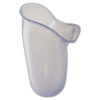
Orfit Industries introduces Orfitrans Medium Soft, made of a stronger thermoplastic material for optimal patient comfort. Orfitrans Medium Soft can be used for transtibial check sockets as well as for lower limb orthoses.
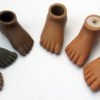
TRS has responded to requests from the O&P profession by introducing two new sizes (14 cm and 15 cm) of its Little Feet for infants and young children. Little Feet are functional, economical prosthetic feet in sizes now ranging in 1-cm increments from 10 cm to 15 cm.
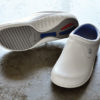
Spenco introduces its Professional Collection of attractive footwear for people whose professions require long hours of standing or walking. The new styles incorporate Spenco’s Total Support Contour and orthotic-grade arch support, along with…
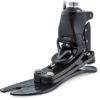
Össur has launched Pro-Flex, a new foot designed to help reduce joint pain among amputees who engage in low-to-moderate impact activities. Pro-Flex is designed to address many comorbidities often found in lower limb amputees, including altered gait dynamics that can…
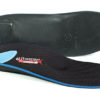
Powerstep’s new ProTech Control Met orthosis offers the stability, support, and comfort of its ProTech Control Full Length, but has the added benefit of a built-in metatarsal pad. The Poron met pad helps to spread and cushion the metatarsal heads to…
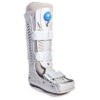
Dalco International’s new Premium Air Walker, the company’s most advanced walker, immobilizes and protects the leg and foot following injury or surgery. Similar to Dalco’s traditional Air Walker, the boot utilizes an inflatable bladder to ensure compression and fit.
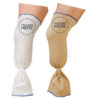
Paceline introduces the new customizable Tensitube Blue Shrinker, an elastic postoperative residual limb shrinker that applies controlled compression to help provide pain relief and reduce hypertrophic scarring and edema in lower extremity amputees.
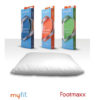
The vast majority of Footmaxx orthotic devices are custom, carefully crafted based on a patient’s unique prescription. Now Footmaxx also offers the MyFit line of nonprescription foot orthoses as an economical solution to foot, arch, and heel pain.
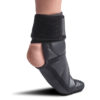
Swede-O announces the launch of the Ankle Foot Stabilizer (AFS), the newest addition to the MVT2 (Micro Ventilated Thermal) Technology line of products. The AFS includes medial and lateral stabilizers, an adjustable closure strap for greater support, and a nonslip safety sole to help prevent slipping.
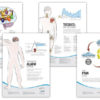
OPTP has partnered with Adriaan Louw, PT, PhD, CSMT, to create a new set of posters focused on neuroscience pain education. The Pain Neuroscience Posters are now available as a set of four 17.75″ x 24″ posters suitable for display in therapy clinics or rehabilitation centers.