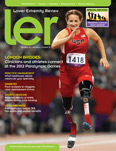
 Cover Story
There were no medals for the orthotists, prosthetists, and other lower extremity specialists in attendance at the 2012 games in London. But thousands of world-class athletes couldn’t have succeeded without them.
By Emily Delzell
Editor Message

If you treat overweight patients with hip or knee osteoarthritis, you’ve undoubtedly counseled them about the benefits of exercise and maintaining a healthy weight. They’ve probably told you how much they really would like to exercise, if only the pain weren’t so bad.
Jordana Bieze Foster, Editor
Special Report
KID STUFF 2012: Pediatric clinical news update

In our second annual pediatric special section, LER updates you on the latest research and clinical news to help optimize management of your littlest lower extremity patients. Topics include cerebral palsy, clubfoot, juvenile idiopathic arthritis, ACL injury, footwear, obesity, and the pros and cons of foot screening.
Sponsored by an educational grant from…
 |
 |
 |
 |
 |
 |
Longer strides lead to increased work
Ankle foot orthoses (AFOs) are regularly prescribed to children with walking disabilities resulting from cerebral palsy, yet the effects of AFOs on energy recovery and work during gait are still unclear.
By Samantha Rosenblum
Method includes complex rotations
A surrogate biomodel of a child’s lower extremities, in particular the ability to model movement along multiple axes of rotation, could help improve researchers’ biomechanical understanding of bracing for clubfoot.
By Emily Delzell
Issues involve custom foot orthoses
A Scottish study suggests foot care in children with juvenile idiopathic arthritis (JIA) falls short because of poor access to care and negative perceptions about custom foot orthoses. Experts say those issues may be less prevalent in the US but emphasize the need to educate patients, parents, and referring clinicians about ...
Patterns mirror those seen in adults
Timing of reconstruction surgery after pediatric anterior cruciate ligament (ACL) injuries seems to be related to the prevalence of meniscal and chondral injuries discovered during those surgeries, according to new research published in the September issue of The American Journal of Sports Medicine.
By Cary Groner
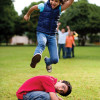
Standing long jump distance improves
Research has recently begun to clarify footwear’s effects on gait and functional performance in children, but the broader implications of the findings remain a matter of debate.
By Cary Groner
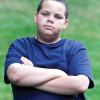
Low force values surprise researchers
An Austrian study exploring the role of genu valgum and flatfoot in obese and normal weight children found obesity was associated with higher peak plantar pressures, but lower maximum force while walking, when forces were normalized to body weight.
By Christina Hall Nettles
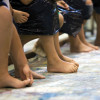
Most question emphasis on flatfoot
The value of screening programs for pediatric foot problems—primarily flatfoot—was recently challenged in a commentary by Australian podiatrist Angela Evans, PhD, a researcher and lecturer in the Division of Health Sciences at the University of Adelaide.
By Cary Groner
Departments

Despite being upheld by the Supreme Court, the Affordable Care Act remains a subject of debate heading into next month’s presidential election. Meanwhile, government affairs experts are working to determine just how the ACA will affect lower extremity practitioners.
By Shalmali Pal
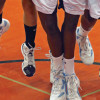
Research suggests that the ankle’s ability to absorb its share of energy during landing from a jump is altered with the use of an ankle brace. The extent to which this effect might influence risk of injury to other lower extremity joints or soft tissues, however, remains unclear.
By Jacob K. Gardner, MS
There are few high-quality studies and no randomized controlled trials documenting its effectiveness, but debridement—from surgical to larval—remains a mainstay of diabetic ulcer care in many practices, and new twists on conventional techniques continue to evolve.
By Cary Groner
Prehabilitation, particularly in the form of exercise, has the potential to significantly improve preoperative and postoperative outcomes in patients with knee osteoarthritis who are undergoing total knee arthroplasty. Both physiological and psychological outcomes can be positively impacted.
By Carly McKay, PhD, and Harry Prapavessis, PhD
News
In the Moment: Sports medicine
By Jordana Bieze Foster
The sports medicine community is demonstrating increasing interest in the possibility that neurocognitive impairment and musculoskeletal injury may be related, as evidenced most recently by an exchange in the letter to the editor section of the September issue of The American Journal of Sports Medicine (AJSM).
Running a marathon does not significantly affect Achilles tendon stiffness, suggesting that overuse may not explain Achilles ruptures in runners, according to a Finnish study published in the October issue of the Journal of Experimental Biology.
Knee and ankle sprains in National Football League (NFL) players occurred more frequently on artificial turf than on grass between 2000 and 2009, according to a study commissioned by the NFL Injury and Safety Panel e-published in September by The American Journal of Sports Medicine.
In the Moment: Surgery
By Jordana Bieze Foster
Contrary to expectations, total joint arthroplasty (TJA) for hip or knee osteoarthritis does not necessarily lead to weight loss, according to a systematic review performed by researchers in San Diego.
Athletes who undergo surgical reconstruction after anterior cruciate ligament (ACL) injury are no more likely to return to sports one year later than those treated nonoperatively, according to a Norwegian study.
Swiss researchers have found that pedobarographic differentiation between ankle arthrodesis patients and healthy volunteers can be narrowed down to a single variable, midfoot index of load—a finding that could make the technology much more accessible to the average clinician.
Market Mechanics
Products
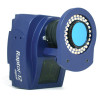
Motion Analysis Corporation announces a new camera to its lineup: the Raptor-12, with a maximum resolution of 12 megapixels (MP). Resolutions include 150 fps with 12MP, 200 fps with 9.4MP, 300 fps with 6.3MP, 500 fps with 3.8MP, and 900 ...
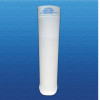
Silipos introduces the Antibacterial Silosheath, which offers the same benefits as the Silosheath Original along with the added benefits of antimicrobial protection and odor control. The interior lining of the Antibacterial Silosheath is coated with a mineral oil gel specifically ...

Amerx Health Care has introduced its new and improved Amerigel Wound Wash for painless and effective wound cleansing. The product is a sterile, pH neutral, nonlactated Ringer’s solution containing sodium chloride, calcium chloride, and potassium chloride in purified water. Amerigel ...
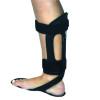
As a step up from its successful PeroSupport.tec ankle foot orthosis, Euro International presents a newer revamped version: the PeroSupport.Pro from Streifeneder ortho.production. The PeroSupport.Pro prevents lateral twisting as well as lateral slipping. It is intended for management of peroneal ...
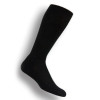
Thorlo introduces Thorlos Padds—clinically tested padded socks for people with low to moderate foot pain and people with diabetes whose feet are not at immediate risk for ulceration and who want nonactivity-specific foot protection. The padding is designed to reduce ...
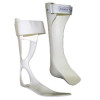
The Platinum Sound AFO and the Foot Drop Splint from PAL Health Technologies follow PAL’s new approach to drop foot and equinus treatment. The noncustom Foot Drop Splint (from PAL’s Transition Ankle line) is a lightweight injection-molded polypropylene brace with ...
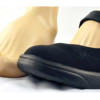
Apis Footwear offers the new 9205-L women’s Lycra Mary Jane comfort shoes as a part of its Mt. Emey Therapeutic Line. Three pairs of heat mold- able inserts are included with every order. The new Lycra Mary Jane shoes feature ...
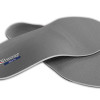
Powerstep introduces the Wide Fit Full Length Orthotic, a new wider profile orthotic specifically designed for use with wide-width footwear. This functional device features a semirigid polypropylene support shell calibrated for arch support with flexibility, a deep and wider heel ...